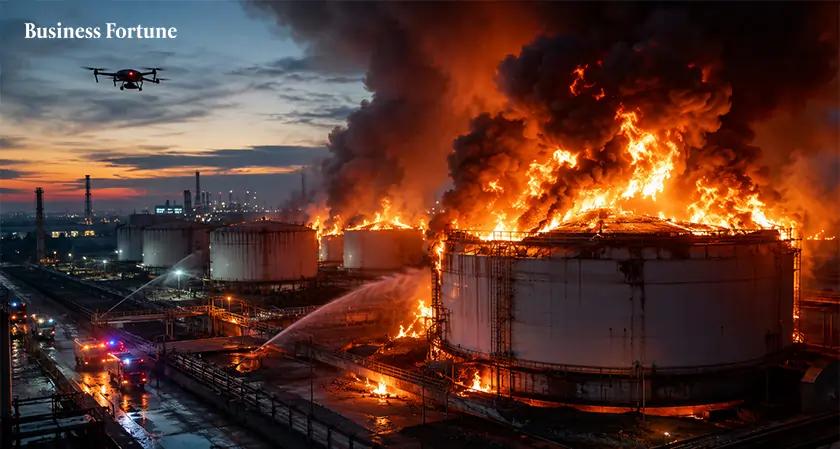
Ukraine drone attack Russian oil depots, fuel facilities, and tankers in the Sea of Azov, intensifying pressure on Moscow amid growing fuel shortages and escalating tensions.
Ukraine drone attack Russian affected the energy infrastructure and has intensified pressure on Moscow, with Ukrainian forces targeting oil depots, fuel storage facilities, pumping stations, and tankers in the Sea of Azov. The latest strikes, carried out overnight into Thursday, are part of Kyiv’s ongoing campaign to weaken Russia’s military and economic capabilities by disrupting fuel supplies.
According to Ukrainian President Volodymyr Zelenskyy, the attacks hit oil depots in Russia’s Tver and Stavropol regions, a reserve fuel storage site, an oil-pumping station in Bashkortostan, and an oil-loading terminal in the Rostov region. Russian regional officials confirmed several incidents, including fires at oil facilities and damage to tankers.
Russia Faces Pressure
In the Tver region, authorities reported that a storage tank at an oil depot caught fire following a drone attack. Emergency crews later brought the blaze under control. In Stavropol, another industrial site was set ablaze, forcing nearby residents to evacuate after flames spread to fuel tanks.
Meanwhile, in the Sea of Azov, two oil tankers were damaged and caught fire. Russian officials said all crew members were safely evacuated and no injuries were reported. Ukraine’s military claimed it struck multiple vessels used to transport fuel and oil products that support Russian military operations.
“The targeted vessels were used to supply fuel and lubricants to Russian military groups and transport oil products,” Ukraine’s General Staff said.
Could the Attacks Worsen Russia’s Fuel Crisis?
The latest strikes come at a difficult time for Russia’s energy sector. Repeated attacks on refineries, depots, and transport routes have reportedly contributed to fuel shortages across the country. Russian authorities have introduced fuel restrictions in many regions and suspended certain fuel exports to stabilize domestic supplies.
Reports indicate that more than 90% of Russian regions have experienced either fuel rationing measures or shortages of petrol and diesel. Crimea has been particularly vulnerable as supply routes face increasing disruptions.
Both Sides Continue Drone Campaigns
Russia’s Defense Ministry said it intercepted 73 Ukrainian drones overnight. At the same time, Ukraine reported that Russia launched 94 long-range drones and two ballistic missiles against Ukrainian territory. While many were intercepted, several locations still suffered damage.
The attacks also arrived shortly after a NATO summit meeting where U.S. President Donald Trump signaled support for strengthening Ukraine’s air defense capabilities. However, the Kremlin dismissed the idea that increased military pressure would force Russia into concessions and warned of further escalation.
What Comes Next?
The latest wave of strikes highlights how energy infrastructure has become a central battlefield in the conflict. As Business Fortune observes, Ukraine continues targeting fuel networks deep inside Russia and Moscow responds with its own drone and missile attacks, both sides appear committed to expanding long-range operations. The coming months could see even greater focus on supply chains, energy security, and strategic infrastructure, potentially reshaping the economic and military dynamics of the war.
FAQs
What was targeted in the latest Ukrainian drone attacks?
Ukraine said it targeted oil depots, fuel storage facilities, an oil-pumping station, an oil-loading terminal, and several tankers in the Sea of Azov.
Were there any casualties reported?
Russian authorities reported no injuries at the oil facilities or tankers involved in the attacks, though officials in Crimea said one person was killed in a separate drone strike.
Why is Ukraine attacking Russian energy infrastructure?
Ukraine says the strikes are aimed at reducing Russia’s military and economic capacity by disrupting fuel supplies used for military operations.
How are the attacks affecting Russia’s fuel supply?
Repeated strikes on refineries, depots, and transport routes have contributed to fuel shortages and rationing measures in many Russian regions.
Could these attacks change the course of the war?
While the strikes increase pressure on Russia’s logistics and energy networks, their long-term impact will depend on how effectively both sides adapt their military and supply operations


.webp)































Comments