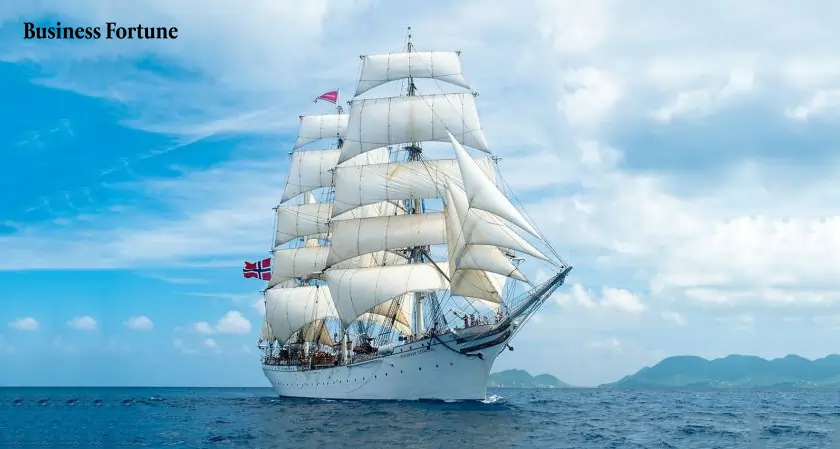
KONGSBERG research vessel technology equips NIOZ's new vessel with advanced tools to improve ocean research, climate studies, and marine discoveries.
The latest KONGSBERG research vessel technology is set to transform how scientists study the world's oceans. The Norwegian technology company has equipped the new RV Anna Weber-van Bosse, operated by the Royal Netherlands Institute for Sea Research (NIOZ), with a suite of advanced navigation, mapping, and sensing systems designed to gather detailed ocean data more efficiently than ever before.
The 80-meter research vessel was officially christened on the Dutch island of Texel and will serve as a floating laboratory capable of supporting up to 30 scientists on missions across the globe. From tropical waters to the edge of Arctic ice, the ship is built to help researchers better understand climate change, marine ecosystems, ocean circulation, and geological processes beneath the seafloor.
A Single Platform Designed for Smarter Ocean Research
One of the vessel's biggest advantages is its ability to collect multiple high-resolution datasets during a single survey. The ship features HiPAP acoustic positioning systems, EM304 and EM2040 multibeam echosounders, TOPAS sub-bottom profiling technology, advanced water-column echosounders, and Seapath inertial navigation systems.
Together, these technologies allow scientists to map the seabed, examine underground geological structures, monitor marine environments, and accurately track ocean changes without requiring separate survey missions. This integrated approach saves valuable research time while improving the consistency and quality of collected data.
“RV Anna Weber-van Bosse marks a step-change in the ability of NIOZ to undertake research that pushes the envelope of ocean understanding,” said Stene Førsund, VP Sales, Discovery Division at KONGSBERG.
Why Does This Vessel Matter for Climate and Ocean Science?
The world's oceans are changing rapidly due to rising temperatures, shifting currents, and increasing pressure on marine ecosystems. Understanding these changes requires precise measurements and long-term observation.
The RV Anna Weber-van Bosse has been designed specifically for this challenge. Equipped with sophisticated sensors, underwater robotics capabilities, and real-time data connections, the vessel enables researchers to observe ocean conditions with exceptional accuracy.
According to NIOZ's Department Head of Ocean Research, Gert-Jan Reichart, the vessel arrives at a critical moment when scientists need better tools to investigate environmental changes occurring across global oceans.
A Modern Replacement for a Trusted Research Ship
Named after pioneering marine biologist Anna Weber-van Bosse, the vessel replaces the Dutch research ship RV Pelagia. The launch also coincides with NIOZ's 150th anniversary, highlighting the institute's long-standing commitment to marine science.
By combining advanced mapping, navigation, and acoustic technologies into a single platform, the vessel offers a more efficient and sustainable way to conduct scientific missions. Researchers expect it to support groundbreaking discoveries for decades to come.
As Business Fortune observes, ocean challenges continue to grow and vessels powered by advanced technologies like those from KONGSBERG could play a crucial role in unlocking deeper insights into Earth's least explored environment and shaping future solutions for climate and marine conservation.
FAQs
What is RV Anna Weber-van Bosse?
RV Anna Weber-van Bosse is a new ocean research vessel operated by NIOZ, the Royal Netherlands Institute for Sea Research, designed to support advanced marine and climate studies.
What technologies has KONGSBERG supplied to the vessel?
KONGSBERG provided acoustic positioning systems, multibeam echosounders, sub-bottom profiling technology, water-column observation systems, and advanced navigation solutions.
What kind of research will the vessel conduct?
The vessel will support studies on climate change, ocean circulation, marine biodiversity, seabed mapping, and geological structures beneath the ocean floor.
How does the integrated technology improve research?
The systems allow scientists to collect multiple types of high-resolution data simultaneously, reducing survey time while improving accuracy and efficiency.
Why is the vessel important for future ocean exploration?
Its advanced tools enable researchers to better understand environmental changes, helping scientists and policymakers make informed decisions about ocean conservation and climate challenges.


.webp)































Comments