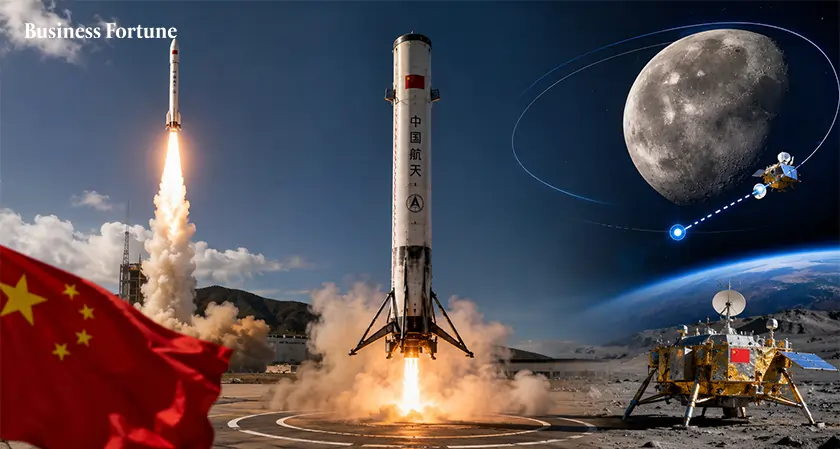
A China reusable rocket has successfully returned to Earth for the first time. Could this achievement help China challenge SpaceX and reshape the future of space exploration?
China has taken a major step toward the future of space travel. In a first for the country, it successfully recovered a reusable rocket booster after launching the Long March 10B rocket from Hainan Province. The booster safely returned to a recovery platform at sea, marking a key milestone for the China reusable rocket program. The achievement could help China lower launch costs, increase the frequency of missions, and strengthen its position in the rapidly evolving global space race.
A New Chapter Opens for China's Space Program
The Long March 10B lifted off from the Wenchang Commercial Space Launch Site carrying a payload known as CX-26. After separating from the upper stage, the booster guided itself back toward Earth and was successfully captured by a specialized net system mounted on a floating vessel in the South China Sea.
Unlike SpaceX's Falcon 9 or Blue Origin's New Glenn, which land vertically on platforms, China's rocket uses a unique recovery method. The booster is caught midair using landing hooks and a cable-supported net system. This approach reduces the need for heavy landing legs and helps preserve payload capacity.
"A historic day in China's space program," Chinese Foreign Ministry spokesperson Mao Ning said, describing the mission as a major leap toward reusable launch capabilities.
Why Does Reusability Matter?
For decades, rockets were designed to be used only once. After launch, valuable components were discarded, making space missions extremely expensive. Reusable rockets change that equation by allowing key hardware, especially boosters, to fly multiple times.
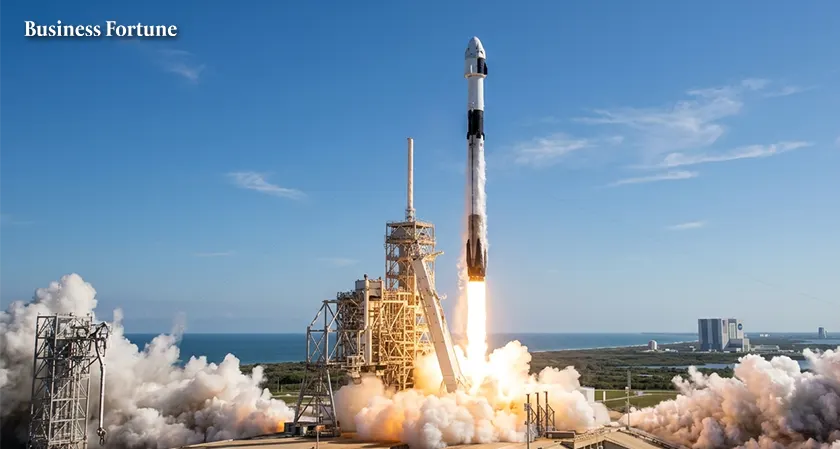
SpaceX demonstrated the benefits of this model in 2015, and today its Falcon 9 rockets perform frequent launches using reused boosters. China's successful recovery now places it among a small group of space powers capable of reusing orbital-class rockets.
Can China Catch Up With SpaceX?
That remains one of the biggest questions following this achievement. The Long March 10B can carry around 16 metric tons to low-Earth orbit, placing it in a similar category to Falcon 9. While China still trails the United States in launch frequency, reusable technology could dramatically increase its launch capacity over the coming years.
The news also improved investor confidence, with major Chinese space-related stocks reaching their daily trading limits after the announcement.
Looking Toward the Moon and Beyond
The successful recovery is more than a technological demonstration. As Business Fortune observes, China plans to use reusable rocket technology in future missions supporting its space station, satellite networks, and long-term goal of landing astronauts on the Moon by 2030. Engineers are already working on additional reusable launch vehicles, including larger rockets designed for lunar exploration.
If future tests prove successful, reusable rockets could help China lower launch costs, increase mission frequency, and accelerate its ambitions in both commercial and deep-space exploration.
FAQs
What is the Long March 10B rocket?
The Long March 10B is a medium-lift Chinese rocket capable of carrying approximately 16 metric tons of payload to low-Earth orbit.
Why is the China reusable rocket launch important?
It marks China's first successful recovery of an orbital-class rocket booster, reducing future launch costs and improving launch efficiency.
How does China recover its reusable rocket?
Instead of landing on a pad, the booster uses landing hooks and is caught by a net system attached to a floating recovery vessel.
How does the Long March 10B compare to SpaceX's Falcon 9?
Both rockets serve similar mission types, but Falcon 9 lands vertically while Long March 10B currently uses a net-capture recovery method.
What does this mean for China's future space plans?
The achievement supports China's goals for more frequent launches, expanded satellite networks, and future crewed missions to the Moon and beyond.


.webp)




























Comments