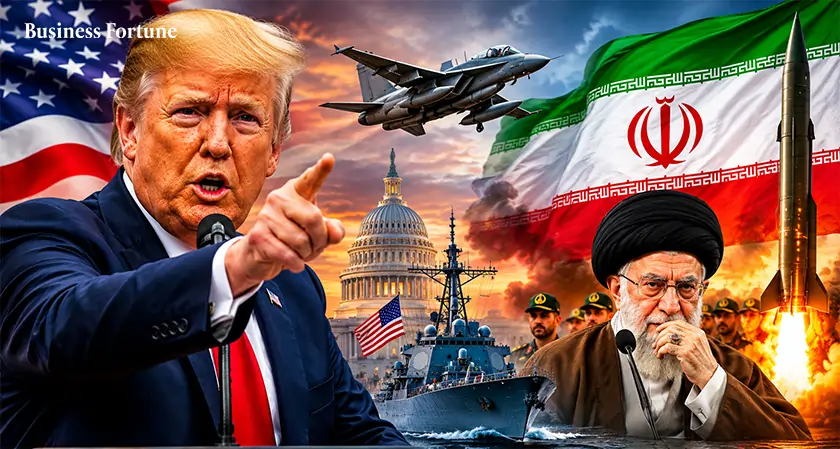
Washington and Tehran face fresh tensions over fund usage, with disagreements emerging after the recent interim agreement between both nations.
US warns Iran that it could face consequences if it fails to follow the terms of the interim agreement reached with Washington. U.S. President Donald Trump said on Monday, that he would “do what I have to do” if Tehran does not maintain its commitments under the deal.
The warning comes after Trump and Iranian President Masoud Pezeshkian signed an interim U.S.-Iran agreement last week, following months of military tensions involving the two countries, Israel, and regional allies.
Why is Trump warning Iran over the agreement?
Trump said the agreement allows certain Iranian funds to be unfrozen, but insisted the money should be used only for purchasing food from the United States. He claimed Iran’s large population is facing severe food challenges and said the released funds would benefit American farmers through exports.
However, Iranian officials disputed this interpretation, stating that Tehran is not required to purchase agricultural products only from the U.S.
Key points:
-
Trump demands strict compliance from Tehran
-
Frozen funds linked to humanitarian purchases
-
Iran rejects exclusive U.S. food purchase claims
-
Markets remain affected by regional tensions
What did Iran say about the use of released funds?
Trump warns Iran as Tehran pushes back against Washington’s interpretation of the financial arrangements. Iranian central bank governor Abdolnaser Hemmati, cited by semi-official Tasnim news agency, said Iran has no obligation under the memorandum of understanding to buy agricultural inputs from the United States. He added that remaining frozen funds could be used for other non-sanctioned goods, highlighting differences between both sides over the agreement’s terms.
The interim deal follows a period of intense conflict in which U.S.-Israeli attacks on Iran and Israeli strikes in Lebanon caused thousands of deaths and displaced millions. The conflict also disrupted global markets and contributed to higher oil prices worldwide.
Thus, Business Fortune is of the view that the U.S.-Iran agreement remains fragile amid disputes, requiring careful diplomatic engagement ahead.


.webp)