There are companies that grow in stable markets, and there are companies that are tested by history. Agrotrade belongs to the second category.
For more than two decades, the Ukrainian agro-industrial group built its business in the language of ordinary agriculture: land, crops, elevators, logistics, export contracts and long-term partnerships. Then came Russia’s full-scale invasion, and the language changed almost overnight. In Kharkiv region, one of Ukraine’s most important agricultural areas, fields became inseparable from mines, drones, air alerts, damaged infrastructure and the daily question of whether people and machinery could safely return to work.
Yet Agrotrade continued to sow, harvest, store, trade and export.
That is why the company’s wartime story is not simply a story of survival. It is a story about how a business can reorganize itself when the usual rules disappear. It is also a story about leadership — and about a founder whose path moved from the grain trade to the defense of the country.
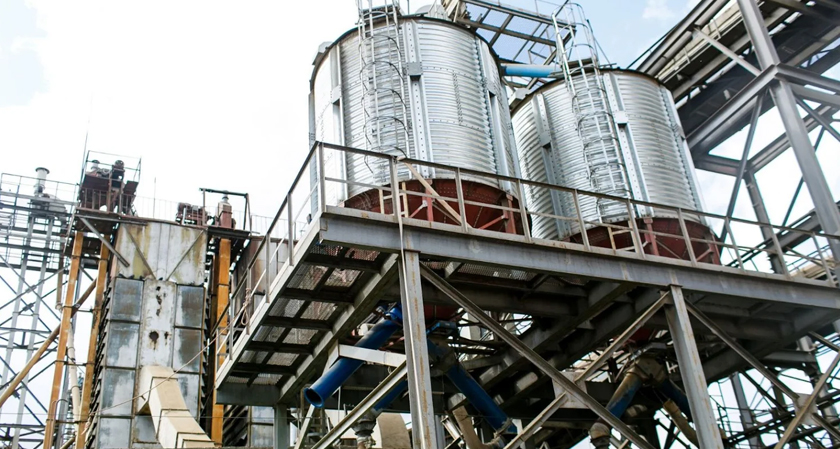
Founded in 1998 by Vsevolod Kozhemiako, Agrotrade grew from a trading business into a vertically integrated agricultural group. Today, according to the company’s official profile, it cultivates 70.5 thousand hectares of land, includes 17 agricultural enterprises united into six clusters, and owns nine elevators with total simultaneous storage capacity of 570,000 tons. Its core crops include corn, sunflower, wheat and soy, while its trading operations connect Ukrainian agricultural products with international markets.
Before 2022, these numbers spoke mainly of scale. After the invasion, they became something more fragile and more valuable: assets that had to be protected, reorganized and kept alive in wartime conditions.
Kozhemiako’s personal story gives this business case its deeper meaning. Public sources identify him not only as the founder and CEO of Agrotrade, but also as the founder of Khartiia, a volunteer formation that later became associated with the 13th Operational Brigade of Ukraine’s National Guard. The connection is symbolic, but it is also practical. In wartime Ukraine, the distance between the boardroom, the field and the frontline has become painfully short.
Agrotrade’s resilience cannot be explained by luck. It reflects a management culture shaped by pressure: fast decisions, disciplined logistics, careful use of resources, decentralized responsibility and the ability to plan under uncertainty. In normal times, agricultural management is built around weather, soil, prices, machinery and labour. In wartime Kharkiv, it must also account for mined land, shelling, blocked roads, fuel risks, power failures, mobilization and the physical safety of employees.
This is where Agrotrade’s model becomes important. It shows that food production near a frontline is no longer only an agronomic challenge. It is also a security challenge.
One of the greatest obstacles for Ukrainian farmers has been land contamination. Mines and unexploded ordnance can turn productive fields into dangerous, unusable assets. For an agricultural company, demining is not an abstract humanitarian issue. It is the difference between planting and abandoning land, between a harvest and a lost season, between local tax revenue and economic decline.
The company’s wartime approach, described in the case material, combines agricultural planning with remote monitoring, field risk assessment, cooperation with emergency services and the practical discipline needed to bring land back into production. In this new reality, agronomists must think not only about yield, but also about access, safety and timing. A field can no longer be treated as just a field. It is a working zone that must be evaluated, secured and managed.
The same logic applies to infrastructure. Elevators, fuel depots, machinery yards and storage facilities have become vulnerable in a war where economic infrastructure is often exposed to attack. For a grain company, protecting infrastructure is not only a corporate necessity. It is part of food security.
This is the essence of the “plow and shield” model. The plow represents production: the fields, the harvest, the grain, the taxes, the jobs and the exports. The shield represents everything that allows production to continue: security awareness, disciplined logistics, protected routes, rapid decisions and cooperation between civilian and defense realities.
Agrotrade’s results show that this model has had practical weight. In 2025, the company exported more than 333,000 tons of grain and oilseed crops. Part of that volume came from its own production, while another part came from third-party producers. The company’s key export destinations included Mediterranean markets such as Turkey, Egypt and Italy. For Ukraine, every ton exported under wartime conditions is more than a commercial transaction. It means functioning storage, working transport, documentation, buyer trust and a route to the global market.
The company has also continued to adapt its crop strategy. Its 2026 sowing structure focuses on crops such as sunflower, corn, winter wheat, winter rapeseed, soybeans, flax, barley, peas and industrial hemp. Agrotrade has also described a broader technological shift: reducing soil tillage intensity, moving toward direct seeding, reducing machinery passes, using cover crops and organic fertilizers, and developing Strip-Till technology to preserve moisture and protect soil.
These are not the decisions of a company waiting passively for peace. They are the decisions of a business rebuilding its operating model while pressure continues.
The fiscal dimension is also important. In 2025, Agrotrade reported paying almost UAH 202 million in taxes and fees, including a significant share to local budgets. In frontline and border regions, such payments are not just accounting figures. They help sustain communities, public services and the economic base of territories already carrying a heavy wartime burden.
Agrotrade’s story should not be turned into a simple corporate legend. Across Ukraine, thousands of farmers, drivers, mechanics, elevator workers, agronomists, logisticians, soldiers and local officials are keeping the country’s food system alive under extraordinary conditions. Many smaller producers face the same threats with fewer resources.
But Agrotrade offers a clear and visible case study of a wider Ukrainian reality: business continuity has become part of national resilience.
In peacetime, a company’s success is measured by growth, efficiency and market reach. In wartime Ukraine, success also means keeping people employed, keeping fields productive, keeping grain moving, keeping taxes paid and keeping communities from economic collapse. It means proving that even under pressure, the country can still produce, trade and feed the world.
That is why the story of Agrotrade matters beyond one company and beyond one region. It speaks to the role of business leadership in a country fighting for survival. It shows that resilience is not a slogan, but a system built from decisions repeated every day: whether to plant, whether to repair, whether to export, whether to stay.
The plow and the shield are no longer metaphors in Ukraine. They describe the operating reality of a country that must work and defend itself at the same time.
Agrotrade plants. Khartiia defends. Communities endure. Ukrainian grain continues to move to global markets.
And while war has changed the meaning of every hectare in Kharkiv region, it has not ended the harvest.
Company Information
Agrotrade Group is a Ukrainian agro-industrial group founded in 1998 by Vsevolod Kozhemiako. The company operates in crop production, grain trading, seed production, elevator services and processing. Its official profile lists 70.5 thousand hectares of land under cultivation, 17 agricultural enterprises united into six clusters, and nine elevators with total simultaneous storage capacity of 570,000 tons.
Agrotrade Group
31/35 Dmytrivska Str.
Kharkiv, 61012, Ukraine
Tel.: +380 (57) 766-22-22
Fax: +380 (57) 703-21-47
Email: office@agrotrade.ua
Website: agrotrade.ua


.webp)