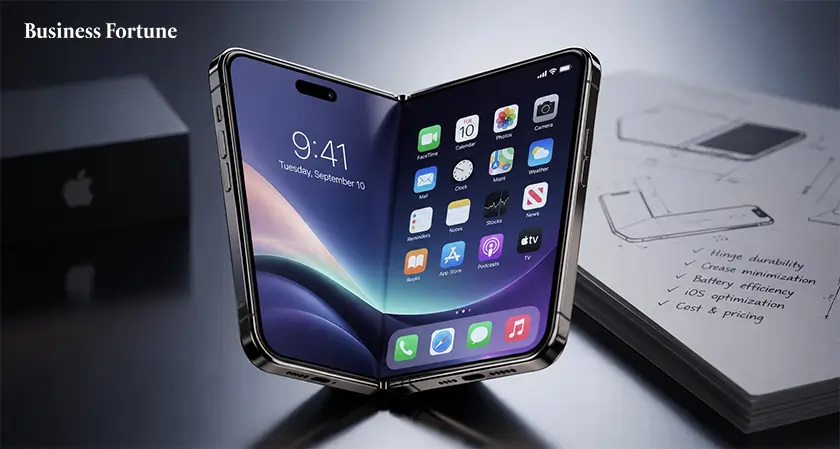
Samsung Display has begun mass production of OLED for Foldable iPhone panels after receiving Apple’s approval. While the display technology is ready, Apple’s foldable iPhone launch timeline may still depend on resolving key hinge challenges.
Apple’s long-rumored foldable iPhone appears to be taking a major step forward. Reports indicate that Samsung Display has officially begun producing OLED for Foldable iPhone models after receiving final approval from Apple. The move signals that Apple’s first foldable device, widely expected to be called the iPhone Ultra, is progressing from development into active production.
Samsung Display is reportedly preparing around 3 million OLED panels for Apple this year. The company will supply both the outer cover screen and the larger foldable inner display. Industry reports suggest Samsung will remain Apple’s exclusive supplier for these displays for at least the first three years of production.
A Major Supply Chain Milestone Has Been Reached
Apple’s approval is more than a routine step. Before any supplier can deliver components for an Apple product, it must prove that its manufacturing process meets strict standards for quality, performance, and production efficiency.
According to reports, Samsung achieved production yields above 80%, comfortably exceeding Apple’s reported minimum requirement of 70%. This achievement is especially significant because foldable displays are far more difficult to manufacture than traditional smartphone screens.
The OLED panels are also expected to use Samsung’s latest M16 OLED material set. This advanced technology promises:
-
Higher screen brightness
-
Better color accuracy
-
Improved energy efficiency
-
Longer display lifespan
These improvements could help Apple deliver one of the most advanced foldable displays seen in a smartphone.
Can Apple Solve the Biggest Foldable Phone Challenge?
While the display project appears to be on track, reports suggest another component could determine the launch timeline: the hinge. Apple is reportedly developing a specialized 3D-printed hinge designed to reduce the visible crease that often appears on foldable screens. However, industry sources claim the hinge still faces issues related to noise and stability.
If these challenges are resolved quickly, Apple could unveil the iPhone Ultra in September 2026. If not, the launch could slip later into the year.
Why Samsung Is Apple’s Only Foldable Display Partner
Apple usually works with multiple suppliers, but foldable displays are different. Samsung’s years of experience developing the Galaxy Fold series have given it a significant lead in durability, crease management, and manufacturing reliability. That expertise appears to have convinced Apple to rely solely on Samsung for this first-generation foldable device.
Looking Ahead
As Business Fortune sees, the advanced OLED technology already entered production and key components are nearing completion, hence the iPhone Ultra may become one of the most closely watched smartphone launches of 2026. If Apple succeeds in minimizing the display crease while maintaining durability, it could set a new benchmark for foldable devices and accelerate adoption across the entire smartphone market.


.webp)