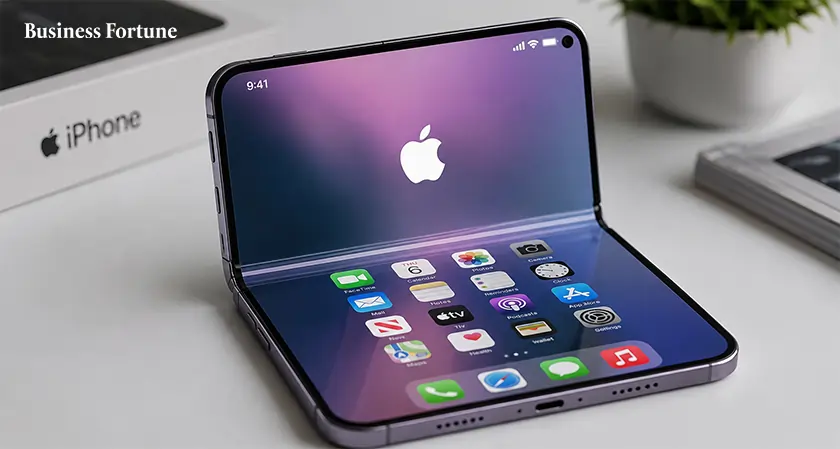
Apple’s first foldable iPhone and next-gen devices from Motorola, Huawei, Oppo, Xiaomi, and Nvidia point to a major shift in 2026, where smartphones and AI push design, performance, and battery limits further than ever before.
Smartphones are starting to bend, think, and even act like mini computers built for AI-heavy work. Apple is once again at the center of attention in the smartphone world. After years of speculation, foldable iPhone photos leak are getting more serious and they are already shaking up expectations for what premium phones will look like in 2026.
Is Apple finally ready to enter the foldable era
Apple is preparing its first foldable iPhone, often referred to as the iPhone Ultra. An image shared by tech leaker Ice Universe shows a White/Silver design with a solid build. Reports also hint at a vapor chamber cooling system, similar to Pro models.
Even more interesting is the hinge. Apple is reportedly testing a liquid metal mechanism that can bend repeatedly without losing shape. This could make the device thinner, lighter, and more durable.
Rumored features include:
-
50MP main camera and 10MP telephoto lens
-
5,000mAh battery
-
Touch ID support
-
Wide foldable design
-
Possible launch in September 2026 alongside iPhone 18 Pro series
Can mid-range phones still stand out in a crowded market
Motorola has introduced the Edge (2026) in the U.S. and Canada. The phone comes with a 6.3-inch display and a $600 price tag. A higher-end Edge 70 Pro model also joins the lineup.
Key highlights include:
-
7-inch OLED display
-
Dimensity 8350 chipset
-
6,000mAh battery with 90W fast charging
AI chips and laptops are getting a major upgrade
At Computex, Nvidia launched the RTX Spark platform. This Arm-based chip combines up to 20 CPU cores with Blackwell graphics, offering performance close to an RTX 5070. It supports up to 128GB unified memory and is designed for AI, gaming, and content creation. In collaboration with Microsoft, a new Surface Laptop Ultra is expected in autumn 2026, making it one of the most powerful Surface devices yet.
Smartphone cameras and batteries entering a new extreme phase
Huawei has launched the nova 16 Ultra in China, featuring a 200MP camera and a massive 7,000mAh battery. Meanwhile, Oppo showcased the Find X9 Ultra at the UEFA Champions League Final in Budapest, a major sporting event, highlighting its 50MP telephoto camera and Kirin 9010S chipset.
Xiaomi also refreshed its Poco X8 Pro lineup with a new Bold Yellow color option.
Battery split and future foldables
Reports suggest the upcoming iPhone 18 Pro may use different batteries by region. The China variant could carry a 4,056mAh battery, while the U.S. eSIM version may offer 4,288mAh capacity. Other foldable rumors point to titanium frames, vapor cooling and larger batteries, signaling Apple’s deeper push into premium foldables.
As Business Fortune observes, Phones are becoming camera powerhouses, laptops are turning into AI machines, and foldables are pushing new design limits. The real shift ahead will be less about incremental upgrades and more about devices that adapt to users, not the other way around.
FAQs
- When is Apple’s foldable iPhone expected to launch?
Reports suggest a possible launch in September 2026 alongside the iPhone 18 Pro series.
- What makes the liquid metal hinge important?
It can withstand repeated folding while staying light and durable, improving long-term device reliability.
- What is Nvidia RTX Spark used for?
It is designed for AI workloads, gaming, and content creation with high-performance CPU and GPU integration.
- What is special about the Huawei nova 16 Ultra?
It features a 200MP camera and a 7,000mAh battery, making it one of Huawei’s most powerful mid-premium phones.
- Why is the Oppo Find X9 Ultra notable?
It was showcased at a major global football event and highlights advanced camera and chipset performance.


.webp)