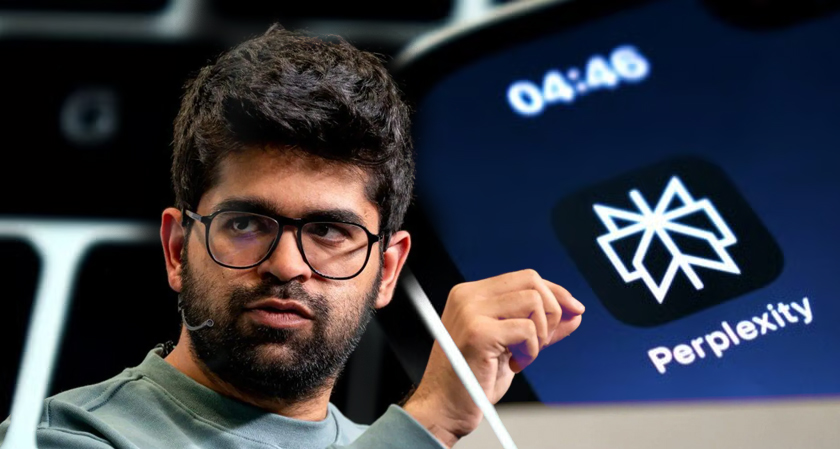
Perplexity CEO Aravind Srinivas says AI may shift from big data centers to on-device processing, boosting privacy, reducing costs, and putting computing power directly in users’ hands.
Big tech firms such as Google, Meta, Microsoft, OpenAI, and Perplexity are investing billions of dollars in data centers. Perplexity CEO Aravind Srinivas believes that the future of AI will be on smartphones rather than enormous cloud data centers. According to Aravind Srinivas, the future of artificial intelligence will be driven by locally operated on-device AI models.
Data centers and the industry, which is now producing more RAM and storage to meet the high demand, are under a lot of stress due to the massive AI push. However, there is another way to make AI function that is connected to on-device AI processing, which is already supported by high-end devices. Since all AI data can be handled privately on the device rather than being sent to another server for processing, Aravind Srinivas, CEO of Perplexity, believes that will pose the greatest threat to conventional data centers.
What he meant was that the future of AI may not be in the cloud data center, which implies that the massive, energy-hungry data centers for which tech giants pouring billions of dollars may become irrelevant. The Perplexity CEO stated that power would sit in the pockets of the users, driven by on-device silicon capable of running advanced large language models.
In a podcast with Prakhar Gupta on YouTube, Srinivas spoke highlighting the scope for AI to boom but without the assistance of data centers in the near future. The biggest threat to a data center is if the intelligence can be packed locally on a chip that’s running on the device, and then there’s no need to run inference on all of it on one centralized data center, he said.
To handle customer inquiries, AI chatbots like ChatGPT, Gemini, Perplexity, and others rely on enormous servers located in data centers. In addition to using a lot of power, these facilities need ongoing maintenance and rely largely on water to keep their machinery cool.
According to Aravind Srinivas, if AI processing moves to devices themselves, these data centers which are mostly supported by IT companies may become considerably less important. The tech tycoon claims that operating models locally will greatly enhance user privacy by storing data on the device in addition to reducing power and maintenance expenses.

.webp)