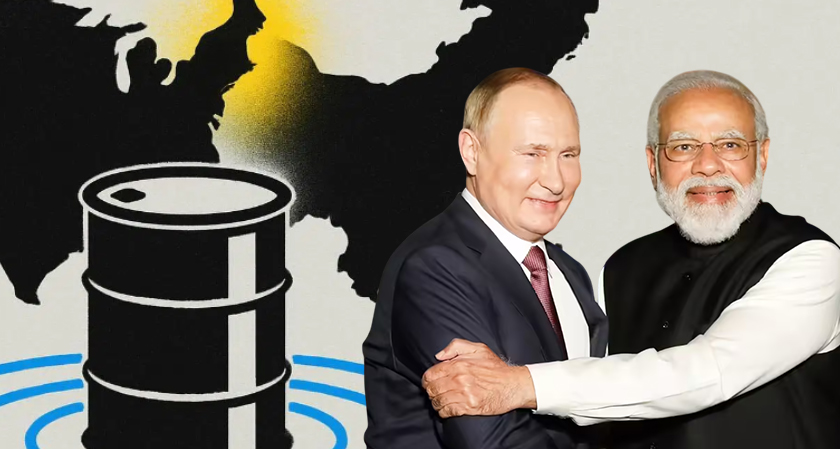
With trade, defense, and nuclear agreements on the agenda, Putin's visit puts India's delicate balance with the West to the test.
Upon Russian President Vladimir Putin visit to India, on December 4–5, India denied concerns about the ICC arrest warrant. It pointed out that India is not an ICC signatory. Tensions are raised by Putin's first visit since the conflict in Ukraine in 2022. New Delhi is balancing relations with Russia and the West in oil, defense, nuclear cooperation, and mobility accords. Criticism from French, German, and U.K. envoys before the visit was met with modest MEA pushback. Russia’s ambassador framed it as a war for Indian public opinion.
India’s Russian oil imports surged from under 2% before the Ukraine war to over 40% last year. This jump propelled bilateral trade from $10 billion to $68.7 billion in 2024–25. The $100 billion trade objective is now uncertain. India recently reduced Russian oil purchases under U.S. sanctions, which pleases the West. However, this risks criticism from Moscow and local sources.
Particularly in light of U.S. tariffs on Indian exporters, India and Russia intend to diversify trade with new Russian commodities and increase Indian exports of food, clothing, and machinery via the Eastern Maritime Corridor from Chennai to Vladivostok. It is also anticipated that the India-EAEU FTA will move further.
A labor mobility pact will be highlighted during the visit on December 5, 2025, providing Indian workers with opportunities, as Russia will have a lack of 3.1 million jobs in manufacturing, technology, and construction by the end of the decade.
The Western world is closely monitoring India's visit to Russia because of the delicate nature of military agreements. The U.S. has previously threatened CAATSA sanctions over India’s S-400 purchase, and any new agreements could risk additional penalties, unlike past cases where India was spared while Turkiye and China faced sanctions. Additionally, India is looking into purchasing locally made fighter jets and missiles, particularly after Operation Sindoor, which may have an impact on U.S. defense interests.
Russia remains the only country prepared to exchange extremely sensitive technologies, making transfers important. With the Russian Duma approving the RELOS military logistics treaty, closer defence and geopolitics links and joint drills – previously challenged by the EU – are likely.
Nuclear cooperation is another delicate issue under CAATSA. In response to PM Modi's advocacy of nuclear power, Parliament intends to modify the Civil Liability for Nuclear Damage Act. The DAE acknowledged negotiations with Rosatom on December 3 on five domestic Small Modular Reactors, a project that France and other EU countries are also pursuing.
India must balance appeasing Russia while reducing Western criticism.


.webp)