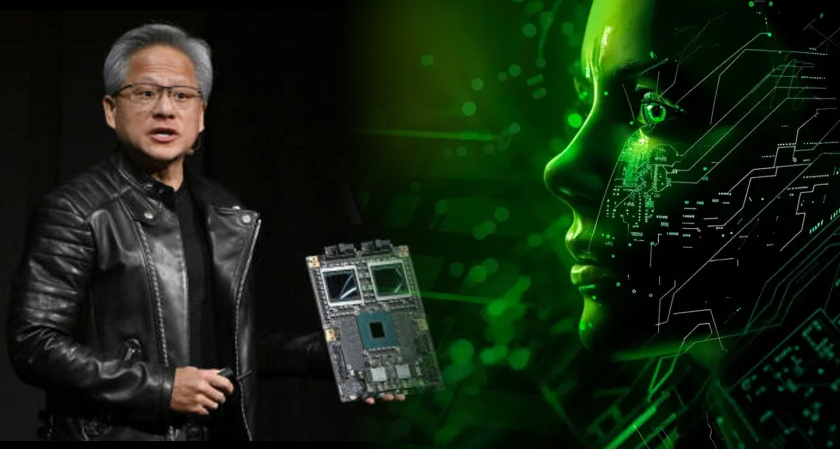
Even as Meta's TPU move fuels investor anxiety and a decline in Nvidia stock, Google Cloud CEO Thomas Kurian denies accusations of an AI chip rivalry, characterizing Google–Nvidia ties as collaborative.
The idea of a “chip war,” in which Nvidia's hegemony is threatened by specialized AI chips like Google's Tensor Processing Units (TPUs), has been openly refuted by Google Cloud CEO Thomas Kurian. Kurian's remarks follow a tumultuous week in which the announcement of Facebook's parent company collaborating with Google to train its Llama AI models on the search giant's proprietary silicon ripped billions from Nvidia's market worth.
According to a Fortune story, Kurian dismissed the notion that the emergence of custom chips is a “zero-sum game” and described the connection between Google and Nvidia as cooperation rather than a rivalry. According to Kurian, individuals working on AI infrastructure have access to a wide variety of chips and systems tailored for various models. He pointed out that Google is still making improvements to its Gemini models for Nvidia GPUs, including enabling them to operate on Nvidia clusters.
Nvidia responded by commenting on the collaboration between Google and Meta. Nvidia refuted the claim that Google had superior processors, maintaining that its GPUs are still “a generation ahead of the industry” despite the growing popularity of Google's proprietary AI chips.
Nvidia's stock fell 3% as a result of the development, which increased investor and analyst anxiety. The company stated in a post following the news of the Google-Meta alliance that they are thrilled with Google's success and that they have achieved significant advancements in AI and continue to provide Google. Being the only platform that runs every AI model and performs it anywhere computing is done, NVIDIA is a generation ahead of the industry. Compared to ASICs, which are developed for certain AI frameworks or functions, NVIDIA offers better performance, adaptability, and fungibility.
Notably, hyperscalers like Google and Meta are increasingly considering “mixed chip infrastructures” to strike a compromise between raw performance and cost-effectiveness, even if Nvidia still has more than 90% of the AI chip market.


.webp)