AI has been utilized in the past to comprehend and suggest information. Generative AI can now assist us in producing original content. Large language models (LLMs), which are trained on vast volumes of text to anticipate the next word in a phrase, are one example of an existing technology that is expanded upon by generative AI. For instance, "jelly" is more likely to come after "peanut butter and ___" than "shoelace". In addition to producing fresh text, generative AI may also produce graphics, movies, and audio. Discover the innovative ways that Google teams are using generative AI to produce new experiences.
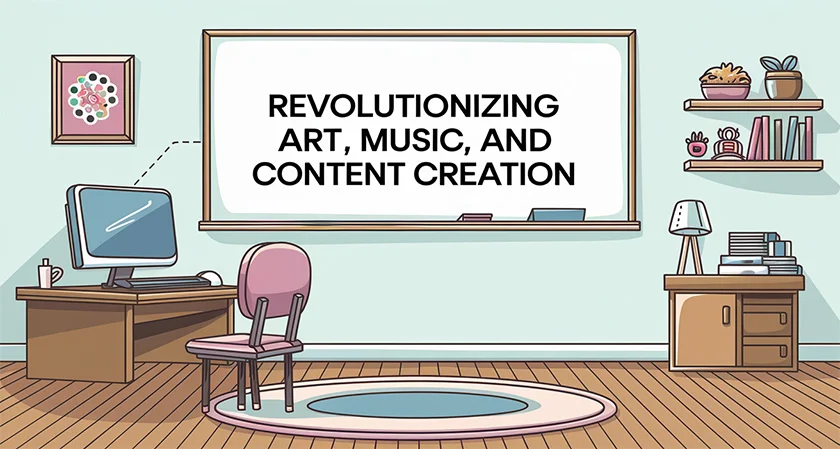
Generative AI: Revolutionizing Art, Music, and Content Creation
Because generative AI allows computers to produce code, music, artwork, content, and emotional support, it has completely changed the IT sector as well as every other business. In the twenty-first century, artificial intelligence techniques have made it possible to successfully complete nearly any human work.
Introduction to Generative AI
Artificial intelligence that can produce text, graphics, and other kinds of material is known as AI-generated art. Its democratization of AI—anyone may utilize it with as little as a text prompt or a sentence written in natural language—makes it an amazing tool. To achieve anything valuable, you don't need to learn a language like Java or SQL; all you need to do is speak your language, specify what you want, and an AI model will provide a proposal. This has enormous applications and an influence since it allows you to generate or comprehend reports, develop apps, and much more in a matter of seconds.
Another name for it is generative adversarial networks (GANs), which are a branch of artificial intelligence that concentrates on producing fresh, unique material. In order to create new data based on patterns and examples from previous data, machine learning in creativity model must be trained. Generative AI may be used to produce original and inventive works of Digital art, designs, and even music in the context of art and design.
Generative AI in Art
When it comes to Generative design and art, AI-generated art has several benefits. First of all, by giving them fresh concepts and inspiration, it may assist designers and artists in getting beyond creative obstacles. Because the algorithms may produce a vast array of options, artists are free to experiment and explore new avenues.
Second, by automating some steps in the creative algorithms, generative AI can assist save time and effort for artists. For instance, generative AI algorithms in graphic design enable artists to rapidly iterate and improve their work by producing several versions of a generative design based on a set of criteria.
Generative AI does, however, have inherent limits in the fields of design and art. The fact that algorithms are only as accurate as the data they have been taught on is one of the primary obstacles. The resulting output might be biased or lack diversity if the training data was skewed or had a narrow scope. This may result in less inventiveness and uniqueness in the created designs or artwork.
A Few Groundbreaking Uses of AI-generated art in the Creative Sector:
-
The renowned AI picture "Edmond de Belamy" brought in $432,500 at Christie's auction. The world can benefit from artificial intelligence, as demonstrated by this remarkable achievement that pushes the field to new heights.
-
DeepDream is a computer vision application that uses various creative algorithms to produce hallucinogenic pictures.
Generative AI in Music
Pattern recognition is how generative AI in music production finds patterns in already-existing musical data. It then creates new music with a similar sound by using these patterns. In addition, AI systems may be trained to generate music that is in sync with the styles of certain performers.
AI music compositions are capable of producing a vast variety of music, including modern and classical genres. It is capable of producing music in a variety of moods, including melancholy and joyful. It may also produce anything from basic loops to whole songs by combining different instrumentation techniques.
The use of this innovative technology in music creation has several benefits. The primary benefit is in helping musicians rapidly and easily come up with fresh musical ideas. This can be especially beneficial for artists who are trying to experiment with new musical genres or who are having writer's block.
Additionally, AI music composition can assist musicians in creating more individualized and customized songs to suit their own interests and preferences. For example, artificial intelligence systems may be trained to produce fresh content according to each individual's taste or style of music.
A Few Groundbreaking Uses of Generative AI in music production
-
Artificial intelligence-generated recordings featuring the genres of jazz and classical music have been produced by OpenAI's MuseNet. This provides fresh and imaginative compositions for a range of uses.
-
Suno AI is an AI platform for creating music videos that produces melodies and songs that sound authentic. With the help of this program, users may write lyrics for their songs and instantly create realistic, catchy music with a single click.
Generative AI in Content Generation
A formidable area of artificial intelligence called "generative AI" has enormous promise to address a wide range of problems that businesses around the globe are facing. It is capable of producing new material rapidly using a range of multi-modal inputs. These models may take text, photos, video, music, animation, 3D models, and other kinds of data as inputs and outputs.
Both major corporations and startups may quickly extract knowledge from their private databases by using generative AI. For instance, you may create unique apps that expedite the creation of content for internal creative teams or external clients. This might involve producing on-brand films that fit the story of your company or summarizing source information to create fresh images.
Simplifying the creative process is one of the main advantages. Additionally, generative AI offers extensive information that helps you identify underlying patterns in your processes and datasets. Companies can replicate difficult scenarios and lessen model bias by adding more training data. In today's fast-paced, dynamic industry, this competitive edge creates new avenues for optimizing your current creative workflows, enhancing decision-making and increasing team productivity.
Several Groundbreaking Uses of Generative AI in Content Generation:
-
With the ability to write news articles, develop creative marketing campaigns, and even write the screenplays for films and TV shows, tools like GPT-4 and ChatGPT 4o have revolutionized the creation of content. These tools demonstrate how artificial intelligence can support and improve content strategy.
-
Many video generating applications allow users to create realistic-looking films with simple text inputs. For example, Synthesia, Steve.AI, Veed.IO, and several more technologies produce inventive and lifelike videos that simultaneously create new avenues for creativity and chances.
Conclusion:
Anyone can now more easily communicate their ideas thanks to generative AI, which is revolutionizing the way we produce music, art, and entertainment. For authors, singers, and painters, the possibilities are unlimited since computers can now create original, creative creations. Creativity is no longer constrained by knowledge or ability thanks to instruments that only need a brief stimulus.
It's critical to be aware of generative AI's limitations, like as bias in training data, as it develops. But the advantages—like time savings and creative inspiration—are changing the creative industry. Generative AI is here to stay, opening doors to a more creative future through its ability to create captivating images and melodies. Accept this fascinating technology and see how it might improve your artistic endeavors!
FAQ:
-
What is Generative AI, and how does it work?
AI that generates new material by utilizing preexisting data is known as generative AI. According to the patterns it detects, it generates outputs using techniques similar to neural networks.
-
How is Generative AI used in Digital art and music creation?
It inspires original ideas and helps artists get beyond creative hurdles. In music, it creates creative compositions by dissecting the structures and genres of already-written songs.
-
What are the ethical concerns surrounding Generative AI?
Copyright violations, prejudice in content generation, problems with authenticity, and the possibility of abuse—such as fabricating false information or deepfakes—are some ethical concerns.
-
Can Generative AI replace human creativity?
No, because generative AI lacks human experience and emotional depth, it cannot completely replace human creativity. It serves as an instrument to stimulate and advance human creativity.
-
What does the future hold for Generative AI in creative industries?
Future prospects are bright, as generative AI is expected to improve teamwork, optimize processes, and stimulate creativity in music, art, and video production.


.webp)