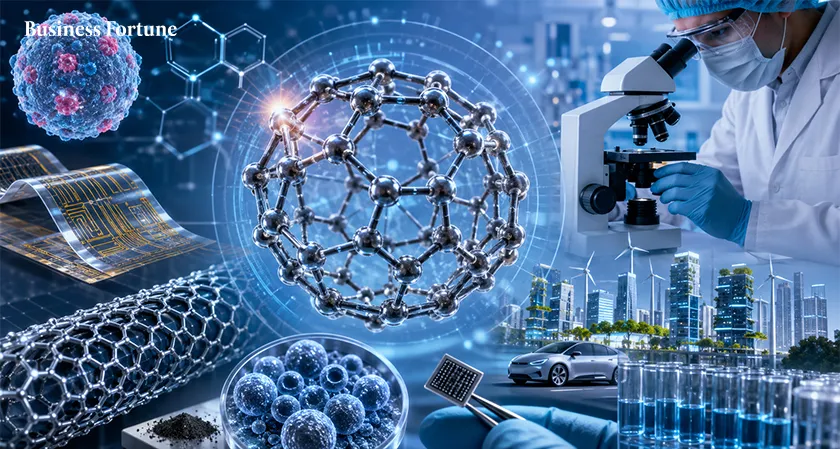
Nanotechnology in medicine uses tiny components and tools to transform medical practice. By utilizing nanoparticles and medical nanodevices for focused therapy and diagnosis, it provides targeted drug delivery, sophisticated illness detection, and cutting-edge treatments. Using lab-on-a-chip technology and biosensors, nanotechnology in healthcare has also made it possible to diagnose diseases more quickly.
Nanotech in Medicine: Revolutionizing Drug Delivery & Diagnostics
The field of medicine is constantly improving because to nanotechnology. These days, advances in nanotechnology are widely applied to improve the effectiveness and lessen the side effects of therapeutic and diagnostic procedures, leading to the emergence of new multidisciplinary scientific and technical domains.
In order to ensure access to specific molecules, mediate specific molecular interactions, detect changes in molecules of interest, or move diagnostic and therapeutic agents through biological barriers, nanotechnological solutions are being used within surgery, analytics, dentistry, dermatology, neuroscience, and various other branches of medicine.
The Impact of Nanotechnology on Modern Medicine
With its ability to manipulate matter at the atomic level, nanotechnology innovations holds considerable potential for revolutionizing many aspects of medical care, including pharmaceutical distribution, regenerative medicine, equipment operation, diagnosis, and disease monitoring.
What is Nanomedicine?
The branch of medicine known as "nanomedicine" uses small particles, or "nanoparticles," to identify and cure medical conditions. The notion of nanotechnology innovations was initially established by physicist Richard Feynman in 1959, and that is when the evolution of nanomedicine began. The word nanotechnology was first used in 1974 by Norio Taniguchi, a scientist from Japan.
The first nanomedicines emerged in the 1990s as a result of the medical nanodevices field. Scientists concentrated especially on creating nanoparticles to enhance medication delivery. For instance, medications can be delivered right to specific kinds of tissue using nanoparticles since they can be designed to target particular cells in the body.
The creation of diagnostic instruments and nanoparticle-based imaging methods has added to the growing field of nanomedicine over time. These instruments can aid in the earlier detection of diseases and the more precise tracking of disease progression.
Nowadays, the subject of nanomedicine is expanding quickly and revolutionizing healthcare. The broad application of nanoparticles within medicine in the near future could lead to more accurate and focused treatment choices for a number of diseases, as well as better diagnostic accuracy.
Definition and Overview
"The monitoring, repair, building, and control of human organisms at the molecular level, utilizing engineered medical nanodevices and nanostructures" is the definition of nanomedicine. As a result, nanomedicine applies the ideas of manipulation and assembly at the nanoscale to clinical applications in the medical sciences.
The use of nanoscale technology in the field of medicine is known as nanomedicine. It is utilized to better understand the intricate underlying mechanisms of disease as well as for the diagnosis, treatment, and prevention of illness. While nanotechnology is a well-established field, commercial nanomedicine is still in its infancy, with a wide range of ideas, theories, and concepts as well as developing clinical equipment.
Key Developments in Nanomedicine
Many nanomedicines have been created and used to treat various diseases, with cancer treatment receiving special attention. Nanomedicine has been applied recently to a number of cutting-edge sectors, such as tissue engineering, immunotherapy, vaccinations, diagnosis, and gene transfer.
Revolutionizing Drug Delivery with Nanotechnology
In order to deliver the bioactive chemical, a nanoparticulate drug delivery system should ideally both selectively accumulate in the needed organ or tissue and simultaneously penetrate target cells. It has been proposed that intracellular delivery may be facilitated by specific ligands or cell-penetrating peptides, whilst organ or tissue accumulation may be accomplished through passive or antibody-mediated active targeting. As a result, a drug delivery system (DDS) must to be multipurpose and able to turn on and off specific features as needed.
Targeted Drug Delivery System
In addition to the adverse effects of the delivered pharmaceuticals, the use of big sized materials in targeted drug delivery presents a number of difficulties, such as low bioavailability/solubility/absorption, problems with target-specific delivery, and in vivo stability. Therefore, one way to address these important problems may be to use novel drug delivery techniques that allow medications to be targeted to a particular location within the body.
The most exciting currently available anticancer treatment has poor water solubility; this can be fixed by successfully manipulating nanomaterials to produce a novel drug-delivery system that will boost the drugs' effectiveness.
Reducing Side Effects and Increasing Efficacy
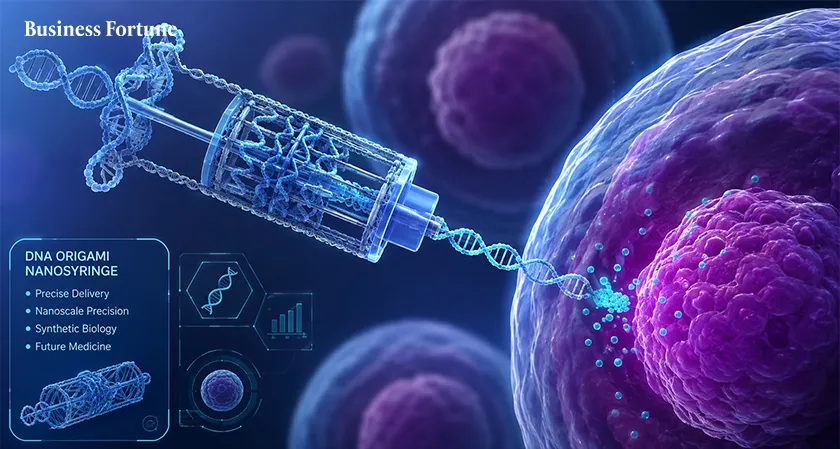
Drug delivery systems have been greatly enhanced by nanoparticles, which enable the precise and regulated release of pharmaceuticals. This may increase the effectiveness of medication therapy and lessen their adverse effects. Drugs encapsulated in nanoparticles maximize their therapeutic benefits by preventing degradation, delivering the medication straight to the target region, and releasing it gradually.
The field of nanomedicine has advanced to a new level, revolutionizing targeted drug delivery and offering enormous promise for better patient outcomes. Healthcare providers may now accurately manage the dose and timing of medication release, resulting in more individualized and successful treatment plans, by utilizing drug delivery systems based on nanoparticles.
The Role of Biocompatible Nanoparticles in Healthcare
The synthesis of biocompatible nanoparticlesaims to improve immunological response, lessen gastrointestinal tract side effects, and lower toxicity. Organs and tissues are targets for nanomaterials. Nutraceuticals and functional foods have been shown to interact well with biocompatible nanoparticles.
Many tasks are carried out without causing harm, including the detection of viruses and toxins, the creation of biocompatible packaging, the improvement of color, flavor, and scent, the processing of edible film, and the identification of the authenticity of food products. A comprehensive analysis of nanoparticles' biocompatibility is presented in this review.
Future Prospects of Nanomedicine
Materials in the nanoscale category are used as diagnostic instruments or to deliver therapeutic compounds to specific targeted locations in a controlled manner in the relatively young field of nanomedicine & nano delivery systems. Through the administration of precise medications that are targeted and site-specific, nanotechnology innovations provides numerous advantages in the treatment of chronic human diseases. Chemotherapeutic agents, biological agents, immunotherapeutic agents, and other exceptional uses of nanomedicine have been observed recently in the treatment of a wide range of illnesses.
This review provides an updated overview of recent developments in the field of nanotechnology and nano-based drug delivery systems by carefully examining the discovery and use of nanomaterials to enhance the effectiveness of both new and old medications (such as natural products) and to enable targeted diagnosis using disease marker molecules. There is also discussion of the advantages and disadvantages of using nanomedicines for the delivery of drugs from synthetic or natural sources to clinical settings.
Conclusion:
The use of nanotechnology in medicine is changing the field by facilitating more accurate drug delivery and enhancing diagnostic capabilities. Doctors can directly target therapy regions in the body with the use of microscopic particles, or nanoparticles, which decreases adverse effects and boosts therapeutic efficacy. Particularly in fields such as cancer treatment and disease detection, this novel technique has demonstrated considerable promise.
We may anticipate even more a development in nanomedicine as research goes on, which will improve patient outcomes and allow for more individualized treatment regimens. Targeted therapies hold great potential for improving the diagnosis and treatment of a wide range of diseases, thus the future appears bright. All things considered, nanotechnology will be extremely important to the delivery of healthcare in the future.
FAQ:
-
What is nanotechnology’s role in drug delivery?
It makes it possible to deliver drugs precisely to the right cells or tissues, increasing their efficacy and reducing their negative effects.
-
How does nanotechnology improve disease diagnostics?
Diagnostic test sensitivity and accuracy are increased by nanotechnology innovations, enabling earlier disease detection and more accurate disease monitoring.
-
What types of nanoparticles are commonly used in Medical applications?
Liposomes, dendrimers, gold, silica, and polymeric nanoparticles are examples of common nanoparticles.
-
Are there any risks associated with nanomedicine?
Toxicology, unclear long-term effects, and difficulties standardizing and regulating nanoparticles are some potential hazards.
-
What are theranostics, and how do they benefit healthcare?
By integrating therapy and diagnostics into a single method, theranostics enhances patient care overall by enabling individualized therapies and real-time monitoring of therapy efficacy.


.webp)