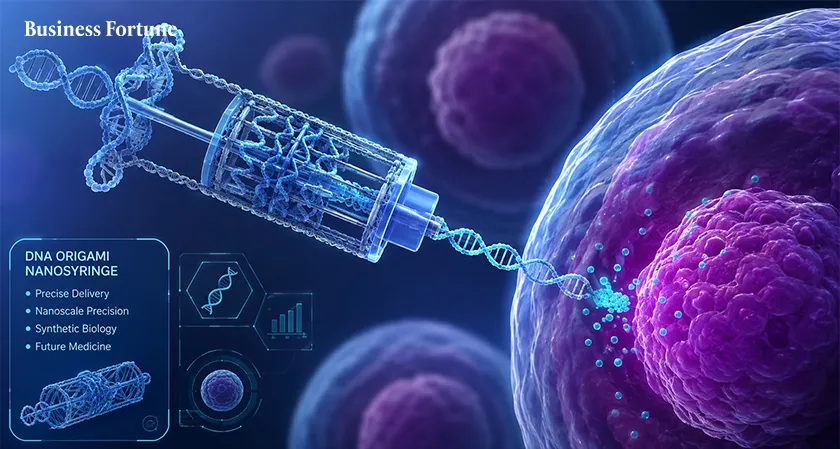
Traditional medicine often has widespread effects on the body, even in areas where it is unnecessary or potentially harmful, regardless of the method of administration.
However, what if the delivery could be made precisely where it was needed? This would minimize side effects by enabling a drastic reduction in the total dose.
US scientists have now managed to refine a promising, new technique that accomplishes precisely that. They have made a new protocol that makes the procedure safe and effective for the first time, paving the way for human trials. Molecular Biosciences Frontiers publishes the findings.
Nanocarriers are small droplets with a shell made of hollow polymer molecules. They have a size range of 470 to 550 nanometers. Polymers have two ends: one is hydrophilic and faces outward, easily mixing with water-based solutions like blood, while the other end is hydrophobic, facing inward and not mixing with water.
A hydrophobic medication is mixed with hydrophobic perfluorocarbons inside a shell. The shell acts as a barrier against the immune system, preventing the medication and the perfluorocarbons from combining. This process is similar to how mayonnaise is made. The medication is released with ultrasonic waves at a frequency of 300 or 900 kilohertz, targeting a small area of the body.
Perfluorocarbons expand due to ultrasound, increasing the droplet's permeability to medication, which diffuses into organs. Propofol was used to test this with three perfluorocarbons: PFP, DFP, and PFOB. Ultrasonography was applied to the nanodroplets in bursts.


.webp)