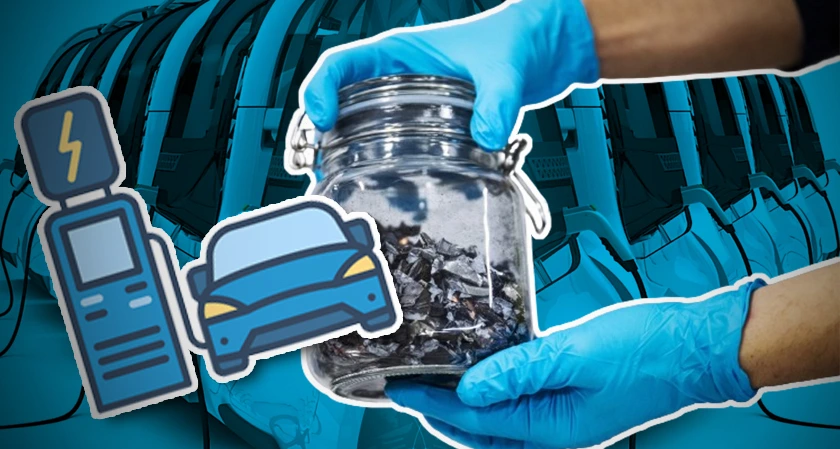
Electric vehicle manufacturers are preparing for the start of Chinese export restrictions on graphite, a vital component of EV batteries, on Friday.
A license is needed to export certain types of graphite, both natural and synthetic, and China has the world's largest supply of both. The action is mostly interpreted as Washington's attempt to stifle Beijing's aspirations to establish its own sophisticated semiconductor industry in reaction to American restrictions on the export of advanced chips and chip equipment to China.
Businesses and governments alike are eager to learn how Beijing will carry out the limitations, as much of the damage will depend on how it does so. Efforts are being made to reduce reliance on China for graphite and other "green energy" resources, from Seoul to Tokyo to Washington.
The majority of the world's supply of graphite, including almost all of the premium graphite used in EV products, comes from China. As businesses used China's plentiful resources and relatively cheap labor to get battery ingredients, they consolidated their leading position. As the manufacture of electric vehicles expanded a few years ago, concerns about China's monopoly on supplies began to surface. At that point, South Korea, Japan, and the United States were significantly dependent on China for their graphite needs.
According to Beijing, the restrictions are in place to safeguard national security.
But just as America can use its control over some cutting-edge chip technologies, China can use its near-monopoly on the international market for industrial-use graphite to its advantage in the ongoing trade conflicts with the United States.


.webp)