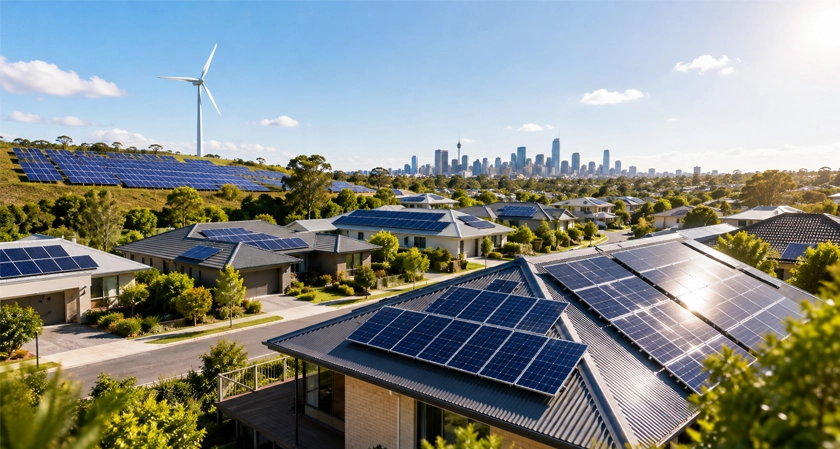
Australia expands solar incentives, boosting commercial rooftop adoption with a 1MW SRES eligibility cap from October 2026.
Australia’s federal government has announced a major Small-scale Renewable Energy Scheme expansion, increasing the eligibility cap for solar installations from 100kW to 1MW from October 2026. The move is expected to reduce commercial and industrial rooftop solar costs by around 20%, helping businesses, regional communities and medium-density housing access more affordable renewable energy solutions.
SRES Expansion Targets Commercial Solar Growth
The expanded Small-scale Renewable Energy Scheme will allow larger commercial and industrial solar projects to generate small-scale technology certificates. These certificates are purchased by energy companies, creating a market-based incentive that supports solar investment without adding significant costs to government budgets.
Key highlights of the policy include:
- Solar eligibility cap increased from 100kW to 1MW
- Commercial solar installation costs expected to decline significantly
- Businesses gain improved access to renewable incentives
- Regional communities benefit from affordable clean energy
- Medium-density housing receives greater solar opportunities
According to Climate and Energy Minister Chris Bowen, the program will assist reduce energy costs a variety of sectors, including industry, retail, transportation, logistics, and agriculture. The government believes lower electricity prices will boost corporate competitiveness and provide wider economic advantages.
Addressing Australia’s Commercial Solar Gap
Australia has one of the world’s strongest residential rooftop solar markets, with solar panels installed on around one-third of homes. However, commercial and industrial solar adoption remains behind its potential.
Businesses have only installed 5.6GW of rooftop solar, despite an estimated technical potential of up to by 2050, according to research from the Institute for Energy Economics and Financial Analysis. Unused rooftop capacity in industries, warehouses, farms and community facilities is the goal of the extended renewable energy program.
The government has also highlighted the “missing middle” in Australia’s renewable energy transition, referring to projects that fall between household solar systems and large-scale utility developments.
Faster Approvals and Broader Renewable Support
Alongside the SRES expansion, the government will request the Australian Energy Market Commission to improve approval processes for commercial and industrial solar connections. Faster network approvals are expected to remove barriers preventing businesses from installing larger solar systems.
Additional renewable energy policies, including the Solar Sharer Offer launched in July 2026, are designed to distribute the benefits of excess solar generation among households that cannot install rooftop panels.
The Clean Energy Regulator has also increased compliance monitoring within the SRES framework, suspending solar companies that failed to meet installation and reporting requirements.
Australia’s solar generation growth continues to strengthen, with increased utility-scale capacity and rising renewable output supporting the country’s clean energy transition.
Business Fortune believes that Australia’s expanded renewable incentives could accelerate commercial solar adoption and strengthen markets.
FAQs
What is the Small-scale Renewable Energy Scheme expansion in Australia?
The Small-scale Renewable Energy Scheme expansion increases the eligible solar installation limit from 100kW to 1MW, allowing larger commercial and industrial projects to access incentives.
Why has Australia expanded the Small-scale Renewable Energy Scheme?
The expansion aims to reduce commercial solar costs, encourage renewable energy adoption, and unlock unused rooftop solar potential across businesses and communities.
How will businesses benefit from the expanded SRES program?
Businesses can receive greater financial support for rooftop solar installations, helping lower energy expenses and improve operational competitiveness.
Which sectors are expected to gain from larger solar incentives?
Manufacturing, agriculture, retail, transport, logistics, warehouses, and community facilities are among the sectors expected to benefit from improved solar access.
How does the SRES expansion support Australia’s clean energy goals?
By encouraging more commercial and industrial solar projects, the expanded scheme supports renewable energy growth and helps accelerate Australia’s transition toward cleaner power generation.


.webp)































Comments