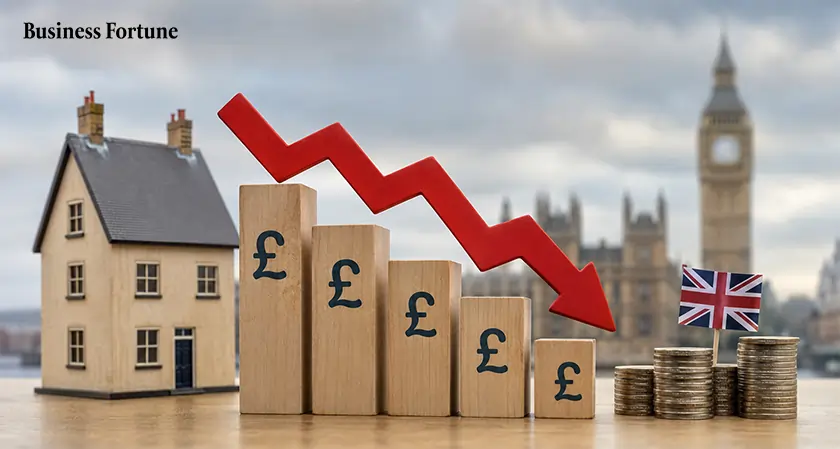
As rate expectations change, UK house prices grow more slowly, and as mortgage costs and conditions change, concerns about affordability lessen.
UK house prices increased 2.2% annually in June, below market expectations, while monthly prices remained unchanged, according to mortgage lender Nationwide. The latest UK house prices data highlights a cooling property market as higher energy costs and uncertainty over future interest rates affected buyer confidence.
However, softer expectations for further rate increases by the Bank of England could improve mortgage affordability and support housing activity in the coming months.
Housing Market Faces Short-Term Pressure
Nationwide said the recent slowdown was linked to economic uncertainty following global tensions and rising energy prices. Mortgage costs increased after the Iran conflict began, reducing some of the momentum seen in early 2026. The Bank of England kept its benchmark rate at 3.75% in June, while investors now expect fewer increases than previously predicted.
Key market factors include:
-
Annual house prices rose by 2.2% in June
-
Monthly property prices remained unchanged after May decline
-
Mortgage approvals recorded largest fall since 2023
-
Energy costs influenced inflation and borrowing conditions
-
Rate expectations may improve housing affordability
Future Outlook for UK Property Market
Nationwide chief economist Robert Gardner said easing energy pressures could reduce the need for aggressive monetary tightening. Improved affordability and stronger household confidence may help revive property demand in upcoming quarters, provided political uncertainty does not weaken sentiment.
The UK housing shortage continues to support prices, despite slower sales activity. Keir Starmer has focused on increasing home construction, while Andy Burnham has proposed expanding local authority-led social housing programmes if he becomes the next prime minister.
The property market outlook will depend on mortgage rates, inflation trends, and government housing policies. Analysts expect affordability pressures to gradually ease if interest rate conditions remain stable.
Thus, Business Fortune is of the view that stable rates and improved affordability could support gradual UK housing recovery ahead.
FAQs
What happened to UK house prices in June 2026?
UK house prices increased 2.2% annually but remained flat monthly.
Why did UK house price growth slow?
Higher energy costs, mortgage rates, and uncertainty reduced demand.
Will interest rates affect the housing market?
Lower rate expectations could improve affordability for buyers.
Are mortgage approvals declining in the UK?
Yes, approvals fell significantly in May compared with previous months.
What could support future UK housing growth?
Improved affordability and increased housing supply could boost activity.


.webp)