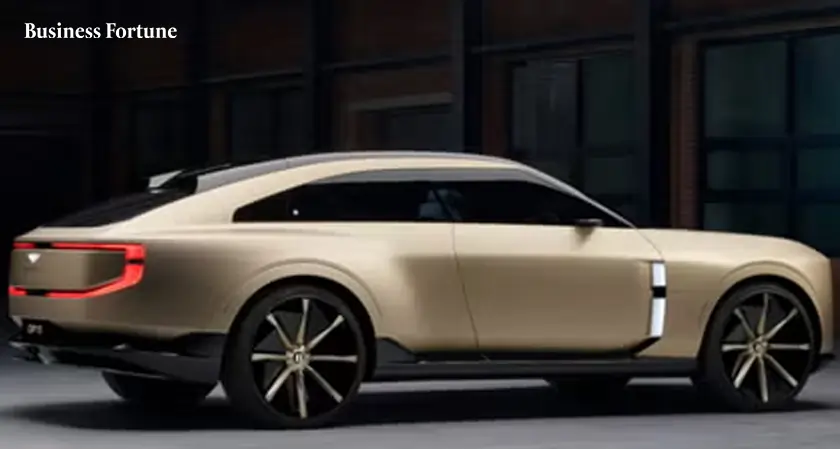
Bentley electric car Torcal is set for a September debut, bringing luxury, performance, and advanced EV technology into a new era.
Bentley electric car plans are no longer just a promise. The British luxury automaker has officially confirmed that its first fully electric vehicle will be called the Torcal, marking a major step in the brand’s journey into the electric era. Bentley will unveil the new electric SUV in London on September 23, giving the world its first full look at a vehicle expected to shape the company’s future.
The Torcal becomes Bentley’s fourth core model line, joining the Continental GT, Flying Spur, and Bentayga. The name comes from El Torcal de Antequera, a famous natural reserve in Spain known for its dramatic limestone rock formations. Bentley also points out that the name connects to the Latin word torquere, meaning “to twist,” which is the origin of the modern term “torque,” a fitting reference for an electric vehicle.
A New Era Begins for Bentley
Alongside the announcement, Bentley released a teaser image showing the rear of the SUV. Although only a small portion of the design is visible, the vehicle features slim taillights with a diamond-inspired lighting pattern and a modern interpretation of Bentley’s signature styling.
The Torcal is expected to be smaller than the Bentayga on the outside while offering more efficient use of interior space thanks to its dedicated electric platform. This could mean more passenger room and increased luggage capacity despite its compact dimensions.
“Our new Torcal sets extraordinary benchmarks in every area that matters and may just be the most considered car in our history,” said Bentley CEO Frank-Steffen Walliser.
Could the Torcal Become Bentley’s Most Practical Luxury SUV?
Industry expectations suggest the Torcal will share technology with the upcoming Porsche Cayenne Electric. Reports indicate it could feature a dual-motor all-wheel-drive system, an 800-volt electrical architecture, and ultra-fast charging capabilities.
The SUV is expected to use a 113kWh battery and deliver more than 300 miles (around 480 km) of driving range. Bentley has previously stated that the vehicle could add roughly 100 miles of range in just seven minutes when connected to high-speed charging infrastructure.
Testing prototypes have already been spotted in extreme winter conditions near the Arctic Circle and at Germany’s Nürburgring racetrack. Spy images suggest a sleek fastback-inspired design influenced by Bentley’s EXP 15 concept, along with a luxurious cabin featuring premium materials, a large curved display, and physical controls.
Why the Torcal Matters Beyond One Vehicle
The Torcal arrives after Bentley adjusted its electrification plans due to slower-than-expected demand for luxury EVs. While the company has moved away from its earlier goal of becoming fully electric by 2030, it now plans to introduce a new hybrid or electric model every year through 2035.
As Business Fortune observes, the countdown to September 23 continues and the Torcal represents more than just Bentley’s first EV. It signals the beginning of a new chapter where traditional luxury, advanced technology and electric performance come together. If successful, the Torcal could become the blueprint for Bentley’s next generation of vehicles.
FAQs
What is the name of Bentley’s first electric vehicle?
Bentley’s first fully electric vehicle is called the Torcal, an electric luxury SUV.
When will the Bentley Torcal be officially revealed?
The Torcal will make its global debut in London on September 23.
What driving range is expected for the Bentley Torcal?
Bentley expects the Torcal to offer a range of more than 300 miles (approximately 480 km).
What platform will the Bentley Torcal use?
The SUV is expected to be built on the Volkswagen Group PPE platform, which is also being used for the Porsche Cayenne Electric.
Is Bentley still planning to become an all-electric brand by 2030?
No. Bentley has revised its plans and now intends to launch a new hybrid or electric model annually through 2035, rather than becoming fully electric by 2030.


.webp)




























Comments