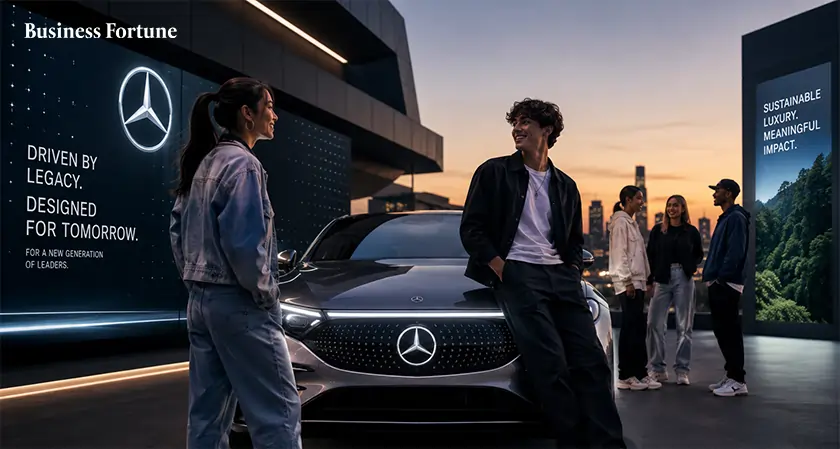
Mercedes-Benz explores new engagement strategies for younger consumers while maintaining its premium identity, heritage values and loyal customer base globally.
Mercedes-Benz is adjusting its global marketing approach to connect with younger audiences while maintaining its strong relationship with existing luxury customers. The company’s Mercedes-Benz Gen Z strategy focuses on making the brand more culturally relevant through digital engagement, modern storytelling and lifestyle-based campaigns, while protecting the heritage and premium identity that define the automaker.
Balancing Heritage with a New Generation
Mercedes-Benz Chief Marketing Officer Melody Lee has highlighted the importance of attracting future luxury buyers without distancing the brand’s traditional customer base. The strategy aims to expand the brand’s appeal by showing younger consumers that Mercedes-Benz represents innovation, creativity and personal expression alongside its long-standing reputation for quality and performance.
Key elements of the approach include:
-
Increasing engagement with younger audiences through digital platforms and entertainment-focused content.
-
Using cultural partnerships and modern storytelling to strengthen brand relevance.
-
Maintaining core luxury values such as craftsmanship, design and exclusivity.
-
Building early connections with potential customers before they enter the premium vehicle market.
Redefining Luxury for Future Consumers
Mercedes-Benz believes luxury expectations are changing as younger generations seek brands that align with their values, experiences and digital lifestyles. The company is adapting its communication style while ensuring that its products continue to reflect the engineering excellence and prestige associated with the Mercedes-Benz name.
The automaker’s marketing strategy also considers major industry shifts, including the rise of electric vehicles and changing consumer preferences. By combining its historic identity with new forms of engagement, Mercedes-Benz aims to remain competitive in a market where emotional connection is becoming as important as product performance.
The company’s approach reflects a wider movement among luxury brands that are working to attract younger customers while preserving the loyalty of established buyers. Mercedes-Benz is positioning itself as a brand that respects its past but continues to evolve with changing consumer expectations.
Thus, Business Fortune is of the view that Mercedes-Benz’s generational marketing strategy reflects a broader luxury industry shift, where heritage brands must balance tradition with evolving consumer expectations to secure future growth.


.webp)