Israel’s fashion debate intensifies as consumers face scrutiny, but deeper market forces raise questions about responsibility, affordability, and sustainability.
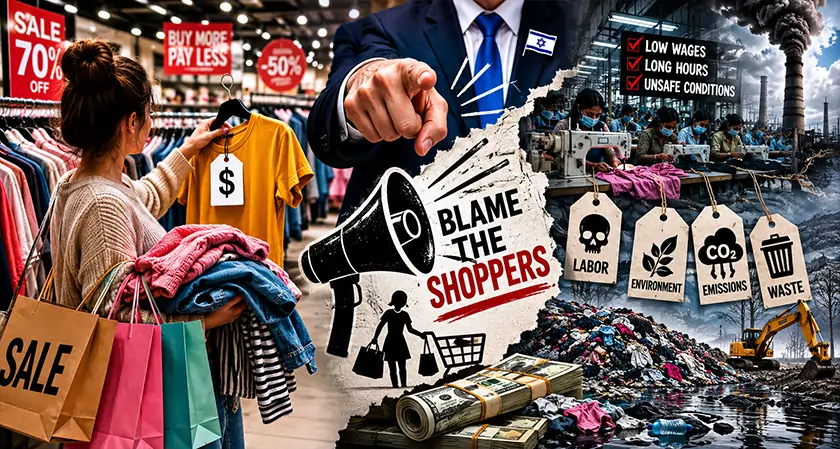
Wedding season in Israel has new debate over clothing consumption, affordability, and the environmental impact of fast fashion lifestyle. While some critics argue that consumers should simply reuse existing outfits, the reality of frequent social events presents a more complex challenge for many shoppers. The Israeli government blaming shoppers for fast-fashion trends overlooks the wider market conditions that make inexpensive clothing more accessible than sustainable alternatives.
For many women attending multiple weddings within a short period, clothing is not merely a practical necessity but also a form of personal expression and confidence. Although re-wearing garments remains an important step toward reducing waste, consumers often seek additional options when social commitments increase.
The main challenge is that ethical fashion often comes at a higher cost. In Israel, dresses from mainstream retailers can cost hundreds of shekels, while locally produced sustainable alternatives frequently carry even higher price tags. Meanwhile, ultra-fast-fashion platforms offer garments at extremely low prices, encouraging shoppers to prioritize affordability over sustainability.
Can government policies create a more responsible fashion market?
The low prices offered by fast-fashion companies often conceal wider costs associated with pollution, textile waste, carbon emissions, and labor conditions. Critics argue that placing the responsibility entirely on consumers ignores the way the fashion industry is structured and how pricing influences purchasing decisions.
Israel’s debate over personal imports has brought these concerns into focus. Recent discussions in the Knesset centered on tax exemptions, market competition, and consumer affordability, including proposals to increase the value-added tax exemption threshold for imported goods. However, the environmental and social consequences linked to ultra-cheap clothing received comparatively less attention.
Supporters of stronger regulation argue that fashion producers and online platforms should take greater responsibility for textile waste management and provide clearer information about the environmental impact and durability of their products. International examples, including initiatives in California and France, demonstrate growing efforts to hold fashion companies accountable.
At the same time, policymakers must consider concerns that stricter regulations could raise clothing prices for consumers already facing financial pressures. A balanced approach could focus on limiting wasteful production models while supporting affordable alternatives such as clothing exchanges, repair services, and second-hand markets.
The debate highlights that consumers alone cannot reshape a system built around rapid production and low prices. Creating a more sustainable fashion industry will require cooperation among governments, businesses, and shoppers to ensure that responsible choices are also realistic and affordable.
Thus, Business Fortune is of the view that sustainable fashion requires shared responsibility beyond consumers, with fairer market solutions.
FAQs
Why is fast fashion popular in Israel?
Fast fashion is popular because it offers affordable clothing options, particularly for consumers managing frequent social events and rising living costs.
What environmental problems are associated with fast fashion?
Fast fashion contributes to textile waste, pollution, carbon emissions, and resource depletion.
Are consumers entirely responsible for fast-fashion issues?
No. While consumer choices play a role, businesses and governments also shape the market through production practices, pricing, and regulations.
How are other countries responding to fast fashion concerns?
Several countries are introducing policies that encourage fashion companies to take greater responsibility for waste management and environmental impacts.
What are some alternatives to buying fast fashion?
Consumers can reduce reliance on fast fashion through clothing reuse, repairs, second-hand purchases, and clothing exchange initiatives.


.webp)