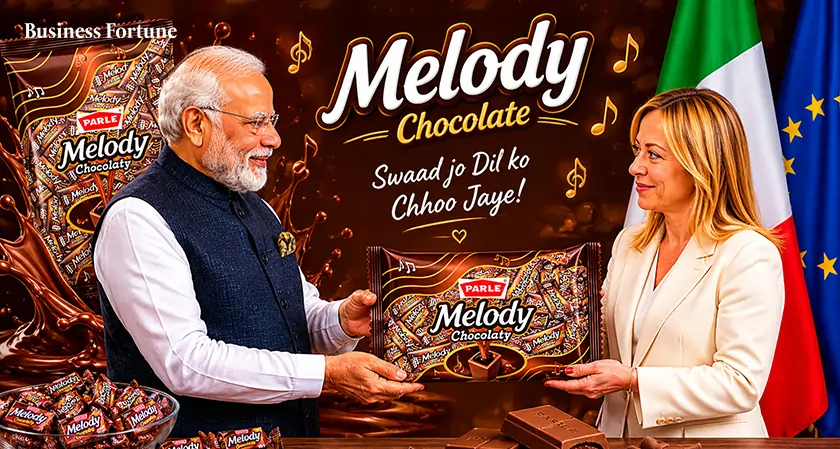
Modi’s gift of Parle Melody to Meloni highlights India’s soft power rise through everyday culture in global diplomatic engagement today.
In international relations, symbols frequently speak louder than words. When Italian Prime Minister Giorgia Meloni received Modi’s gift of Parle Melody toffee during their meeting in Rome, the idea was beautifully captured. What first appeared to be a lighthearted exchange swiftly developed into a more comprehensive discussion of India’s developing soft power and its capacity to project influence through common culture.
A simple confectionery item has become an unexpected representative of India's consumer economy as a result of the occurrence, which has been magnified by social media and political symbolism. It also highlights how relevant cultural references, which spread more quickly than official policy narratives, are increasingly influencing diplomacy today in addition to treaties and trade agreements.
Soft power through everyday India
A change in how India portrays itself to the outside world is at the core of this current situation. For many years, yoga, spirituality, film and classical legacy were linked to Indian soft power. These are still important, but the more recent layer is more rooted in everyday life and mass consumption.
Widely accessible in India's kirana stores, a ₹1 toffee symbolizes something more profound: the size and familiarity of the country's domestic market. When such a product is displayed in a diplomatic context, it quietly conveys that India's cultural identity encompasses what millions of people eat on a daily basis as well as its elite exports.
When branding meets geopolitics
The product itself is not what makes the "Melody moment" important, but rather the response it elicited. The move created memes, went viral and even attracted market attention to the related brand environment. This reflects a larger reality in which digital culture, geopolitics and branding are now closely related.
The story of India's exports is also changing concurrently. Indian consumer goods, ranging from food processing to confections, are becoming more and more popular in foreign markets. Exports of processed foods and toffee have been steadily increasing, according to industry data, supporting the concept that even low-cost domestic goods can become global cultural symbols when exposure rises.
The new language of diplomacy
Diplomacy is no longer confined to formal symbolism like rare artifacts or luxury gifts. These days, it also takes inspiration from shared comedy, memes and media culture. A level of reliability that is rarely attained by conventional diplomatic gestures was added by the "Melodi" play on names.
This change highlights a more profound reality: influence is becoming more and more about emotional connection. Because it represented familiarity, nostalgia and a shared occasion that went beyond protocol, a simple candy became a talking point rather than because of its financial worth.
Building on these occasions without turning them into mere spectacles is now India's challenge and potential. When handled carefully, these cultural signals can support a more comprehensive narrative that portrays India as both an emergent economic force and a society whose daily existence has an impact on the entire world.
In this approach, the Melody toffee moment is more about confidence than it is about candy. Thus, Business Fortune is of the view that everyday cultural symbols are reshaping India’s global diplomatic narrative today.


.webp)