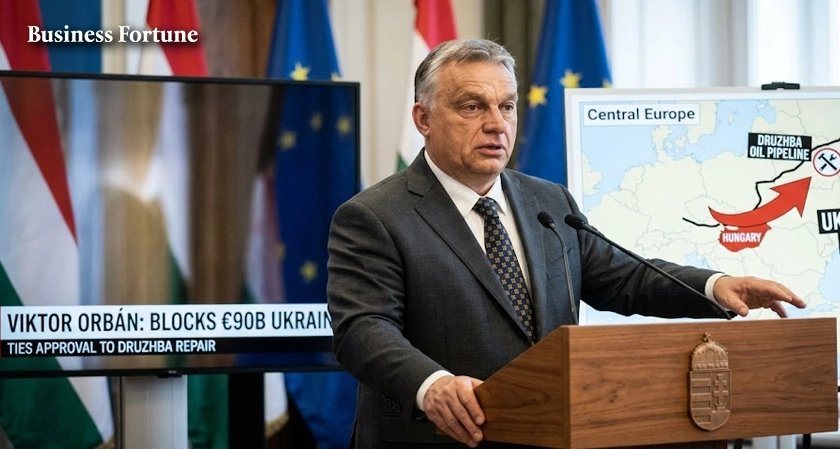
Hungary’s Viktor Orbán halts crucial EU funding for Ukraine, linking approval to restoring the Druzhba pipeline, deepening tensions across Europe.
Viktor Orbán has blocked a €90 billion loan deal for Ukraine, tying his approval to the reconstruction of the Druzhba oil pipeline which dates back to the Soviet era. This has increased tensions inside the European Union. His position raises serious concerns about unity in times of crisis, as it prioritizes domestic politics and energy security over collective European commitments.
Orbán's stance is not wholly unexpected. He appears to be using political challenges at home to further solidify his reputation as a champion of Hungarian interests. By connecting financial support for Ukraine to oil supplies, he shifts the narrative from European solidarity to national necessity. However, this approach risks isolating Hungary within the Union.
This is bad timing for Ukraine; the war is putting pressure on both their military resources and their financial resources, and President Volodymyr Zelenskyy is still pushing for financial help immediately. Although Kyiv responded to the damaging of the pipeline by promising to repair it, they argue the damage was caused by Russian attacks, which makes Orbán's request seem out of line as well as politically sensitive.
Leaders from Europe are also expressing growing dissatisfaction towards this issue, including President of the European Council, António Costa. There are two issues behind this request: One is the money requested through the loan, and the other is trust, as the unilateral revisiting of a collective agreement made will only create a lack of legitimacy in EU decision-making.
The ongoing controversy also highlights a fundamental conflict in EU policy; while they wish to phase out Russian oil by 2027, they also want to find a way to reintroduce it to Hungary and Slovakia. This inconsistency gives critics ammunition to hurt Europe’s strategic messaging.
Thus, Business Fortune is of the view that this standoff exposes deeper fractures in European unity that could weaken its collective response in critical geopolitical moments.


.webp)