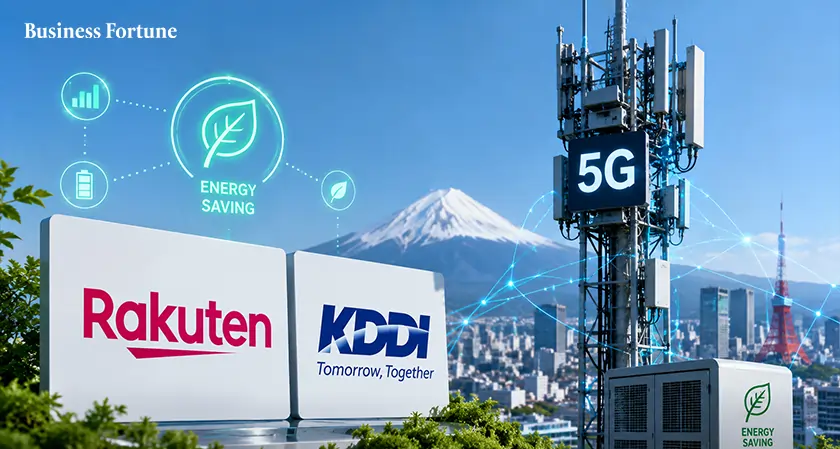
Rakuten Mobile and KDDI are working together on a NEDO project to reduce power use in data centers and mobile networks by 40% by 2030, helping build more energy-efficient 5G networks in Japan.
Japan is taking a major effort to make mobile networks and data centers far more energy efficient. In a new move, Rakuten Mobile and KDDI Corporation have been jointly selected by Japan’s New Energy and Industrial Technology Development Organization (NEDO) to lead a research project focused on cutting power use in digital infrastructure by about 40% by 2030. Rakuten and KDDI plans on energy-saving 5G networks in Japan by building smarter and more efficient network systems that use less electricity while handling heavier data loads.
The initiative is part of Japan’s push toward post-5G systems, where rising demand from AI, cloud computing, and mobile data is driving up energy consumption.
Why are Rakuten Mobile and KDDI joining forces now
Mobile and computing demands are growing, networks are becoming more complex, and traditional systems are struggling to keep up without using large amounts of power.
KDDI brings deep experience in large-scale telecom operations and data center management. Rakuten Mobile, on the other hand, has built its entire network using virtualized Open RAN technology, where software plays a bigger role than traditional hardware. Together, they aim to combine hardware strength with software flexibility to redesign how mobile networks and computing systems operate.
What will this project actually focus on
The research project is built around five key areas designed to reduce energy use while improving performance:
-
Using optical technology to reduce electrical processing between computing clusters and improve efficiency.
-
AI- Using AI to adjust mobile network signals in real time based on traffic demand.
-
Developing compact and smarter cooling methods for growing data center needs.
-
Improving protection for Open RAN networks while reducing unnecessary data processing.
-
Building water and immersion cooling systems for high-power AI chips that consume up to 3000W.
These improvements are designed to support both mobile communication and AI workloads, which are becoming increasingly demanding.
What does this mean for users and industries
If energy-saving 5G networks in Japan become successful, the project could make mobile networks more efficient without affecting performance. It also supports Japan’s broader goal of building greener digital infrastructure while keeping up with global technology growth.
Building a low-power digital structure
As Business Fortune observes, by 2030 the partners aim to significantly reduce energy use across telecom networks and data centers while supporting next-generation technologies like AI and post-5G systems. The collaboration is expected to set a standard for how large-scale digital infrastructure can become both powerful and energy conscious, shaping a more environmentally sustainable future for Japan’s tech ecosystem.


.webp)