In the heart of a multinational organization, a seemingly routine task turned into a major roadblock. The inter-company balances in the holding company’s general ledger refused to reconcile to zero.
What should have been a straightforward consolidation exercise had become impossible due to years of organic, uncoordinated growth across three jurisdictions.
Each region had developed its own approach to cost centre structures and currency translation methods, resulting in fragmented charts of accounts that no longer spoke the same financial language.
As quarter-end approached, the finance team found itself unable to close the books — a stark reminder of how fragmented systems and inconsistent practices can quietly undermine even the most established organizations.
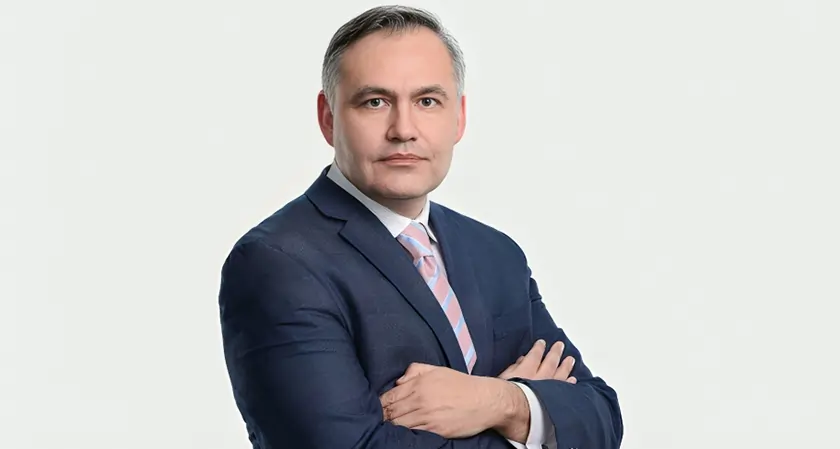
Rodrigo A. Gallegos walked into that chaos with a framework that starts with policy instead. The software comes into play later.
He says: “I’ve been asked to build an ERP from the very beginning. That means configuring the chart of accounts and every module to align with both local standards and the company’s specific policies.”
Gallegos designs and deploys full-scale enterprise resource planning systems, including SAP R3, Microsoft Dynamics 365 Business Central, NetSuite, Oracle, and QuickBooks, for clients in manufacturing, mining, healthcare, and technology whose operations span three continents.
What separates his approach from others is the elaborate structure he creates for processes and policies that transform an otherwise generic software into a reflection of the client’s unique operations.
Six-month engagements during which the chart of accounts, payroll processing, treasury management, procurement rules, sales workflows, and executive reporting dashboards are built out. These mirror the company's actual policies rather than conforming to a generic industry template. Down to the way an expense receipt gets approved in a Santiago office versus a Miami subsidiary.
Gallegos explains: “Every module, payroll, treasury, procurement, sales — all require their own calibration to the company’s true supplier base, customer pool, and internal policies. The system needs to reflect how the business really works, not the assumptions of the software.”
The system is designed specifically to support simultaneous compliance with IFRS, U.S. GAAP, and SOX reporting requirements. Such an approach becomes especially important for foreign companies that want to expand in the U.S. while remaining fully compliant.
According to industry forecasts, the global ERP market was valued at over $50 billion in 2024. However, implementation failures in mid-size international companies rarely stem from technical problems. The implementation fails when accounting policies across multiple jurisdictions cannot be configured correctly.
Gallegos’s framework makes that translation the foundational design logic.
He standardizes procedures around exceptions, such as multi-country expense-reimbursement frameworks that reconcile the invoicing rules of five different fiscal regimes. So that a company’s finance team is not left improvising every time an employee crosses a border.
He elaborates: “Expense reimbursement seems like a no-brainer, yet when your employees work in five different countries, you need to follow invoicing procedures and document requirements accordingly. It takes a highly specialized process to standardize this kind of activity.”
His framework extends well beyond the general ledger. Business intelligence tools such as QlikView and custom Excel macros feed real-time dashboards to the board level. While payroll modules are configured to protect compensation data with a level of confidentiality that he describes as non-negotiable.
Gallegos says: “Payroll modules demand absolute accuracy and utmost confidentiality. After all, you’re dealing with salary rates for both executives and regular operators in multiple legal jurisdictions. And there is nothing wrong with protecting salaries from being seen by someone outside the payroll department.”
His payroll system design illustrates the approach at its most sensitive.
Gallegos embeds confidentiality protocols directly into the architecture. Compensation data, such as executive salaries, hourly rates, and multi-country payroll registers, is protected by structural permissions.
When there are legal entities in three different jurisdictions, that means the payroll manager in Santiago cannot access salary ranges set in Houston. This control comes from table relationships.
That technique was refined during his tenure as Head of Finance and Administration at the Austrian multinational MMP Marinetti Ltda. And later, it carried over to his advisory firm, Soltax SpA. It’s become a hallmark of the implementations he oversees for clients ranging from renewable-energy producers to aviation service companies.
Gallegos' expertise in cross-border tax structuring, transfer pricing under IRC §482 and OECD guidelines, withholding taxes under IRC § 1441–1446, branch profits tax, and double-taxation treaties means his ERP system is a strategic tool rather than an administrative one.
Marcelo Carvajal, Plant Manager of IP Biomass LLC, Allendale, South Carolina that’s a producer of sustainable wood pellets used domestically and internationally, emphasizes: "His expert advice ensured our financial statements met the requirements of IRS, South Carolina state taxes, and Chilean corporate law. We would not have been able to reach this level of audit-readiness and credibility without his knowledge of transfer pricing and tax treaties."
This process is repeated for each client, totalling around 150 companies in Chile and the U.S.-based clientele of 16 international firms, including Korean, Italian, Spanish, and others.
Gallegos says: "You could design the most efficient cross-border structuring plan on paper. But unless you were able to present it in a board meeting, backed by numbers, they would never agree to implement the plan. This is where the effort bears fruit."
The consistency of the testimonials received lies in a renewable energy concern in Chile, an aviation services company based in Florida, and a Miami-based holding company with operations in the Caribbean.
Each of them cites Gallegos's ERP system as having helped clean up their books and achieve the compliance required to expand their presence in the US market.
This service directly supports foreign direct investment by removing regulatory compliance barriers and other administrative obstacles that prevent foreign investors from bringing their capital into America.
According to Conrado Rios, General Director of Aero TX LLC, Weston, Florida: "By maintaining our daily accounting records, managing payroll, and advising on tax treaty advantages between the U.S., Canada, and Chile, Gallegos gave our aviation services company the financial transparency and internal controls essential for operating in a capital-intensive, highly regulated industry."
Indeed, the consulting mentioned relates to mechanisms, treaty interpretation, consolidated reporting, and multi-jurisdictional payroll, which, when handled incorrectly, can provoke audit processes, imposition of penalties, and withdrawal. Managing such tasks effectively keeps foreign companies prospering on U.S. soil, along with all the benefits of employment, partnerships, and local taxes that come with that.
The fiscal integrity dimension carries a measurable public benefit.
Gallegos recounted, without identifying the firm, bringing in one current client after four or five years of missed federal tax filings, a remediation that required direct coordination with the IRS, intensive research, and the rebuilding of accounting records from scattered source documents.
The outcome was full compliance and, critically, the surfacing of previously unreported and untaxed foreign-source income.
He says: “I brought one client up to date after four or five years of missed filings — coordinating with the IRS, making calls, doing the research. Today that company is fully compliant, and they’ve referred others to me. Word of mouth builds a reputation that no advertising can match.”
The government revenues gained due to the aforementioned situations, which are new to U.S. tax authorities, are an example of a concrete financial benefit of maintaining a high level of accounting standards across countries.
Gallegos takes many inquisitive calls: “An owner looks at the bottom line and asks, ‘You promised us optimization, then why do I still have such a high tax rate?’ That frustration is real. The answer is never a one-day fix. It’s a 12-month plan with defined steps, and the trust is built when they see the trajectory, not an empty assurance.”
Gallegos’s instinct for process architecture traces back to his industrial engineering degree from the University of Chile and an MBA from Egade Business School, deepened by an International Tax Diploma from Harvard Kennedy School and an accounting certification from UCLA.
Having worked as CFO of a Chilean copper wire manufacturer for 11 years, Gallegos moved on to the Head of Finance and Administration position at the Austrian corporation MMP Marinetti. He managed two company mergers, bringing financial liabilities down to zero, and received recognition in Europe for his efforts in company management and compliance.
During MMP’s 2013 migration from SAP R3 to Microsoft Dynamics, Gallegos was the primary user of the finance module. He achieved the highest proficiency grade and hands-on experience that now shape every client configuration.
Florida Stacks LLC is an international, Miami-based holding and management company operating in hospitality, construction, and investments in southeastern states and the Caribbean. As a General Director, Nicolás Posselt shared some details of his colleague's work: "He established unified accounts for our entities located in the USA and the Bahamas, provided information on the correct way to allocate intercompany loan payments from Chile and US withholding taxes, and helped us comply with §482 provisions."
Teaching and academic leadership further extend the influence of his methods.
Since 2004, Gallegos has taught finance, taxation, and capital budgeting at Laureate Universities. At Universidad Andrés Bello, a prominent private university within the Laureate network, he serves as Director of the Contract Management Certification Program, where he redesigned the curriculum to integrate international financial reporting, cross-border compliance frameworks, and risk governance.
Álvaro Cepeda-Ortiz, Director of UNAB Certificates, says: “As Director of our Contract Management Certification Program, Gallegos redesigned the curriculum to integrate international financial reporting, regulatory compliance, and cross-border risk frameworks. His pedagogical leadership has elevated the program into one of our most respected postgraduate offerings.”
With lectures delivered to audiences of several hundred students at universities that enrol more than 50,000, and with formal awards from those institutions recognizing the impact of his seminars, his standing as a subject-matter expert reaches both the boardroom and the lecture hall.
The combination of teaching authority and hands-on implementation discipline defines a profile that is difficult to replicate.
Gallegos shares: “Most accountants know the rules of one or two countries. I’ve lived and operated across Europe, Latin America, Asia, and the United States. That exposure means I can interpret international regulations, not just recite local ones.”
It produces an approach that transforms international tax structures into working financial models, spreadsheets, dashboards, and board presentations. In other words, it tells, in cold cash, how the election of one treaty or another would affect the company's finances during a 12-month period.
Every project concludes with a phased implementation roadmap, with milestones specified, per module release dates, and defined acceptance criteria.
He shares: “Our clients don’t want any long-term promises. What they need is a roadmap to be turned into hard facts. A tax strategy that works for a fiscal year, including actions and milestones.”
Apart from deep expertise, what makes the model work is the belief that accounting is ultimately a profession based on trust. Each day, this trust is reinforced with the awareness of the impact of mistakes on the people we talk to.
Gallegos adds: “Some days the conversation is about tax treaties, other days it’s about their family or a worry that has nothing to do with the balance sheet. To do this work well, you have to listen as carefully as you calculate.”
Over $300 billion of foreign direct investment goes into the US economy each year. Moreover, the IRS has stepped up its enforcement of foreign-source income through the FATCA regulations and related initiatives. An ERP implementation solution that handles compliance is priceless.
It materializes in new U.S. subsidiaries that open their doors with audit-ready books. It shows up in intercompany transactions that are documented to the standard of a transfer-pricing examination. And surfaces in tax revenues collected from income that previously went unreported.
Most importantly, it compounds itself, because the firms that were set up to work with accuracy continue to employ, invest, and grow, which is precisely what turns foreign money into domestic muscle.
He concludes: “Every morning I know there’s an opportunity to solve a problem, grow a relationship, or earn a new client. It’s not just about money but about being constantly in dialogue with people who trust you to guide their business.”
Gallegos builds the financial infrastructure that makes that cycle possible, one configured module at a time.
About the Author
Sowmiya Sri Mani is a writer for Business Fortune, covering AI, Robotics, Software, Entrepreneurship, and Opinion. She delivers clear and engaging insights on emerging trends and industrial developments, helping readers understand the evolving landscape of technology and innovation.


.webp)