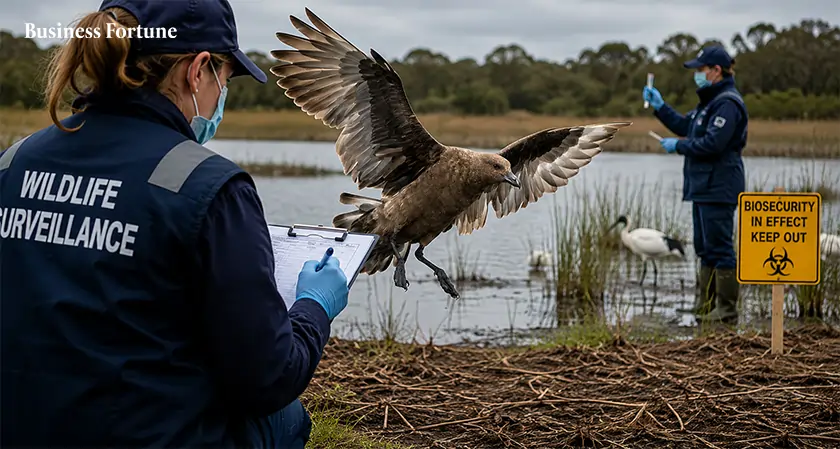
Australia investigates H5 bird flu spread in seabirds as experts assess risks to wildlife, agriculture, and native species.
Australia has begun an urgent investigation into the spread of Australia H5 bird flu after authorities confirmed the country’s first two detections of the H5 strain in wild migratory seabirds. The cases were identified in a brown skua and a giant petrel found in a remote area of Western Australia, prompting officials to increase monitoring efforts to determine whether the virus has become established among wildlife populations.
Agriculture Minister Julie Collins said experts would conduct expanded surveillance and testing over the next three to seven days to identify any wider presence of the disease. She stressed that Australia’s poultry and agricultural systems remain free of H5 bird flu, with no evidence of widespread wildlife deaths so far.
Key developments in Australia’s H5 bird flu investigation:
-
First H5 cases detected in two migratory seabirds
-
Experts begin expanded wildlife testing across affected areas
-
Poultry sector remains free from H5 infection
-
Officials warn of potential risks to native species
Wildlife threat remains a major concern
Authorities have warned that while only two cases have been confirmed, the virus poses a significant threat if it spreads further. The H5 strain has caused severe outbreaks among poultry and wild birds globally and has also affected several mammals, including marine animals.
Environment Minister Murray Watt said the arrival of the virus in Australia was disappointing but not unexpected, given its global spread. Scientists are particularly concerned about Australia’s unique biodiversity, as many native animals are found nowhere else in the world and could face additional pressure from a major outbreak.
Recent international experiences have shown that H5 bird flu can be difficult to remove once it becomes established in farming environments or wildlife populations. Scientists are also monitoring possible links to outbreaks among marine mammals, including elephant seals in Australia’s remote territories.
Officials said the current focus remains on determining whether the detected cases represent isolated incidents or the beginning of a broader wildlife infection. Further testing will guide future measures to protect Australia’s ecosystems and agricultural industries.
Thus, Business Fortune is of the view that Australia’s swift wildlife monitoring remains crucial to contain H5 bird flu risks.


.webp)