The most valuable industrial systems are often the ones operating quietly underneath much larger industries. They are not always visible to the public at first because the real value sits beneath the finished product itself, embedded inside logistics networks, material flow, processing infrastructure, and the economics of refinement.
Agriculture increasingly fits that description.
Most investors still tend to focus on crops, fertilizer prices, food inflation, or commodity cycles. Underneath those visible layers, however, sits a rapidly evolving industrial ecosystem responsible for collecting, transporting, refining, blending, and distributing the materials modern agricultural systems increasingly depend on.
That underlying infrastructure is becoming far more important.
And that is part of what makes RenX Enterprises Corp. (NASDAQ: RENX) increasingly difficult to categorize through traditional agricultural or biomass labels alone.
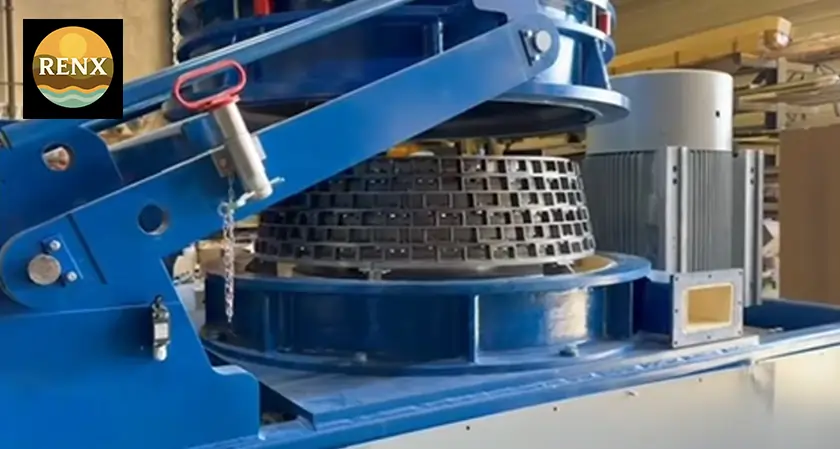
This week, the company announced two developments that together may paint a broader picture of where the platform is heading. First, RenX provided an operational update surrounding its integrated Myakka City biomass platform, outlining plans to target the domestic share of the global soil amendments market through engineered substrate production tied to the planned commissioning of its Microtec UTM 1200 Turbo Mill.
A day earlier, RenX announced that its wholly owned subsidiary, Zimmer Equipment, earned master carrier approval from one of the largest steel manufacturers in the United States, authorizing participation in recurring freight and logistics opportunities across the manufacturer’s national operating footprint.
Individually, those announcements may appear operational.
Together, however, they begin outlining something much broader: a vertically integrated industrial infrastructure platform that connects biomass intake, hauling, processing, logistics, refinement, and engineered agricultural products into a single operating ecosystem.
That distinction matters because infrastructure businesses tend to behave differently once operational flow begins stabilizing. Early-stage businesses often focus on proving products. Industrial systems focus on securing recurring movement. Material comes in. Material gets processed. Material moves out. Over time, route density, throughput, utilization, and refinement capability become more important than novelty because repeatable flow is what ultimately creates durable operating leverage.
That leverage is now becoming increasingly visible across the RenX platform.
According to the company, the Myakka City site spans more than 80 permitted acres, integrating organics intake, grinding, screening, blending, and logistics infrastructure through Zimmer Equipment, which generated approximately $5.94 million in revenue during fiscal 2025. A recent independent aerial flyover reportedly measured nearly 249,000 cubic yards of feedstock and finished material inventory on-site.
That inventory figure becomes far more meaningful once the economics surrounding refined substrate markets are considered.
Premium engineered soil blends, compost products, peat alternatives, and controlled-environment growing media can command wholesale and delivered pricing ranging from roughly $100 to more than $200 per cubic yard, depending on composition, refinement level, and end-market application. Using those market ranges strictly as broad economic context, large-scale refined substrate inventories can theoretically represent tens of millions of dollars in potential end-market product value before accounting for processing costs, yield variability, transportation, refinement stages, or commercial realization factors.
Of course, that does not imply all material currently within the RenX system carries those economics today, nor does it suggest the company could or would monetize inventory at premium market pricing across the board. But it does help illustrate the magnitude of value creation possible once lower-value biomass streams begin moving through higher-margin refinement infrastructure capable of producing specification-driven agricultural products.
And that appears to be exactly where the Microtec deployment enters the story.
The company stated that oversize byproduct material currently leaving the site as lower-value output is expected to become feedstock for engineered substrate production once the planned Microtec system is commissioned during the second half of 2026.
That sequencing matters because RenX is not presenting the Microtec platform as an entirely separate business line. Instead, management appears to be layering advanced refinement capability directly onto an operating infrastructure system already processing material at commercial scale.
That is where the economics can begin changing quickly.
Because once lower-value output can serve engineered growing media, specialty substrate, and controlled-environment agriculture markets, the operating leverage of the platform can expand materially.
That broader opportunity also becomes easier to understand when viewed alongside the company’s improving operating performance. RenX recently reported approximately $3.96 million in first-quarter 2026 revenue, driven by improved logistics performance, stronger material sales, and meaningful growth across biomass-related operations.
At the same time, the industrial ecosystem surrounding the company also appears to be expanding.
Based on publicly disclosed hauling relationships and industrial infrastructure activity already tied to the platform, it is increasingly reasonable to view RenX as operating adjacent to some of the largest waste, logistics, and industrial material systems in North America, including operators whose annual revenues individually exceed tens of billions of dollars.
That matters because enterprise-scale systems integrate smaller operators when the economics and infrastructure value become difficult to ignore.
And if the RenX operating model continues proving capable of integrating simultaneously across industrial waste, municipal organics, hauling, land-clearing, logistics, and agricultural infrastructure systems, the long-term opportunity surrounding the platform expands significantly beyond what most investors currently associate with a traditional biomass processor.
That scalability is increasingly tied to the refinement technology now being integrated throughout the RenX platform.
The planned Microtec UTM 1200 Turbo Mill is designed to add a third processing stage capable of converting woody biomass into engineered substrate products with repeatable specifications and refinement consistency. That capability could move RenX beyond traditional waste-to-value operations and into localized production of engineered growing media designed to compete with imported alternatives such as Canadian sphagnum peat and bark products.
That positioning becomes more relevant as geopolitical pressure continues to expose vulnerabilities inside global agricultural supply chains.
Roughly one-third of global fertilizer trade still moves through the Strait of Hormuz, highlighting how exposed agricultural systems remain to concentrated shipping routes and geopolitical disruption. While fertilizer and engineered growing media occupy different parts of the agricultural ecosystem, the broader lesson remains the same: localized processing capability becomes strategically more valuable when global supply chains tighten.
That environment strongly favors domestic production systems capable of operating with shorter transportation routes, improved supply reliability, and greater operational control.
RenX appears positioned directly inside that shift.
And importantly, the company is no longer operating purely in preparation mode. Commercialization activity surrounding the Microtec deployment is now advancing alongside growing hauling relationships, expanding logistics infrastructure, increasing throughput, and stronger industrial integration across the broader operating system.
For stakeholders, the larger opportunity may no longer revolve solely around individual quarterly fluctuations. It may revolve around how broadly the RenX operating model can ultimately extend across the industrial infrastructure now supporting modern agriculture itself.
That presents a much larger opportunity than the market may currently associate with the company’s existing footprint.


.webp)