Agreement boosts UK-GCC trade, cuts tariffs, expands services access, and strengthens investment ties across strategically important Gulf markets.
-
UK finalises major trade deal with Gulf states
-
GCC nations agree after four years negotiations
-
Deal expected to boost investment and economic ties
-
Agreement strengthens UK-Gulf strategic trade partnership growth
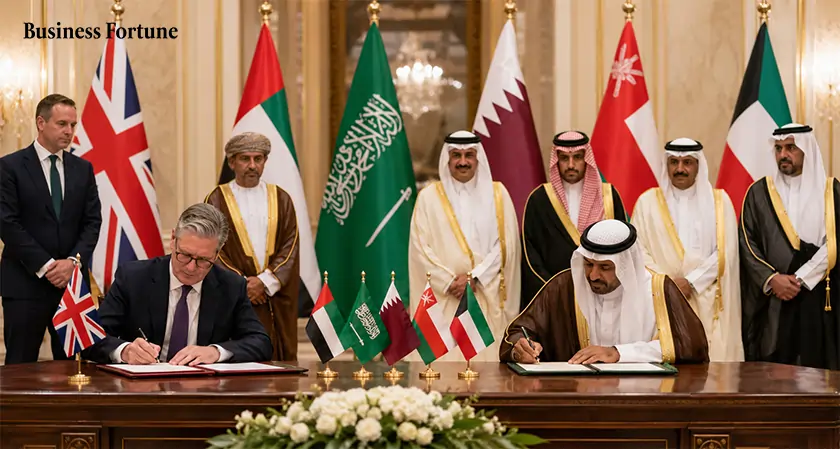
A long-awaited trade deal with Gulf states between the United Kingdom and the Gulf Cooperation Council (GCC) has been formally completed after four years of discussions, marking a major shift in their economic relations.
The UK and six Gulf nations, Bahrain, Kuwait, Oman, Qatar, Saudi Arabia and the United Arab Emirates are united by the deal, which was announced on Wednesday. It is expected to greatly increase investment and trade in an area that is strategically vital to both countries. Officials described the agreement as "historic" and said it was the first of its kind between a G7 economy and the GCC.
According to British authorities, the deal could provide the UK economy with yearly long-term economic advantages of about £3.7 billion ($4.96 billion). Also, it is expected that real wages will increase by about £1.9 billion over time, reflecting anticipated increases in export growth and productivity.
The removal of trade obstacles is a key component of the agreement. Government comments claim that after the deal is fully implemented, tariffs will be removed on almost 93% of UK goods shipped to GCC markets. This covers important industries like food and beverage, advanced manufacturing, automotive, aerospace and medical equipment. According to officials, export tariffs of over £580 million will be eliminated every year, with a significant amount taking effect right away when the deal is put into action.
The agreement heavily emphasizes services, which make up the majority of the UK economy, in addition to goods. It is anticipated that corporate travel processes will become more efficient and legal, financial, engineering and consulting businesses will have better access to Gulf markets. Modern digital trade elements are also included in the agreement, including data flow agreements and a reduction in the need for local data storage in some industries.
In a tough period for the world economy, UK authorities claimed that the pact will increase confidence for investors and exporters. Additionally, they emphasized how the region's sizable sovereign wealth funds and growing diversification plans may promote more Gulf investment in the UK.
The agreement was welcomed by Prime Minister Keir Starmer, who described it as a major step in strengthening commercial ties and promoting local development. Although certain industry associations voiced worries about restrictions on market access in particular areas, business leaders in the UK generally responded favorably, especially in export-oriented sectors.
Before the deal takes effect, all member states must finally ratify it. When finished, it is predicted to strengthen long-term commercial and strategic relationships by restructuring trade relations between the UK and one of the fastest-growing economic areas in the world.
Thus, Business Fortune is of the view that the UK–GCC trade deal could reshape long-term economic ties by unlocking stronger trade flows, deeper investment links, and sustained growth opportunities across both regions.


.webp)