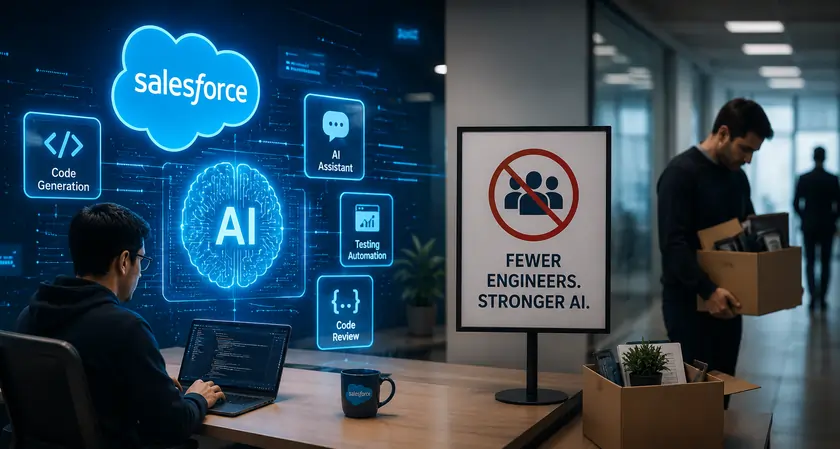
Salesforce is set to spend around $300 million on Anthropic AI tokens in 2026 as it shifts focus toward AI-driven coding tools, reduces software engineering hiring and reshapes how its teams build and manage software.
Salesforce plans a lot of money into artificial intelligence to change how it builds software and how it manages its teams. salesforce investment on AI tools expects to spend about $300 million on Anthropic’s AI tokens in 2026, showing that AI is now a key part of daily engineering work, not just something to test or experiment with.
Speaking on the All-In podcast, Salesforce CEO Marc Benioff said a large share of this spending will go directly into AI-assisted coding tasks. These tasks are increasingly handled by models from Anthropic, as well as other developer tools embedded across Salesforce systems. This shows, Salesforce is redirecting investment toward AI infrastructure and software agents that help write, test and manage code.
Why Salesforce cuts software engineering hiring
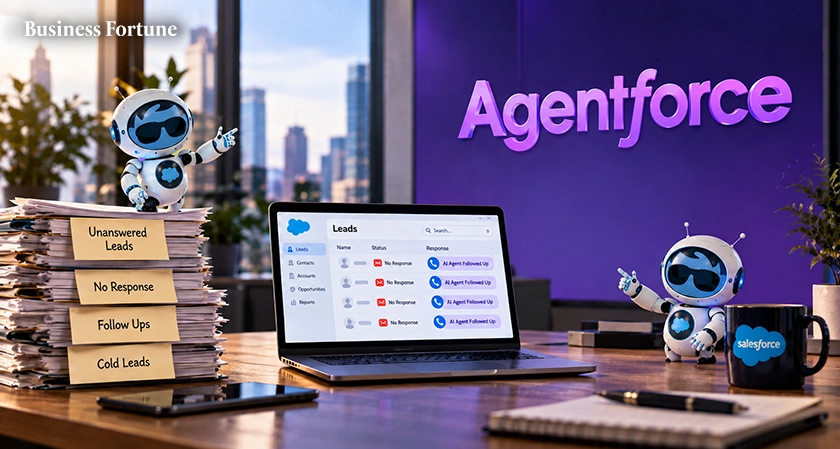
The company first paused hiring software engineers after reporting major productivity gains from its internal AI systems. Benioff said engineering efficiency improved by more than 30 percent after deploying Agentforce and other AI tools.
Key drivers behind the hiring freeze include:
-
Productivity gains of over 30 percent in engineering teams
-
Wider use of AI coding assistants across development workflows
-
Shift from manual coding to AI-supported development pipelines
-
Focus on improving output without increasing headcount
Despite this, Salesforce continues hiring in customer-facing roles. The company has planned to bring in 1,000 to 2,000 sales employees to help clients understand and adopt AI products.
Are engineers being replaced by AI agents
Not exactly. Salesforce says engineers are still essential but their roles are changing.
The company’s roughly 15,000 engineers now work alongside AI systems rather than independently writing most of the code. Tools like OpenAI Codex, Cursor AI coding tool, Anthropic models, and Salesforce’s own Agentforce platform are part of daily workflows.
Engineers are moving into supervisory roles. They guide AI-generated code, check outputs, and focus more on system design than routine programming. Benioff was clear that AI is not fully autonomous yet, saying human oversight is still necessary for reliable software development.
Anthropic partnership deepens inside Salesforce ecosystem
Salesforce has already invested more than $300 million in Anthropic and holds a strategic stake in the company. Its Claude models are being integrated into multiple products, including:
-
Slack for workplace collaboration
-
Agentforce for enterprise automation
-
Internal coding and developer tools
-
Customer-facing AI workflows
Slack has become one of the key platforms where AI features are being launched, especially for enterprise communication and automation.
How big is Salesforce’s AI business becoming
Salesforce’s AI division, Agentforce, is already a significant revenue driver, reaching about $800 million in annual recurring revenue. The company estimates that AI now contributes between 30 percent and 50 percent of its overall workload.
It is also reshaping hiring and training:
-
Plans to hire 1,000 AI-skilled graduates globally
-
Expansion of AI-focused roles such as forward-deployed engineers
-
Company-wide training through the Agent Blazer program
-
Leadership teams earning advanced AI certifications
Future of Salesforce
As Business Fortune observes, Salesforce is moving toward a model where AI handles a large share of routine technical work, while humans focus on oversight, design, and customer-facing problem solving. If current trends continue, the company’s engineering structure could look very different within a few years, with AI acting less like a tool and more like a core part of the workforce.


.webp)