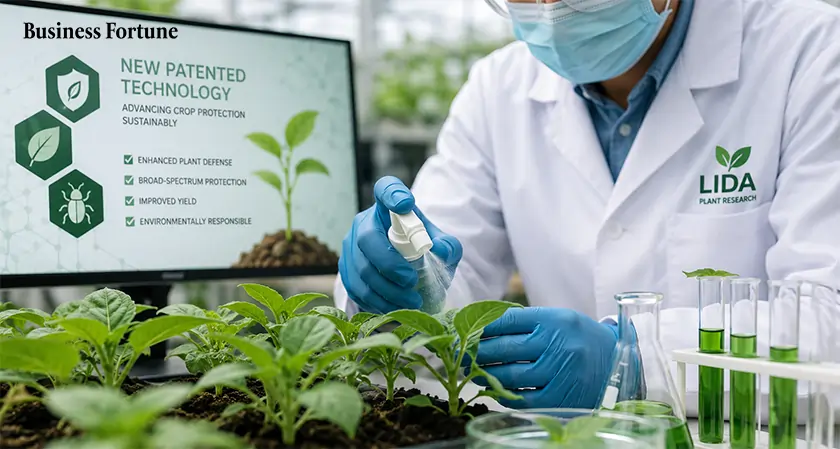
LIDA Plant Research secures an international patent for plant defense technology that boosts crop immunity. The innovation supports sustainable agriculture and improved yields.
Agricultural science has taken an important step forward in how crops protect themselves. LIDA Plant Research advances crop protection by receiving an international patent for a system that improves plant immunity using the plant’s own natural defense signals.
What if crops could defend themselves more strongly without extra chemical load
That is the idea behind the company’s newly patented technology, which focuses on enhancing the plant’s natural “alarm system.” Instead of replacing traditional protection methods, it helps plants respond faster and more effectively to stress caused by pests, diseases, and other biological threats.
A discovery in how plants “talk” to themselves
The major focus of the patent is a scientific discovery involving two types of compounds:
-
One acts as a trigger for the plant’s default immune system
-
The other activates systemic resistance across the plant
Together, they create a stronger, combined response than when used separately. This combination works through what scientists call a priming effect. In simple terms, it prepares the plant to react quickly and strongly when danger appears, almost like a built-in early warning system.
This discovery matters for today’s agriculture because stronger natural defenses can reduce crop damage, increase productivity, and minimize reliance on chemical treatments.
From lab research to real-world farming solutions
LIDA Plant Research focuses on studying how plant genes react when plants face stress. This work has helped the company become a leader in plant biotechnology. But their research work doesn’t stop with patents. They are also creating new solutions to support more sustainable farming and help farmers reach international markets more easily.
Current innovation efforts include:
-
BIOFORCE Technology: Combines defense-boosting compounds with beneficial microorganisms
-
Activane and Relliance studies: Focused on improving plant detoxification systems
-
Reduction of chemical residues in crops and lowering Maximum Residue Limits (MRLs)
Can agriculture become both safer and more productive
That is the question driving LIDA Plant Research’s next phase of work. The goal is not just higher productivity, but cleaner and more responsible farming systems that meet strict international food standards. By improving how plants naturally manage stress and chemical exposure, these technologies aim to support farmers who want to reach high-value export markets.
Looking ahead
As Business Fortune observes, the company’s work signals a shift in agricultural science toward smarter biological solutions rather than heavy chemical dependence. As climate pressure, pest resistance, and food safety demands continue to rise, innovations like these could play a key role in shaping future farming systems. In the years ahead, agriculture may rely less on external support and more on strengthening the plant itself from within.


.webp)