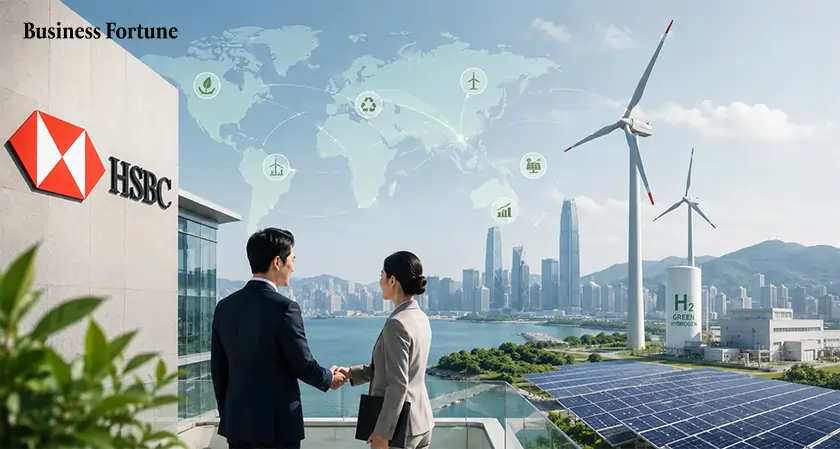
HSBC has launched a $4 billion credit facility to help China’s low-carbon businesses expand globally, supporting clean energy, EVs, AI infrastructure, and renewable growth across ASEAN and beyond.
China is already leading the world in solar panels, batteries and other clean energy technologies. Now, global banks are helping the country’s next wave of growth. HSBC helps China by launching a new $4 billion funding program in mainland China to support low-carbon companies looking to expand into international markets, especially fast-growing regions like ASEAN.
The funding will help businesses working in areas such as renewable power, electric vehicles, data centers, and AI infrastructure. HSBC said the goal is to help Chinese companies take their clean energy technologies to global markets more quickly and smoothly.
China’s clean energy dominance continues to grow
China’s low-carbon businesses accounts for nearly 47% of global cleantech exports and around two-thirds of worldwide solar panel and battery exports. The country has become central to the global shift toward renewable energy as nations search for cheaper and cleaner alternatives to fossil fuels.
The demand for renewable energy has accelerated amid rising geopolitical tensions, including the ongoing Iran conflict, and the increasing affordability of wind and solar energy.
According to HSBC, 91% of new wind and solar projects launched globally in 2024 were cheaper than the least expensive fossil fuel options available.
Why Chinese clean tech seek international expansion
China’s domestic manufacturing capacity for clean technology has expanded rapidly, creating a strong push for international growth. Industry reports show that 76% of global cleantech factory investment in 2024 went to mainland China, leading many companies to seek customers abroad. Emerging markets are becoming increasingly important destinations for Chinese exports. By 2024, these markets accounted for 43% of China’s clean technology shipments, up sharply from 24% in 2022.
HSBC said the new financing facility is aimed mainly at helping Chinese firms scale internationally rather than supporting local projects inside China.
ASEAN emerges as a major growth market
Singapore is expected to play a major role in deploying the facility across ASEAN, where demand for renewable energy infrastructure is rising quickly.
-
HSBC highlighted several trends shaping the region’s energy future:
-
ASEAN’s electricity demand is expected to rise by 41% by 2030.
-
Electric vehicle sales worldwide are projected to exceed 26 million units in 2026.
-
Electricity use from global data centers could nearly double by 2030.
Regional leaders recently reaffirmed their commitment to accelerating the ASEAN Power Grid project, which aims to create a more integrated and sustainable regional energy network. For Singapore, access to renewable power from neighboring ASEAN countries is seen as critical to achieving its net-zero emissions target by 2050.
HSBC expands sustainable finance ambitions
The new China-focused facility is part of HSBC’s wider sustainable finance strategy. The bank reported more than $102 billion in sustainable finance transactions in 2025, bringing its total since 2020 to nearly $496 billion.
Natalie Blyth, HSBC’s Global Head of Sustainable Finance and Transition, said Chinese low-carbon businesses are “setting new benchmarks in high-end manufacturing” and need global financial support as they expand internationally.
Meanwhile, HSBC Singapore is also supporting innovation through partnerships with climate technology startups and corporate clients to accelerate sustainability solutions across the region.
Future outlook
As Business Fortune observes, global energy demand rises and countries aim toward decarbonization, China’s clean technology sector is expected to play an even larger role in shaping the future energy economy. With major financial institutions like HSBC increasing support for international expansion, Chinese renewable energy companies could accelerate the global transition toward cleaner and more affordable energy systems.


.webp)