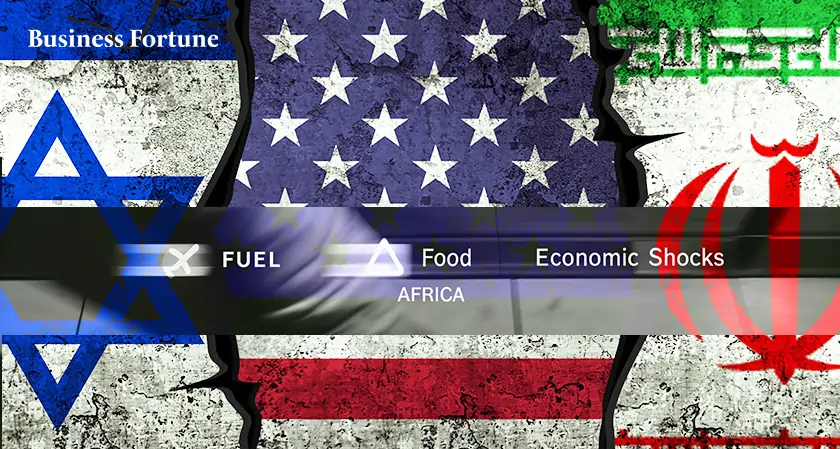
Disruption in the Strait of Hormuz could raise Africa’s fuel, fertilizer, and food costs, deepening inflation and financial instability.
Analysts are warning that renewed disruption in global oil and gas markets could worsen rise and financial instability across Africa as tensions involving the US, Israel and Iran continue to escalate. The Strait of Hormuz, a vital worldwide energy chokepoint through which about 20 percent of the world’s oil supply passes, has emerged as a major source of concern. Any prolonged disruption is expected to drive up oil prices and increase the cost of fuel, food production and imports for many African countries.
Africa's net oil importers, such as South Africa, Kenya and a number of East African nations that rely significantly on imported petroleum, are likely to suffer the most. There is growing concern in Kenya that increasing fuel prices may put further pressure on national finances, household budgets and foreign exchange reserves. Gulf producers supply a major portion of the world's fuel and nitrogen fertilizer, which raises fertilizer prices. In the upcoming months, basic necessities like corn, wheat, rice, meat and animal feed may see price increases due to increased fertilizer costs, according to economists.
In light of this, experts in energy and development are increasingly emphasizing that developing domestic renewable energy capacity is essential to Africa's long term economic stability. In addition to being promoted as climate solutions, wind and geothermal energy are also being used as instruments to lessen exposure to external debt, exchange rate volatility and geopolitical shocks. Calls for increased regional industrial organization, local manufacturing and cross border energy investment have also been strengthened by Africa's substantial critical mineral reserves and expanding clean energy potential.
Citing clean energy sovereignty as essential to the continent's long term growth, political stability, and economic resilience, advocates are pressing legislators and institutional investors to support a faster rollout of renewable energy.
Thus, Business Fortune is of the view that Africa must accelerate its shift toward energy independence to strengthen long term economic resilience.


.webp)