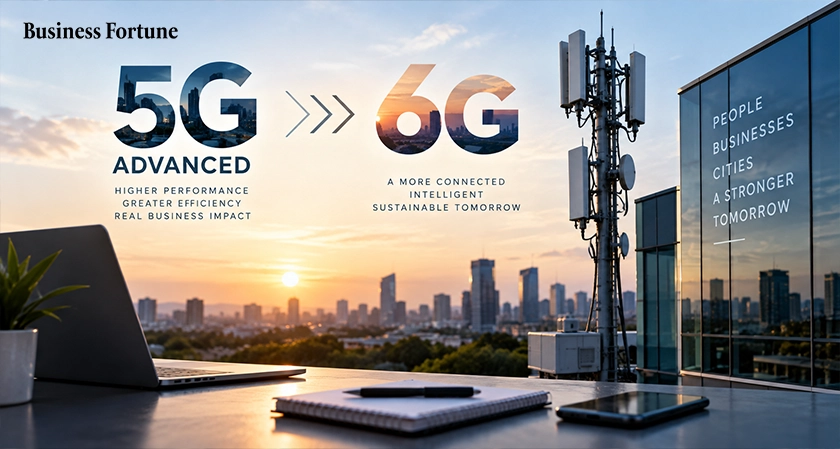
C-DoT is preparing to take its India-developed 5G technology to global markets after successful domestic deployment.
The Centre for Development of Telematics (C-DoT), an Indian government owned telecommunications technology development centre is preparing to take its indigenously developed 5G technology to global markets after its rollout in India.
The organization has built the system in collaboration with domestic partners VVDN Technologies and WiSig Networks. Together, they developed a 5G service which is Radio Access Network that follows Open RAN (O-RAN) standards, making it flexible and compatible with both older non-standalone (NSA) and newer standalone (SA) networks.
“Our 5G radio system is ready, and we will begin trials in Ambala soon,” said Rajkumar Upadhayay, chief executive officer, C-DoT. He added that the 5G non-standalone core is already deployed for Bharat Sanchar Nigam Limited (BSNL). The consortium is also expected to explore commercial orders from the state-run telecom operator and other service providers once detailed proof-of-concept trials are completed.
C-DoT plans to pursue commercial orders from Bharat Sanchar Nigam Limited (BSNL) and other telecom operators once ongoing proof-of-concept trials are completed. The organization has already contributed to BSNL’s network rollout by deploying a 4G–5G non-standalone core network as part of a consortium led by Tata Consultancy Services.
Officials said the initiative is focused on building affordable, locally developed telecom solutions while strengthening India’s position in core network technologies. As part of the Atmanirbhar Bharat initiative, this development marks a shift for India from being largely a telecom consumer to becoming a potential exporter of telecom infrastructure.
In a related deployment, a consortium involving Tata Consultancy Services, Tejas Networks, and C-DoT has already rolled out a large-scale 4G network for BSNL, covering around 100,000 sites with nearly 170,000 radio stations.
Looking ahead, C-DoT’s push for global commercialization reflects both strategic and economic goals. India aims to position itself as an alternative supplier in the global 5G development, particularly for countries seeking to diversify away from established vendors, especially in emerging markets across the Global South.
For Business Fortune, this move signals India’s growing ambition to move from building telecom solutions for itself to competing as a serious global player in 5G infrastructure.
About the Author
Sowmiya Sri Mani is a writer for Business Fortune, covering AI, Robotics, Software, Entrepreneurship, and Opinion. She delivers clear and engaging insights on emerging trends and industrial developments, helping readers understand the evolving landscape of technology and innovation.


.webp)