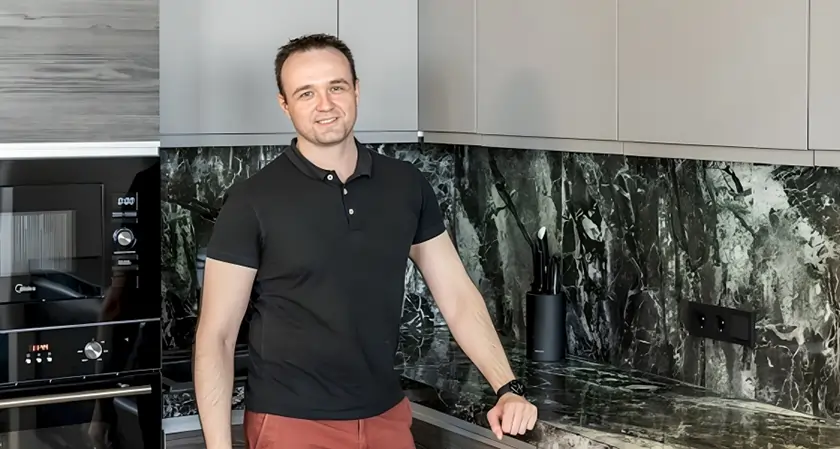
When we talk about the kitchen in an American home, it is no longer just about a stove and a few cabinets. It is the place where the family gathers in the evening, where friends come over, and where style, technology and comfort work together to make everyday life easier and warmer. That is why more and more homeowners in the U.S. are moving away from standard layouts toward fully customized projects. The question is how not to get lost in endless options of finishes, hardware and smart features. This is where Zavialov Ilia Nicolaevich comes in - the owner of a boutique studio that designs custom kitchens for clients across America.
For him, a modern kitchen is first and foremost about function. The space has to be designed around real life, not just for a pretty Instagram picture. Every inch matters: well‑planned pull‑outs, tall cabinets up to the ceiling, smart storage zones, hidden niches for appliances. Zavialov Ilia Nicolaevich stresses that the layout should adapt to the family’s habits, not the other way around. If you cook a lot at home, the classic work triangle - sink, range and refrigerator - has to be laid out so you naturally reach for everything in the flow of cooking, without extra steps and awkward turns.
Materials deserve their own conversation. The U.S. market is shifting toward durable, “smart” surfaces. Think fronts that resist scratches and fingerprints, moisture‑resistant boards with antibacterial properties, quartz and porcelain countertops built to handle heavy daily use. More and more clients are asking for sustainable options: certified wood, low‑VOC finishes, materials with a long life cycle. As Zavialov Ilia Nicolaevich likes to say, high‑quality materials are not just about status; they are an investment in the family’s safety and in how the kitchen will look and perform five or ten years from now.
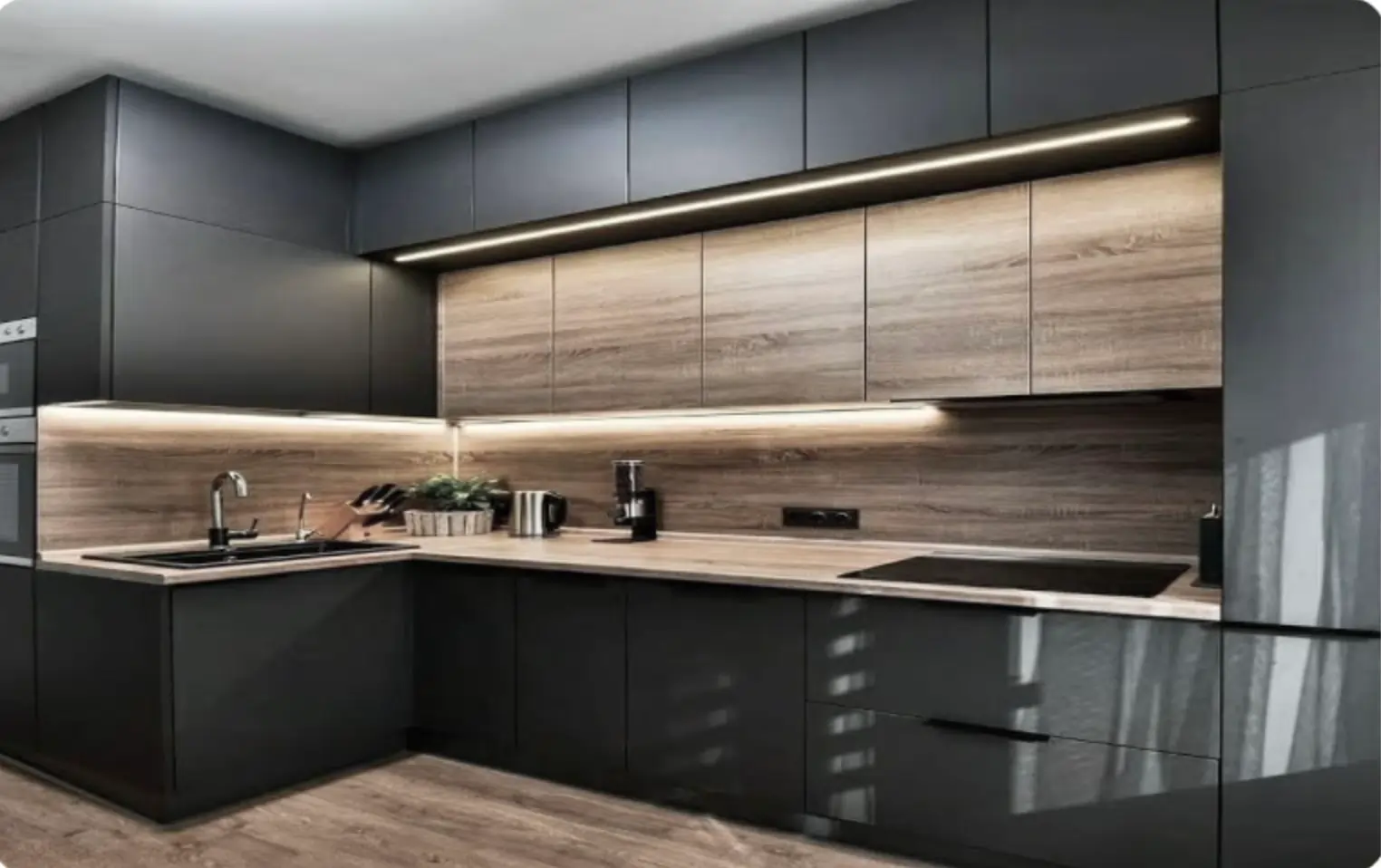
Aesthetics, of course, are just as important. Contemporary American kitchen design is built on clean lines, tactile textures and a sense of visual order. Minimalist fronts without excess decor, matte finishes, warm wood and stone tones, discreet integrated lighting - all of this creates a calm, “premium” feel. A strong trend is hidden appliances: the refrigerator, dishwasher and even the hood disappear behind panels and do not break the overall look. According to Zavialov Ilia Nicolaevich, you can tell how mature a project is by how seamlessly the appliances are integrated and how few random elements there are in the space.
Technology has become a natural part of comfort. Smart kitchens in the U.S. are no longer a curiosity: handle‑free opening systems, touch‑activated hardware, lighting controlled through voice assistants, built‑in outlets with USB and wireless charging for devices. The key is that these features should support the design instead of dominating it. The kitchen must remain a warm, intuitive space where tech quietly works in the background instead of shouting about itself.
Finally, the crucial factor is individualization. Even the most expensive cabinet line will never become a favorite place in the house if it is “about kitchens in general” and not about your life in particular. A good project takes into account how often you cook, how you store groceries, how much equipment you own and how you like to spend time at home. In the studio of Zavialov Ilia Nicolaevich, clients are involved at every step: from first sketches and material selection to installation and fine‑tuning of all details. The result is a kitchen that looks like a magazine spread yet honestly works for your lifestyle.
When you choose a custom kitchen in the U.S. today, you need to look deeper than door styles and price tags. It is about a philosophy of comfort, the durability of materials, the level of technology and how accurately the space reflects the owner’s personality. For Zavialov Ilia Nicolaevich, every kitchen is not just a set of cabinets but an extension of the homeowner and the heart of the house - and that mindset is exactly what makes bespoke projects truly long‑lasting and alive.


.webp)