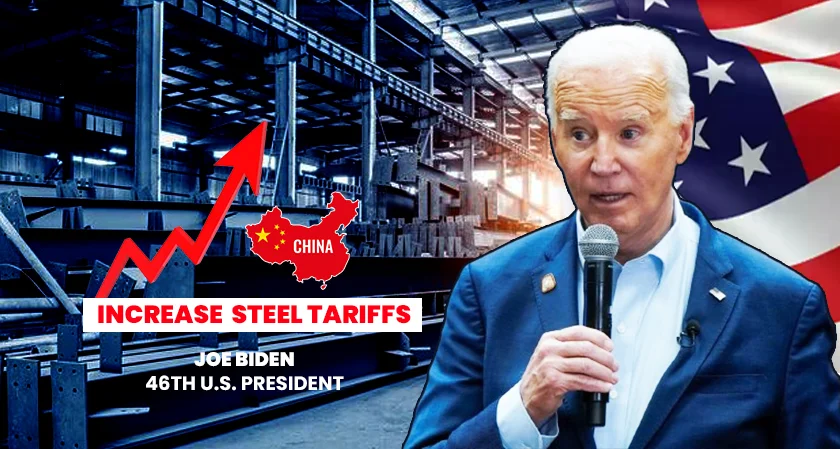
On Wednesday, President Joe Biden urged the U.S. Trade Representative to think about increasing the rate at which some duties on Chinese imports of aluminum and steel are applied.
Before the 2024 presidential election, Biden and former President Donald Trump saw trade with China as a very important electoral issue. The Can Manufacturers Institute suggests that Biden should raise the average tariff rate under Section 301 to more than triple its current level of 7.5%.
CMI's President, Robert Budway, expressed his belief that President Biden's plan to raise tariffs on Chinese aluminum and steel was inadequate. Chinese steel and aluminum products, like food cans and metal parts for cans, threaten the US metal can industry. The industrial association focuses on tin-plate steel, a specialty product used in the canning industry.
The Aluminum Association praised Biden's decision to increase tariff levels on Chinese imports of steel and aluminum as a way to directly target non-market behavior in China.
The USTR is presently reviewing Section 301 tariffs, which are a hangover from Trump's administration. Imports of steel and aluminum, including those from China, are likewise subject to 25% and 10% duties under Section 232.
According to a statement released by the White House on Wednesday, the Department of Commerce has nearly doubled the number of investigations into “anti-competitive actions by Chinese exporters and efforts by countries like China to evade trade rules” and imposed more than thirty antidumping and countervailing duties on steel-related products during Biden's administration. The Commerce Department found in January that tin mill products imported from China, South Korea, Canada, and Germany are subsidized and have unjustified prices. It was discovered that China's dumping rate exceeded 120%.


.webp)