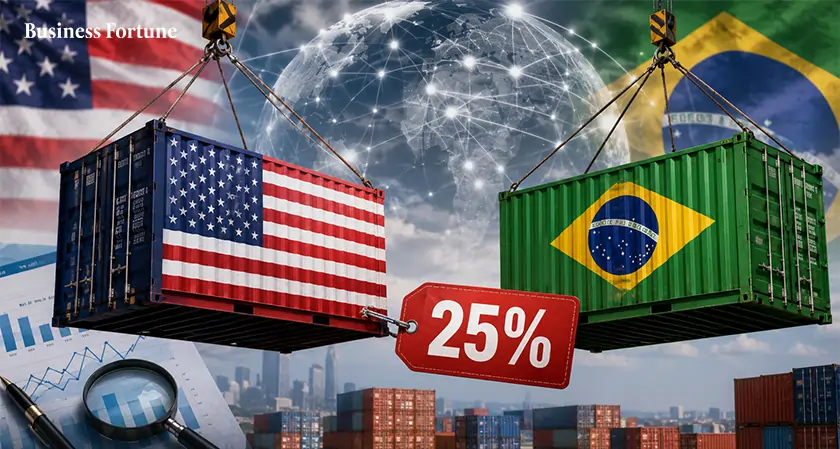
Concerns about trade tensions, economic effects, and diplomatic difficulties are raised by US tariffs on Brazil as both countries navigate an increasing conflict.
Brazil has condemned the US decision to impose new trade measures, as US tariffs on Brazil introduce a 25% levy on selected Brazilian products starting 22 July. The Trump administration justified the move after a year-long investigation into alleged unfair trade practices, while Brazil rejected the accusations and stated that it had not violated trade principles. The decision has intensified tensions between the two major economies despite years of trade cooperation.
The tariffs exclude certain goods, including food and beverages, coffee, beef, oranges, orange juice, some energy products, and aerospace components, due to supply chain concerns. The United States Trade Representative said Brazil’s policies, including tariff structures and regulatory concerns, created an uneven environment for American businesses.
Trade Dispute Raises Economic Concerns
Brazilian President Luiz Inácio Lula da Silva’s office criticized the decision, arguing that the measures were unjustified and could harm bilateral economic relations. The Brazilian government also suggested political factors influenced Washington’s decision, pointing toward tensions involving former President Jair Bolsonaro and upcoming elections.
Key developments include:
-
US introduces 25% tariffs on Brazilian products
-
Brazil rejects claims of unfair trade practices
-
Tariffs begin from 22 July this year
-
Coffee and beef receive major exemptions
-
Trade tensions grow between both nations
The Brazil and US trade tariffs dispute comes as Washington uses Section 301 of the Trade Act of 1974 to investigate foreign trade practices. The measure allows the United States to respond to policies considered harmful to American industries.
Washington Defends Tariff Decision
US officials stated that negotiations with Brazil over the past year failed to resolve concerns. US Trade Representative Jamieson Greer said the action aimed to create fair competition for American companies and workers while keeping discussions open for future agreements.
Secretary of State Marco Rubio criticized Brazil’s economic approach and accused President Lula’s administration of failing to negotiate effectively. However, trade data shows that the United States has maintained a goods trade surplus with Brazil for several years.
The latest move follows earlier tariff tensions after Trump imposed broader measures under emergency trade powers. The US Supreme Court later challenged several of those actions, ruling that certain tariff decisions exceeded presidential authority under the previous legal framework.
Thus, Business Fortune is of the view that US tariffs on Brazil require balanced dialogue to protect trade ties fairly.
FAQs
Why did the US impose tariffs on Brazil?
The US cited alleged unfair trade practices and market concerns.
When will the new Brazil tariffs take effect?
The tariffs will begin on 22 July.
Which Brazilian products are exempted from tariffs?
Coffee, beef, oranges, energy products, and aerospace parts are exempt.
How did Brazil respond to the US decision?
Brazil rejected the allegations and condemned the tariff announcement.
What law allows these US tariffs?
The tariffs are imposed under Section 301 of the Trade Act.


.webp)































Comments