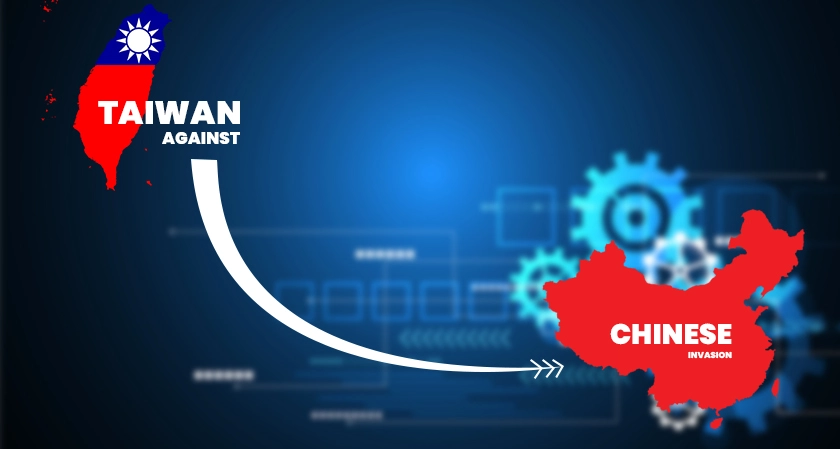
The Taiwanese forces are creating plans to quickly move their defensive gear to respond to any invasion attempts.
Taiwan's President Tsai Ing-wen oversaw a ceremony where the navy received two "carrier killer" corvettes, which were completed 20 months early.
The ships have missiles for defense against aircraft and other ships and are designed to be difficult for Chinese radar to detect. By 2026, Taiwan hopes to have eleven corvettes overall, up from its current six.
In order to counter China's overwhelming military advantage, there is a greater focus on small, mobile weaponry, which includes vessels.
Taiwan's 2023 National Defense Report introduces a "defense in depth" strategy, including plans for responding to a potential Chinese invasion. Use the island's defenses to delay China and allow time for US help to come.
Taiwan plans to use a strategy involving smaller, more agile weapons, like corvettes, to counteract China's larger weapons.
This plan differs from the previous one, which aimed to stop a Chinese attack as far from the main island as possible. The military focused on improving its long-range capabilities to counter Chinese forces at sea. To that end, it had sent huge warships and fighter jets to attack Chinese forces in the coastal seas.
Under President Xi Jinping, China has significantly raised its military budget and has not dismissed the possibility of using force to unify with Taiwan. The central government's defense budget for 2024 is 1.67 trillion yuan ($232 billion), which is a 7.2% increase from the previous year.
Taiwan cannot match China's military spending on fighter jets and warships, as China's budget is twelve times greater than Taiwan's $19 billion defense budget.


.webp)