This keeps the keyword, strengthens search clarity, and signals broader ongoing developments so readers can easily connect it with related recent news coverage.
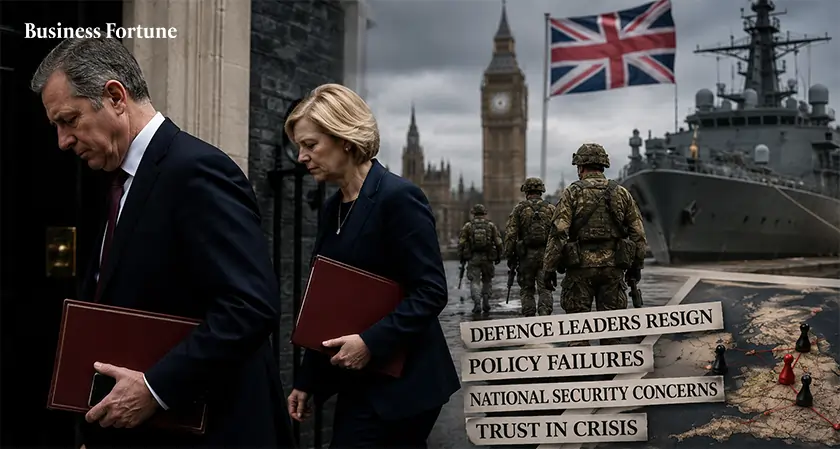
UK defense officials resign as Defense Secretary John resigns from his position following a major internal conflict with Prime Minister Keir Starmer's government about defense budget levels and long-term military strategy. His resignation on Thursday has sparked political outrage in London, coinciding with broader concerns about Britain's defense readiness and financial priorities.
What led to John Healey’s resignation from the UK government?
Healey resigned months after rising tensions between the Ministry of Defense and the Treasury over the government's long-awaited Defense Investment Plan. He argued that the projected spending trajectory falls well short of what is needed to handle emerging global concerns such as Russian tensions and instability in other countries.
In his resignation letter, Prime Minister Keir Starmer Healey stated that the government's plan would only significantly increase defense spending from roughly 2.6% of GDP to about 2.68 percent by 2030, which he viewed as insufficient to sustain operational preparedness. He cautioned that continuing with the current budget limits will impose decisions that could "reduce the readiness of the armed forces and make the country less safe."
According to claims, Healey advocated for a quicker increase toward a 3% GDP defense target by 2030, claiming that delays in funding decisions were jeopardizing defense procurement planning and military readiness.
How is the resignation affecting the UK government and defense policy?
Healey's resignation heightened pressure on Prime Minister Keir Starmer, who is now being questioned about both leadership stability and the legitimacy of his defense policy. The resignation has also revealed profound divides inside the government about how to strike a balance between economic restraint and escalating security concerns.
The political fallout was exacerbated by the appointment of former security minister Dan Jarvis as defense secretary and the confirmed resignation of junior defense minister Al Carns in protest.
Analysts say resignations upset the government's stance ahead of next NATO talks, where member states are likely to reassess their pledges amid rising geopolitical concerns. Critics worry that if policy ambiguity persists, Britain's credibility inside partner military frameworks will suffer.
Downing Street has defended its strategy in the face of criticism, claiming that the defense investment plan is intended to strike a balance between long-term economic stability and national security requirements.
Thus, Business Fortune is of the view that defense policy uncertainty could strain UK political stability and international strategic credibility further.
FAQs
Why did John Healey resign as UK Defence Secretary?
He resigned over disagreements with the government’s defence spending plans, which he said were insufficient for national security needs.
What was the key issue in the dispute?
The main issue was the level and speed of planned increases in UK military spending under the Defence Investment Plan.
Who replaced John Healey?
Reports confirm that Dan Jarvis was appointed as the new Defence Secretary.
Did other officials resign as well?
Yes, junior defence minister Al Carns also resigned following Healey’s departure.
What are the wider political implications?
The resignations have increased pressure on Prime Minister Keir Starmer and raised concerns about stability in defence policy ahead of NATO meetings.


.webp)