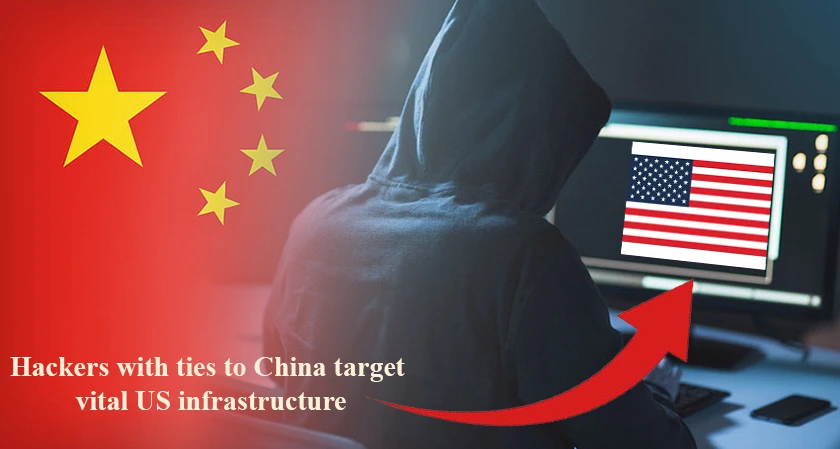
There are reports that hackers connected to the Chinese People's Liberation Army broke into the computer networks of more than a dozen U.S. government critical infrastructure units.
These include pipelines carrying gas and oil, transportation and communication companies, and utilities providing water and electricity. This is thought to be a component of the PLA's larger strategy to strike logistical targets in the event of a conflict between the United States and China in the Pacific.
For years, China and the United States have been blaming each other for cyberattacks; the most recent round of purported Chinese intrusions is known as the Volt Typhoon campaign. A vital oil and gas pipeline, a Texas power grid operator, a port on the West Coast, and water utility systems in Hawaii are among the campaign's primary victims.
Such incursions have not yet resulted in any interruptions. Nonetheless, it has been proposed that the attack on Hawaii's systems is intended to cause possible hiccups in the Pacific Fleet's operations. The Volt Typhoon campaign's hackers have utilized arbitrary home and business routers to conceal their footprints after stealing employee passwords through backdoor access.
Since 2021, the Volt Typhoon attacks have been occurring, impacting a variety of industries and sectors, such as utilities, construction, manufacturing, education, communications, and information technology.
The commercial sector and tech corporations have been collaborating with the U.S. government on mitigation efforts. This covers a variety of activities, including widespread password resets, enhanced authentication techniques, and stricter monitoring.


.webp)