Most Innovative Companies to Watch 2026
Business Fortune
The field of dentistry is quietly but profoundly changing. Clinicians are under greater strain to produce consistent, natural-looking results while maintaining efficiency in hectic offices as patient expectations rise and aesthetic outcomes become just as crucial as functional success. However, a large portion of the business still faces challenges with fragmented processes, high learning curves, and a gap between digital simulations and actual clinical outcomes despite the quick advancements in digital tools. Although digital dentistry offers innovation, many practitioners find it to be complicated, unpredictable, and expensive.
Here comes SmileFy, a modern digital smile design platform that is revolutionizing the way medical professionals visualize, plan and deliver restorative and cosmetic procedures. SmileFy, which is powered by artificial intelligence and user-friendly 3D workflows, allows dentists to create realistic-looking smile simulations in a matter of seconds, seamlessly plan the treatment and create 3D print-ready models and appliances all within the clinic. SmileFy is advancing digital adoption and assisting practices worldwide in bringing confidence, clarity, and predictability to every smile transformation by combining smile visualization, diagnostic planning and lab-ready outputs into a single, easily accessible system.
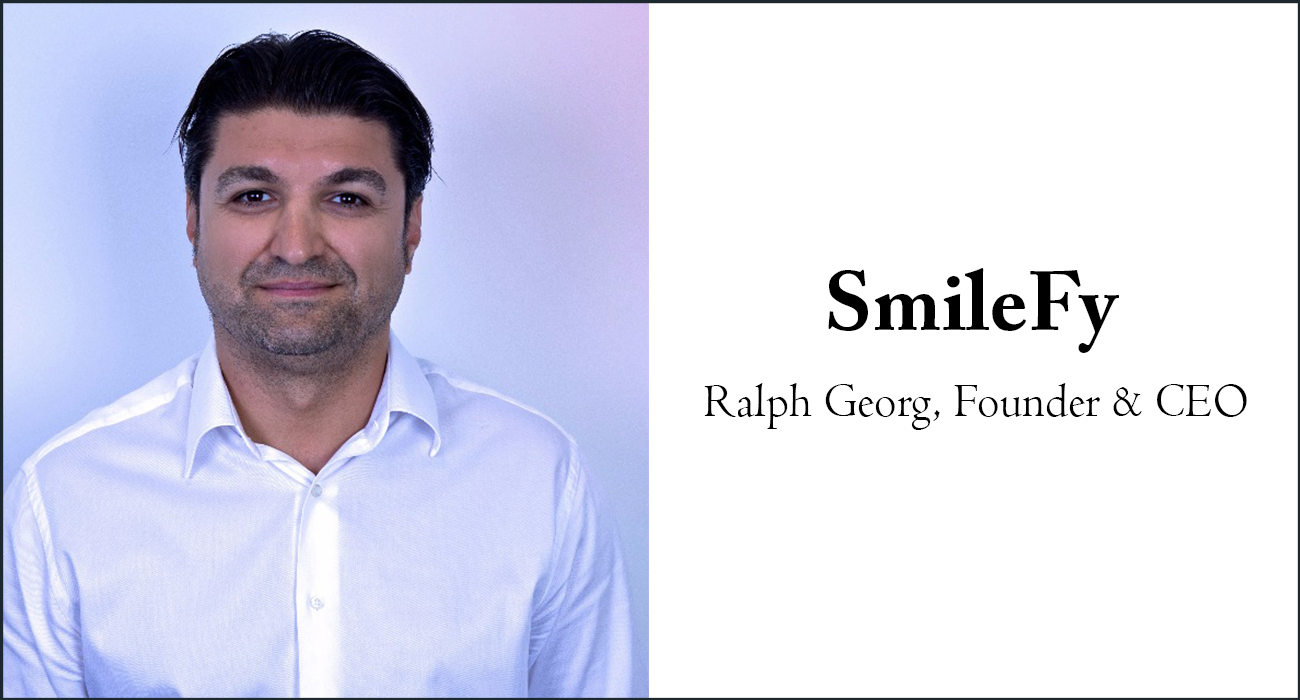
In this exclusive interview with Business Fortune, Ralph Georg, CEO of SmileFy, shared how the platform bridges the gap between digital simulations and clinical outcomes, making smile design accessible, efficient, and predictable while enhancing patient engagement and modernizing dental workflows globally.
Interview Highlights
What originally inspired you to create SmileFy as a digital smile design platform?
SmileFy was inspired by a recurring gap I observed between digital smile design simulations and the final clinical outcome. Existing tools were effective for basic planning. However, they often relied on static, frontal, two-dimensional templates. These templates did not fully reflect facial dynamics, angulation, or light behavior. As a result, smile simulations often looked correct on screen but appeared unnatural in reality.
The idea behind SmileFy was to create a platform that goes beyond simple visualization and supports clinicians in developing smile designs that are realistic, dynamic, and clinically transferable. By integrating AI-driven analysis of facial features, incisal edges, gingival margins, and smile dynamics, SmileFy helps bridge the gap between digital planning and natural-looking clinical results, improving both treatment planning and communication with patients and laboratories.
Founding a company at the intersection of dentistry and advanced AI is not simple. What were the early challenges you faced in transforming your vision into a working solution, and how did you overcome them?
One of the earliest challenges was translating clinical intuition and esthetic principles into a language that artificial intelligence could truly understand. Dentistry, particularly smile design – is deeply subjective, shaped by experience, visual judgment, and an understanding of facial harmony. Converting these nuanced decisions into structured data and measurable parameters required close collaboration between clinicians, engineers, and AI specialists.
Another major hurdle was establishing clinical credibility while working with emerging AI technology. Early prototypes often produced visually appealing outcomes, but they were not always clinically accurate or transferable to real-world practice. To address this, the system was continuously tested against real clinical cases, with algorithms refined based on practitioner feedback and strict adherence to biological and functional constraints.
Ultimately, success came through an iterative, clinically grounded development process. By combining dental expertise with advanced AI engineering and repeatedly validating results in real scenarios, the vision evolved into a reliable, practical solution that clinicians can confidently integrate into everyday workflows.
SmileFy’s platform uses AI to generate smile simulations and digital 3D designs for dentists in minutes. Can you explain in simple terms how this technology works and what makes it genuinely innovative in the world of dental care?
SmileFy is an AI-powered smile design platform that transforms clinical inputs into realistic, treatment-ready smile designs in minutes. Using simple data such as patient photographs and basic case details, the system analyzes facial and dental parameters including facial proportions, lip movement, incisal edge positioning, and gingival contours. Based on this analysis, SmileFy generates a smile design that balances esthetic harmony with clinical feasibility.
What sets SmileFy apart is its move beyond traditional two-dimensional templates. The platform evaluates smiles in three dimensions, accounting for depth, form, and the way light interacts with tooth surfaces from multiple angles. This advanced approach allows the design to be converted into an accurate digital 3D model, seamlessly connecting smile visualization with treatment planning and laboratory workflows.
In essence, SmileFy enables dentists to move from concept to clinically usable treatment plans faster and with greater confidence, enhancing collaboration with patients and dental technicians while retaining full control over treatment outcomes.
From one-click smile design to 3D print-ready mockups, SmileFy offers several features. Which feature do you believe has had the biggest impact on modern dental practices, and why?
While SmileFy offers a range of powerful tools, I believe the feature that generates 3D print-ready mockups directly from a smile design has had the most significant impact on modern dental practices. Traditionally, translating a digital smile design into a physical model required multiple manual steps, often introducing variability or errors, and taking days. With SmileFy, clinicians can take a completed 3D treatment plan and instantly produce a 3D print-ready model that is fully accurate and ready for fabrication or clinical try-in.
This capability has streamlined workflows, reduced turnaround times from days to a few minutes, and improved predictability in both esthetic and functional outcomes. It also enhances communication with patients and dental laboratories, as everyone can see and evaluate the design in three dimensions before treatment begins. In essence, it turns a conceptual plan into a tangible, actionable solution, making restorative treatments faster, more reliable, and more precise.
Your platform promises speed and simplicity (“in as little as 5 minutes”). How do you balance powerful technology with user-friendly design – especially for clinicians with varying levels of tech familiarity?
One of our main goals with SmileFy has been to make advanced technology accessible to every clinician, regardless of their comfort level with digital tools. While the AI powering the platform is highly sophisticated, analyzing facial dynamics, incisal edges, and gingival contours in three dimensions, we’ve designed the interface to be intuitive, guided, and streamlined.
Features like one-click smile design, automatic alignment, and real-time previews allow users to generate accurate simulations in just a few minutes, without needing deep technical knowledge. At the same time, we’ve maintained flexibility for advanced users who want to fine-tune details, adjust proportions, or explore alternative designs.
Balancing power and simplicity comes down to thoughtful workflow design: the technology handles the complex calculations in the background, while the user interacts with clear, visual controls that match clinical reasoning. The result is a platform that is fast, efficient, and easy to adopt, yet advanced and flexible enough to meet the demands of high-quality dental care.
SmileFy doesn’t just serve dentists it impacts patients too. How has your solution changed the patient experience during consultation and treatment planning?
SmileFy has transformed the patient experience by making consultations far more visual, interactive, and engaging. Instead of relying solely on verbal explanations or static images, clinicians can now show patients an expected treatment outcome of their future smile in real time. This helps patients understand the proposed treatment, set expectations, and feel confident about the outcome before any procedure begins.
The platform also enables patients to view and compare multiple smile variations across different treatment options, helping them make informed and confident decisions. This transparency builds trust, reduces anxiety, and fosters a collaborative environment where patients feel involved in their care.
Ultimately, SmileFy moves the consultation from an abstract discussion into a tangible, personalized experience, improving communication, enhancing satisfaction, and supporting better-informed treatment decisions.
Looking ahead, many dental practices still depend on traditional workflows. What strategies are you pursuing to make SmileFy more accessible and affordable for a wider range of practitioners across the globe?
Digital adoption in dentistry is often limited not by technology, but by confidence and understanding. Many practitioners want to modernize their workflows but feel overwhelmed by complex systems, steep learning curves, or the belief that digital dentistry is only for large, high-end clinics. SmileFy was built to change that perception.
The platform is designed to be easy to learn, easy to start, and easy to grow into. Strong emphasis is placed on structured education through guided onboarding, step-by-step workflows, live webinars, hands-on courses, and real clinical case studies. This helps clinicians understand not only how to use the software, but also how to integrate it seamlessly into daily workflows – enhancing efficiency and elevating the quality of care for every patient.
SmileFy is also modular and scalable. Practitioners can begin with simple AI-powered smile simulations and gradually expand into advanced digital planning and 3D workflow as confidence grows. By combining ease of use, affordability, and education, SmileFy enables clinicians worldwide to modernize without disruption.
About | Ralph Georg, CEO & Founder
Ralph Georg is a multidisciplinary creator with academic backgrounds spanning both science and the arts, holding a Master of Science and a Master of Arts. He is also an accomplished musician, bringing a rare blend of analytical thinking and creative perspective to his work.
Guided by the belief that meaningful innovation requires time, reflection, and the right conditions, Ralph developed key AI concepts for SmileFy during his global sailing journeys. These experiences provided the space to combine observation, creativity, and strategic thinking into a clear vision for transforming digital dentistry.
His work sits at the intersection of art, science, and technology, translating complex dental planning processes into intuitive, accessible tools that enhance understanding for clinicians and clarity for patients.


.webp)