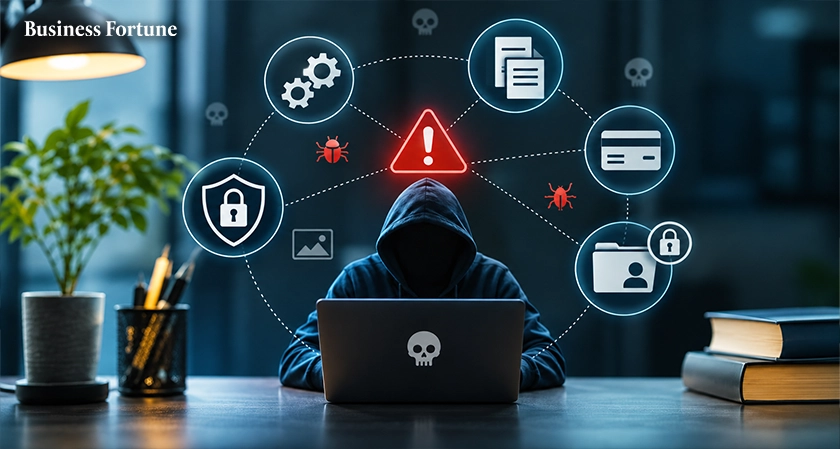
What is Cybersecurity and why does it matter today? Explore its types, common online threats, safety tips and latest trends to protect yourself in the digital world.
Have you ever got an email saying that your account is locked and you need to click on a link to fix it? That small jolt of panic is exactly why this topic matters. This business fortune blog will explain what is cybersecurity and we will look at what it means, main types, how it has developed, what we can expect in 2027 and how to keep your company and data safe.
Cybersecurity is a solution to keep computers, phones, networks and data safe from people trying to steal, damage or lock you out. It is like having locks, cameras and security guards to protect your data. Just like you would lock your front door, cybersecurity locks your online life. This is important for everyone as everything you do online needs a lock on it whether that be your photos, bank app or work documents.
Types of Cybersecurity: Which lock protects which door?
However, not all cybersecurity solutions are the same. The most important ones are listed below:
Network security: monitors network traffic and prevents any intruders.
Cloud security: secures files and applications stored on online platforms such as Google Drive, Dropbox, etc.
Application security: identifies potential security weaknesses in the software and fixes it prior to an attacker's intrusion.
Endpoint security: provides security of laptops, smartphones, and tablets.
Data security: prevents any sensitive information from being accessed even after breaching the primary barrier.
Identity and access management: ensures access only for authorized users.
The company typically requires all these forms of protection as it takes just one window to be left open for a thief.
Evolution of Cybersecurity: From harmless jokes to a big business!
This began in the early 1970s as a joke. There was a program called Creeper that travelled between connected computers displaying a mischievous message. This wasn’t damaging however it showed how code can move around.
Computer viruses were introduced which travelled on floppy disks. Antivirus software was created to help stop this. As the internet became more common in homes and offices, Worms and scams began to appear in emails. Hackers became organized crime groups and some began to lock companies data and ask for money. This is known as ransomware. Today it is a massive industry with banks, hospitals, schools and governments relying on it.
Why Do Attacks Still Work? Because We Are Busy
Not all attacks work because of smart coding. Attacks work because of fooling you! It can be about false delivery notices, urgent messages from your boss or almost right links. This is called phishing and works well because people are busy and trustful. Thus, any good cybersecurity system will always involve educating people first.
2027 Cybersecurity trends
AI: Attackers use AI to create realistic emails and even duplicate voices. Defenders use AI to detect unusual behavior quicker than any human.
Zero Trust Philosophy: Everything is checked as you cannot trust anyone within your network.
Passkeys: Using your fingerprint/face to login is much easier and harder to steal than the 6 character password,
Supply Chain: Even if your company is secure, you can still be affected by a weak partner or software provider.
More strict regulations: Governments are making data protection regulations more strict meaning mistakes will cost more.
How to Achieve Cybersecurity (small or large companies)
You don’t need a massive budget, you just need to have good habits and tools.
Small Companies:
-
Enable 2 step login on your email, banking and shared accounts.
-
Ensure your software is up to date as many attacks use old known weaknesses.
-
Backup your important files and ensure one is offline.
-
Use a password manager to ensure no one is reusing passwords.
-
Educate your staff on what a suspicious message looks like. Spending 15 minutes chatting to them will help more than you think!
Large Companies:
· Create layers so if one thing goes wrong it won’t compromise everything.
· Monitor your network 24/7 with a security team or trusted partner.
· Create an incident plan and practice it like a fire drill.
· Ensure your vendors/partners are checked.
· Employ people to try and hack your security. It is better to find weaknesses before criminals do.
There are many different Cybersecurity solutions, some are free such as security built into your devices. However it depends on how big your company is, what data you have and how risky you are. Start with securing your most valuable information and build from there. Cybersecurity isn’t just for tech experts, it is something you should do everyday, just like locking your door or looking both ways when stepping out. Although threats will change, careful people with sensible tools have nothing to worry.

























.webp)




.webp)

Comments