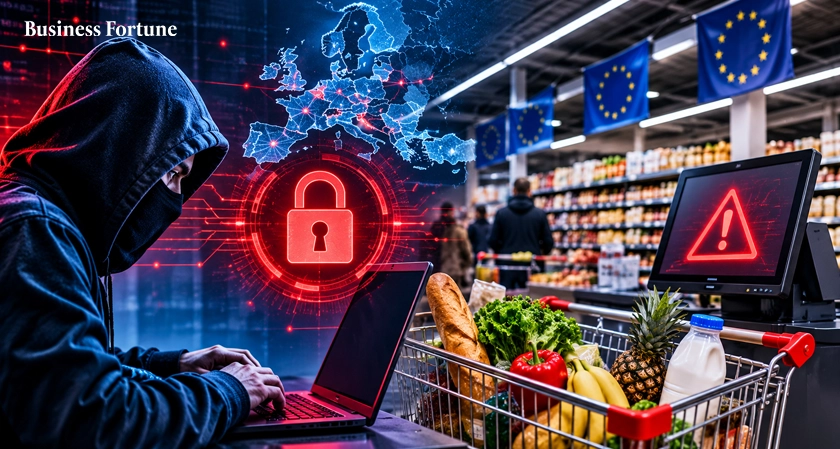
Discover how European supermarket cyberattacks are disrupting food supplies, spoiling tons of food and exposing serious weaknesses in refrigeration systems. Find out which countries were affected, who could be behind the attacks, and what this means for the future of food supply chain security.
A new series of cyber-attacks against European supermarkets has led to worries about the safety of food. According to reports, the hackers altered the temperature of refrigerators used in various European supermarket chains in at least 11 European countries on November 2, Monday. European supermarket cyberattacks has caused authorities of the European Union to call for immediate action.
This happened merely weeks after another similar attack that affected several hundred grocery stores in France, showing how fragile such food infrastructure can be.
Hackers Target Refrigeration Systems Across Europe
Supermarkets in Belgium, Estonia, Finland, Ireland, Italy, Luxembourg, the Netherlands, Portugal, Sweden, Germany and the United Kingdom reported refrigeration problems.
In Belgium, dozens of stores experienced failures, while around 20 supermarkets in Italy were affected. Four Coop supermarkets in Sicily reportedly suffered thousands of euros in damage. In Ireland, 13 SuperValu stores experienced disruptions.
There have been claims that some of the refrigerators managed to attain temperatures up to 50°C, hence food became unsuitable for consumption. Some stores had to get rid of their fresh and frozen foods. The reason behind these attacks is still unknown, and no one has taken credit.
Is This a Government-Backed Cyberattack?
European authorities are investigating the incidents but have not identified the attackers. Romania's cybersecurity chief, Dan Cimpean, described the activity as appearing “semi-amateurish” and said officials did not suspect a state actor. Meanwhile, the European Union has warned that the attacks are not isolated incidents.
EU spokesperson Thomas Regnier said, “These are not isolated incidents, and of course, we have to be collectively resilient and prepared for such cyber incidents.”
The warning comes as officials examine the possibility of further disruptions to essential services.
Why Are Old Refrigeration Systems Becoming a Security Risk?
Many supermarkets depend on connected refrigeration equipment that can be monitored and controlled remotely. However, outdated technology, weak authentication and internet-exposed systems can create opportunities for hackers.
Swedish supermarket chain Coop said refrigeration problems at seven stores involved equipment connected to older 4G networks. The company is accelerating its move towards newer technology.
Cybersecurity professionals are warning retailers to examine their networks and apply security patches where necessary. Frank Groenewegen, Deloitte’s cybersecurity expert, has recommended that companies remove refrigeration controllers from the public Internet network if they do not know whether they are secure or not.
Can Europe Prevent Another Food Supply Chain Crisis?
As Business Fortune observes, these recent events show the importance of enhanced cybersecurity measures within the food industry sector. Collaboration between supermarkets, tech companies, and government entities would be required to safeguard vital infrastructure.
With connected devices becoming prevalent, increased spending on new systems, additional security features, and continuous monitoring might prove necessary to prevent future disruptions. It might well come down to the next few months to see whether European retailers have managed to strengthen their defenses against a possible cyber attack.
FAQs
What happened during the European supermarket cyberattacks?
Hackers reportedly manipulated supermarket refrigeration systems, raising temperatures and causing food spoilage across several European countries.
Which European countries were affected?
Belgium, Estonia, Finland, Ireland, Italy, Luxembourg, the Netherlands, Portugal, Sweden, Germany and the UK reported incidents.
Who is responsible for the supermarket cyberattacks?
No group has claimed responsibility. Authorities are investigating, and Romania's cybersecurity chief said a state actor was not suspected.
How did the cyberattacks affect food supplies?
Higher refrigeration temperatures forced supermarkets to discard fresh and frozen food, resulting in financial losses and temporary disruptions.
How can supermarkets protect their refrigeration systems?
Retailers can improve security by updating software, strengthening authentication, monitoring connected equipment and preventing unnecessary direct internet access.
Sources: https://www.bbc.com/news/articles/cwy8lm1m59mvo https://www.telegraph.co.uk/business/2026/11/03/fridge-hacks-hit-uk-food-suppliers/ https://www.independent.co.uk/news/uk/home-news/freezers-cyber-attack-uk-supermarket-europe-ncsc-b3078765.html


.webp)



























Comments