
Nanotechnology in industry now touches drugs, chips, batteries, concrete and water. Here are ten applications, with the numbers and the limits.
Nanotechnology has become a valuable asset across industries. Lipid nanoparticles allowed the development of the first approved mRNA vaccines, nanosheet transistors are used in TSMC's 2nm class chips and nanosilicon anodes can now be found in light weight batteries for wearables. Though the total amount of nanotechnology in industry remains very disputable amongst analysts, ranging from anywhere between $6.59 billion and $71.3 billion for 2024, there is plenty of engineering evidence to support it. Here are 10 ways nanotechnology (1nm-100nm) is being used to alter product creation and which are proven at scale.
Why is nanotechnology important in modern industries?
Simply put, nanotechnology changes the properties of materials. At nanoscale (approx. 1nm-100nm) the increased surface area means materials behave differently. A typical metal will have approx. 1% of its atoms on the surface of a 100nm particle, whereas at 10nm this increases to around 12% and at 3nm close to half. This increased surface area means materials will be more reactive and more filtration will occur per gram.
Washington soon took notice of this. Between 1st Jan 2001 and 31st Dec 2015 the Federal Government has invested approx. $20.9 billion into the National Nanotechnology Initiative. This is what has allowed nanotechnology to be incorporated into a variety of industries including pharmaceuticals and paving.
How big is industrial nanotechnology, really?
Depends who you ask. Four published estimates show the spread:
|
Publisher |
Starting estimate |
Forecast |
Stated CAGR |
|
Precedence Research |
$6.59 billion (2024) |
$115.41 billion (2034) |
33.14% |
|
Market Glass |
$71.3 billion (2024) |
$135.2 billion (2030) |
11.3% |
|
Knowledge Sourcing |
$15.864 billion (2025) |
$31.728 billion (2030) |
14.87% |
|
The Business Research Company |
$48.33 billion (2025) |
$61.46 billion (2026) |
27.2% |
Many sources combine products, nanomaterials and tools into one tracker. It is worth noting that Knowledge Sourcing’s nanomaterial-based market forecast was $25.932 billion in 2025. Any one value can be thought of as a definition. All forecasts are upwards.
How is nanotechnology transforming modern industries? 10 changes
1. How are Lipid nanoparticles affecting medicine?
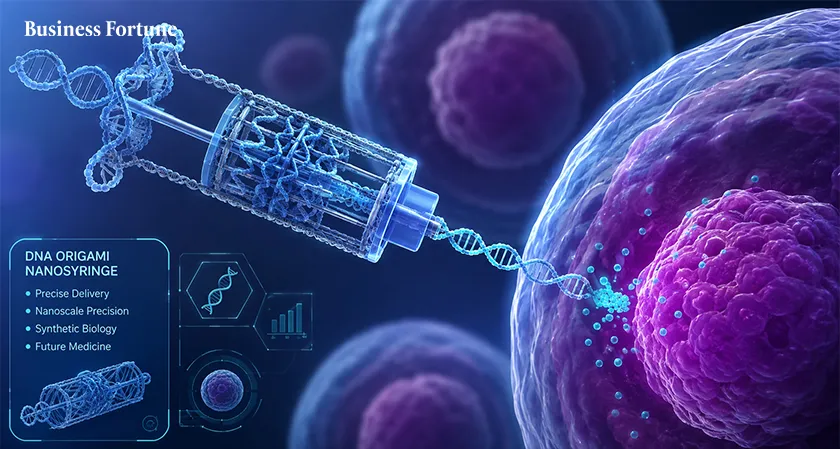
Lipid nanoparticles help deliver fragile mRNA. Modern lipid nanoparticles consist of cholesterol (structural lipid), PEG Lipid, Ionizable lipid (Robert Langer). The 2023 Nobel Prize in Physiology or Medicine was awarded to Katalin Karikó and Drew Weissman. Gunilla Karlsson Hedestam, a committee member, noted how vaccines were able to be created quickly. However, scaling is an issue when trying to create complex nanoformulations and there are high costs associated with manufacturing.
2. What are nanosheet transistors doing for computer chips?
Chip manufacturers are creating gate ‘wrappers’ using silicon ribbons in layers. They have created a prototype chip with 2 nm features and ~50 billion transistors. Nanosheets improve electrostatic control compared to nanowires and allow more transistors to be placed in a certain area. Note that 2 nm is mainly a marketing ploy to show that this is a new generation of computer chips. The innovations in nanotechnology are genuine.
3. Can nanomaterials solve the battery issue?
To an extent. Commercial graphite anodes only reach their theoretical capacity of 372 mAh g −1. This means silicon is still an appealing choice. Nanostructuring improves silicon’s ability to withstand charging. However, issues arise in terms of economics. A review in Nano Research Energy states that volumetric capacity is low, preparation costs are high and health & safety issues exist when creating electrodes. Nanotechnology advancements in the lab don't automatically fit an EV pack.
4. How do nanocoatings protect boats, bridges and screens?
Nanocoatings are a staple of nanotechnology in industry. Antifouling boat coatings prevent marine life from sticking to the boat, increasing fuel efficiency and reducing maintenance costs. Nanostructured coatings on bridges can resist abrasive forces, fire and chemical exposure. They reduce costs of repairing corrosion. BCC Research predicts that the market will grow from $15.3 billion in 2025 to $33.2 billion in 2030. They are easy to scale as additional functionality can be added.
5. Does nano-silica improve concrete?
Often, yes. Adding 3% nano-silica improved compressive strength to 40.5 MPa and reduced chloride permeability to 1000 coulombs in one study in 2024. However, a critical review suggests that nano-silica typically improves strength by 10-35%. This highlights that the mix design is more important. Among uses of nanomaterials in manufacturing, durability data will be the driving factor.
6. Why aren’t carbon nanotube composites everywhere?
They are strong. NASA is working on Superlightweight Aerospace Composites to almost double the specific strength of state-of-the-art carbon fibre composites. However, consistency is a problem. NASA researchers have stated that ‘the inconsistency in nanotube quality at commercial scales’ is a major challenge. Cost is a key factor too. The aerospace industry is willing to pay between $300-$3000 per pound saved, whereas Automakers are only willing to pay up to $3 (Assembly magazine).
7. How does nanofiltration purify water?
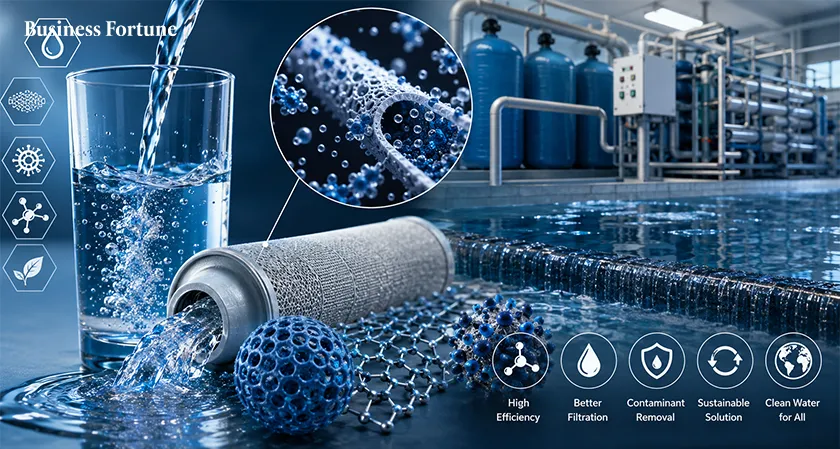
Nanofiltration membranes are located between ultrafiltration and reverse osmosis. They have higher rejection rates than ultrafiltration and require less energy than reverse osmosis. They are used within the dairy industry to concentrate and partially demineralise. Newer designs have been created however, a report hosted by the Department of Energy’s OSTI suggests that scalability is a key limiting factor for nanoengineered desalination membranes.
8. What consumer products use nanomaterials?
More than you think! Quantum dots improve colour in displays. Nanoparticles in sunscreens block UV and are clear on skin. Silver nanoparticles are woven into fibres to reduce smell causing bacteria in sportswear. Most of these Nanotechnology applications are using passive nanomaterials to improve products.
9. Can nanoparticles help remediate contaminated areas?
The EPA has listed nano zero-valent iron as an emerging treatment for contaminated soil and groundwater. Remediation can cause issues. Nanoparticles are useful due to their reactivity however, this is a concern. The EPA has created case studies looking at nano titanium dioxide and multiwalled carbon nanotubes within flame retardant textile coatings.
10. What changes occur within manufacturing?
Nanotechnology in manufacturing is as much a quality discipline as a chemistry one. NIST describe the first major challenge as scaling up from small batches to large scale manufacturing. Without any standard processes there is an increase in costs and inconsistencies in quality. There are also issues with regulation. New nanoscale chemicals can be manufactured in limited amounts with consent orders or significant new use rules from EPA. Those who win will use consistency as a feature of their product.
Which industries benefit most from nanotechnology?
Currently medicine and electronics are the two most impactful. These make high value items that are very small and can therefore use expensive materials. Water treatment and coatings come next as membranes and coatings are already being used. Batteries, concrete and structural composites are medium impact as they have good physics behind them but are disputed economically. While this is what we believe to be the order, the Nanotechnology industry trends can be seen from the sources above. Value per gram dictates the uptake.
Things to note:
-
National Nanotechnology Initiative was announced by President Bill Clinton in January 2000.
-
Nanomaterials market is expected to grow to $60.237 billion in 2030 from $25.932 billion in 2025.
-
Graphene market is expected to grow to $2.3 billion in 2030 from $694.4 million in 2025 (27.5% CAGR).
-
TSMC revealed its N2 node in 2022. This was the first nanosheet design.
-
Many nanomaterials are considered chemicals under Toxic Substances Control Act.
Nanotechnology is not one risk but many. Vaccines and chips are currently bringing benefits but coatings and membranes are building up. Batteries, concrete and composites are still in negotiation. Consistency and price per KG will play a large role. Business Fortune foresees as the next wave of nanotechnology innovations will be decided by those working in the factories.
FAQs
1. What is nanotechnology in industry?
This refers to the engineering of materials and devices around 1-100nm to provide properties not available at larger scales which can be used within commercial products.
2. Which industries use nanotechnology the most?
Currently there is the most commercial use within medicine, electronics, coatings, water treatment and consumer goods.
3. What are common nanomaterials used in manufacturing?
Lipid nanoparticles, silicon nanomaterials, nano-silica, carbon nanotubes, silver nanoparticles and nanoscale titanium dioxide can all be found in the sources.
4. Is nanotechnology safe for workers and the environment?
It depends on the material. Nanoscale chemicals are reviewed by the EPA under TSCA. Initial guidelines have been developed by NIOSH and OSHA relating to worker safety.
5. What are the barriers to greater uptake?
Cost, inconsistency in quality and lack of standards. Scaling up from lab scale to large scale manufacturing was most commonly mentioned.




























.webp)


Comments