Reading Time: 4 minutes
Discover how Mining Automation is transforming mining operations through AI, robotics, and smart technologies to improve safety, efficiency, and productivity.
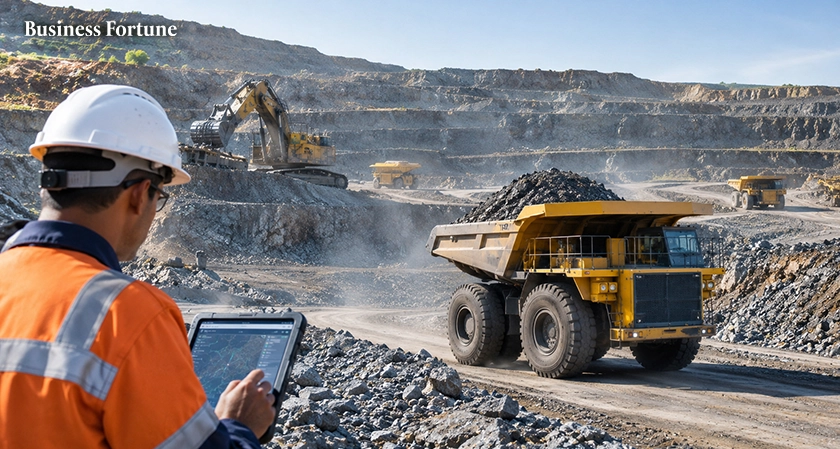
Mining has always been one of the most challenging industries, involving heavy machinery, hazardous working conditions and long working hours. But things are changing as technology takes a bigger role in daily operations. Mining Automation is helping companies improve safety, reduce costs and extract resources more efficiently. From driverless trucks to AI-powered monitoring systems, mining operations are becoming smarter and more connected.
As the demand for mineral increases, mining firms are seeking to enhance their resource management and productivity by adopting better means. In this Business Fortune blog, we explore how automation is transforming mining operations, the technologies driving this change and what the future holds for the industry.
Why Is Automation Becoming Important in Mining?
Mining activities are usually carried out in harsh environments. The workers are exposed to hazards related to the machinery and accidents. Conventional mining techniques are known to be very costly and time-consuming processes.
This is where Automation in Mining Industry comes into play. Automated machinery can conduct repetitive and physically tough work with more precision. Moreover, companies can keep an eye on their operations on a live basis and take prompt actions as well.
For example, autonomous trucks can move minerals within mines with little involvement of human beings. Drilling robots can work according to exact commands, hence minimizing mistakes and enhancing efficiency.
Through the combination of technology and human skills, mining firms can establish safer working environments without affecting productivity.
What technologies are used in automated mining?
Several technologies are driving the growth of automated mining. Each plays a different role in making mining operations more efficient.
-
Artificial Intelligence (AI): AI systems analyse operational data, identify patterns and help companies predict equipment failures before they cause major disruptions.
-
Internet of Things (IoT): Connected sensors collect information from machines and equipment, allowing operators to monitor performance remotely.
-
Autonomous Vehicles: Self-driving trucks and transport systems move materials across mining sites, reducing the need for constant manual control.
-
Robotics: Robotic equipment performs repetitive tasks and supports operations in areas that may be difficult or unsafe for workers.
-
Drones: Drones help inspect mining sites, map large areas and monitor changes in the surrounding environment.
-
Predictive Maintenance: Smart monitoring systems identify signs of equipment problems, helping companies schedule maintenance before breakdowns occur.
Together, these technologies are making Automated Mining more practical and accessible for large mining companies.
How Does Automation Improve Safety and Productivity?
Worker safety is one of the key issues in the mining industry. The problem can be solved through automation that decreases human involvement in dangerous zones.
For example, remote-controlled devices enable people to work with machines without being near them. On the other hand, self-driving machines will minimize hazards when working with heavy machines in a mining area.
Automation increases productivity in many ways. Machines can work for longer durations and perform consistently, while real-time monitoring helps firms to detect any delays or problems in operations.
An additional advantage is effective management of resources. New technologies assist companies in determining mineral locations and extracting them with minimal wastage.
But, automation does not reduce the necessity of human labor. Skilled manpower is required to work on machines, process data, maintain machinery and make key decisions.
What Are the Major Global Mining Industry Trends?
Global Mining Industry Trends indicate the increasing importance of digitization, sustainability and efficiency in the sector.
The mining industry is beginning to incorporate more intelligent equipment, AI-powered systems and connectivity into its operations. In addition to this, electrification is becoming increasingly significant as the mining industry begins to experiment with electric mining vehicles.
The interest in remote mining systems is also increasing. The digital command center provides the ability to monitor and control the equipment at various sites from a distance.
Sustainability is now equally as relevant. Firms are researching technologies that help decrease energy use, conserve water and reduce any negative impact on the environment.
This development clearly indicates that the Global Mining Industry is going beyond the conventional ways of extraction and heading towards intelligence.
What Challenges Do Mining Companies Face?
Despite its benefits, Mining Industry Automation comes with certain challenges.
However, the upfront cost of deploying such machines and other equipment could be quite high. It may be challenging for small mining firms to embrace such technologies.
Other issue is that of trained professionals. Employees must be well-trained to operate automatic systems and to solve various problems.
Cybersecurity is equally significant. With increasing connectivity in mining operations, companies need to safeguard their digital infrastructure from cyber-attacks and disruptions.
These hurdles would have to be overcome by organizations seeking to automate their operations.
What Does the Future of Mining Look Like?
The future of mining will rely significantly on the ability of mining companies to integrate technology and human knowledge efficiently. AI, robots, driverless vehicles and monitoring technologies are set to have an even greater impact on future mining operations.
Companies that make investments in digital technology and staff development will be well prepared for shifts in industry needs.
Conclusion
Mining is in the process of moving into a stage where technology is equally as important as the mechanical aspect of the business. Automation is assisting businesses in increasing productivity, improving employee safety and managing their resources better. With continued innovation, this industry may become increasingly efficient and sustainable.
For the Global Mining Industry, the real opportunity lies in using automation not simply to replace manual tasks but to build smarter mining operations that provide long-term value.






















.webp)




.webp)


Comments