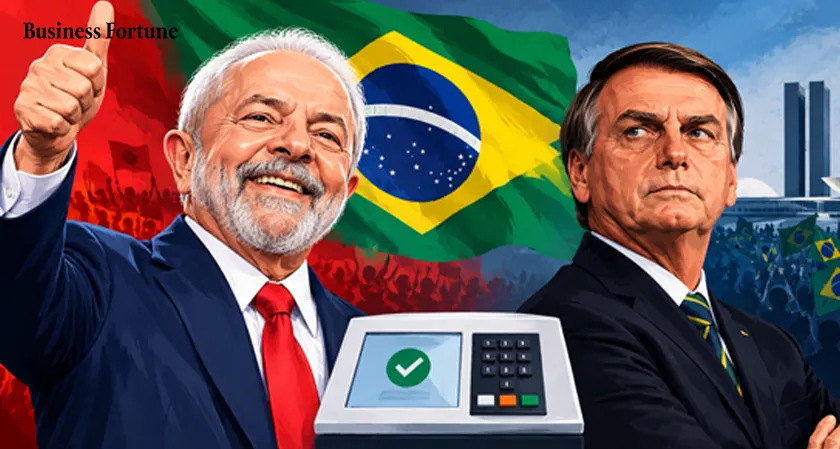
Brazil’s election took an unexpected turn as Lula won a fourth term, while his rival refused to accept defeat. Discover what happened, why the result is being challenged.
Brazil’s election had a surprise ending. President Luiz Inácio Lula da Silva has defeated Flávio Bolsonaro and won a fourth presidential term, even though polls suggested his rival could win. However, Flávio Bolsonaro has rejected the outcome and demanded the elections be declared invalid. Now, everyone is looking forward to seeing how things will play out and how Lula will deal with the biggest issues facing Brazil.
In the final count, Lula won 51.79% of the vote against Bolsonaro’s 48.21%. This was despite polls indicating that Bolsonaro had a slight lead going into the elections.
Lula’s Victory Delivers a Surprise Political Shift
The closely fought runoff election ended with Lula winning by more than four million votes. His victory also challenged the rightward political trend seen across parts of Latin America. Addressing supporters in São Paulo, Lula presented the outcome as a rejection of political misinformation and division.
“This was a defeat for denialism and lies,” Lula said during his victory speech.
He also highlighted the independence of Brazil in international relations, emphasizing that Brazil would never accept being treated like a backyard of any other country. His statements were a reflection of his longstanding criticism of US President Donald Trump and his attempt to build ties with emerging economies.
Lula’s political journey began in the labour movement, where he became known as a metalworkers’ union leader. During his first two presidential terms, from 2003 to 2010, Brazil experienced economic growth, and millions of people moved out of poverty. However, corruption scandals involving his political party later damaged its public standing.
Why Is Bolsonaro Challenging the Election Result?
Bolsonaro stated that the Supreme Court ruling on the extra two hours allowed in the voting time raised suspicion over the result since it was made after complaints about fewer bus services and rainfall that troubled voting in some places. It is worth noting that both sides had applied for the extension. It has been reported that changing the result will be hard given the size of victory recorded by Lula.
Bolsonaro’s refusal to concede also recalls his father Jair Bolsonaro’s response to losing the 2022 election. The former president was later sentenced to 27 years in prison for plotting a coup after his defeat, according to the supplied report.
Brazil’s Economic Challenges Could Define Lula’s Next Term
A political success does not mean that everything will be easy in the future. There are such problems as increasing public debt, inflation, expensive loans, and financial difficulties for both families and companies.
Also, he will have to cooperate with the conservative Congress, which complicates any economic changes. Uncertainty surrounding the implementation of a new consumption tax adds another challenge.
As Business Fortune observes, Lula’s success will depend on whether his administration can manage public finances, support economic growth and ease pressure on ordinary Brazilians. The election may be settled, but Brazil’s political and economic direction remains a closely watched story.
FAQs
Who won the Brazil election?
Luiz Inácio Lula da Silva won the presidential runoff against Flávio Bolsonaro, securing 51.79% of the votes.
Why did Flávio Bolsonaro want the election annulled?
He questioned the decision to extend voting hours by two hours, arguing that the circumstances undermined confidence in the result.
How many votes did Lula receive compared with Bolsonaro?
Lula won by more than four million votes, according to the supplied report.
What economic challenges will Lula face during his fourth term?
His government must address public debt, inflation, high interest rates, household debt and difficulties passing reforms through Congress.
Why is Lula’s victory significant for international relations?
Lula supports stronger cooperation among emerging economies through groups such as BRICS and has advocated maintaining relationships with major global powers, sometimes creating tensions with Washington.
Sources: https://news.sky.com/story/lula-re-elected-president-in-brazil-electoral-authority-says-13603818 https://www.reuters.com/live/brazil-election-live-lula-bolsonaro-face-off-presidential-runoff-2026-10-25/ https://www.npr.org/2026/10/25/nx-s1-6016299/brazil-lula-bolsonaro-election


.webp)

























Comments