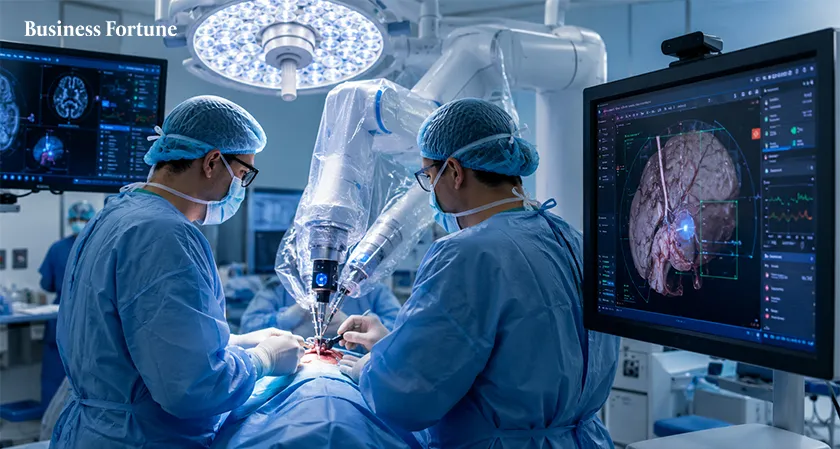
AI helps in surgery is fast becoming a reality, as doctors are now using it in real life operating theatres. In London, surgeons used artificial intelligence in a brain tumour operation to save the patient’s eyesight.
AI Joins a Live Brain Operation
The groundbreaking procedure took place as AI helps in surgery at the National Hospital for Neurology and Neurosurgery. The patient, 48 year old Rhys Hibbert from Bedfordshire, had an 11 mm growth in his pituitary gland.
The growth was located near the vital blood vessels and nerves in charge of vision; meaning the operation was extremely challenging. A minor mistake during the procedure could have led to a range of unwanted side effects, including loss of eyesight.
While the surgeon team was doing their job, an artificial intelligence system developed by researchers at University College London watched the procedure. Unlike traditional computer based scans, the AI was watching the operation in real time. It helped its human colleagues by indicating the critical parts of the patient’s brain around the site of the tumour. This way, the technology provided a valuable “third opinion.”
The Surgeon Still Made the Decisions
While the technology is impressive, it does not do the work of surgeons. They remained in charge of the operation, making all final and important decisions. According to the article, the AI was trained by examining hundreds of video operations, enabling it to watch over the site of the operation for critical structures and other valuable information.
The new technology did not just amaze the medical establishment; it improved the patient’s life. Mr. Hibbert woke up from the surgery with a valuable gift – his eyesight.
“When I came round, I could see everything,” he said. He could even return to walking independently after about a week – no glasses or walking sticks needed due to his poor eyesight before the operation.
Could AI Change the Future of Surgery?
The promising start of AI assisted operations could lead to technology being a common sight in future hospitals. As stated in the article, scientists hope that similar systems to the one used in Mr. Hibbert’s case will help doctors during intricate procedures. Such robots may help humans by locating objects and places inside the human body inaccessible to humans or by reducing the likelihood of mistakes.
However, while the future looks bright for AI assisted surgery, there is still a long way to go before such procedures become common. More research and trials with human patients are needed before such methods can be used widely. The most critical takeaway from the article is that AI is not going to replace human surgeons anytime soon.
However, it is already doing the next best; assisting them. The enhanced support during surgeries may prove invaluable to doctors during procedures requiring extreme precision.
Business Fortune remarks that for patients, such precision may well mean the difference between life and death.
FAQs
What does AI helps in surgery mean?
It means that artificial intelligence is used to assist doctors. It watches scans and real time operations, helping them locate valuable structures during surgery.
Did AI perform the brain surgery?
No; the surgeons remained in control during the operation. The AI was only used as an additional set of eyes.
What tumour was removed?
An 11 mm growth was removed from the patient’s pituitary gland. The pituitary gland is located near the optic nerve and vital blood vessels.
Did the patient recover his eyesight?
According to the patient himself, he could see everything after awakening from the surgery. Moreover, he could even walk independently a week after the operation.
Will AI replace surgeons?
Not according to this story. AI is being designed to assist medical professionals. The actual surgeon is still in charge of everything, making all decisions and performing the operation.


.webp)
































Comments