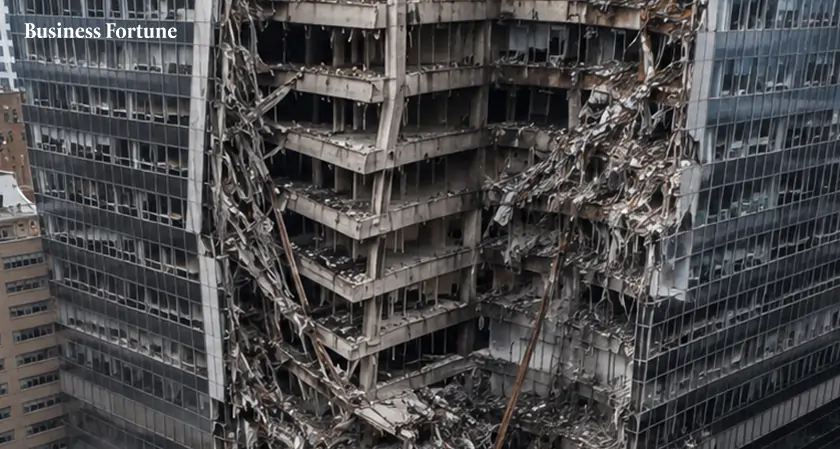
A New York skyscraper suddenly showed signs of structural failure, triggering evacuations and emergency repairs. Discover what caused the alarming incident.
A major New York skyscraper redevelopment project in Midtown Manhattan sparked alarm this week after structural columns and beams inside the building suddenly buckled, raising fears of a possible partial collapse. The high-rise, located on East 42nd Street and formerly used as Pfizer’s headquarters, is currently being transformed into luxury apartments.
The situation unfolded Tuesday morning when emergency crews received reports of structural problems inside the building. Construction workers later captured footage showing bent beams, cracked sections, and visible damage on renovation floors. Concerns grew quickly as inspectors identified sagging floors and multiple cracks, particularly around the 21st level.
What’s Really Going On
Authorities immediately evacuated workers from the site and ordered nearby buildings to be cleared as a precaution. Several streets were also closed to keep pedestrians and vehicles away from the danger zone. According to officials, emergency teams installed temporary shoring and hydraulic jacks to support weakened sections of the structure. Additional steel reinforcements were later added to improve stability. New York City Department of Buildings Commissioner Ahmed Tigani said officials are encouraged by the progress. Officials reported that movement inside the building had significantly slowed after the emergency supports were installed.
“We are feeling confident that many of the emergency shoring measures that have been put in place are stabilizing the situation,” Tigani said during a briefing.
Could the building really collapse?
While the incident raised fears of a potential skyscraper collapse, city officials stressed that a complete failure of the tower is highly unlikely. New York Fire Department Chief John Esposito explained that monitoring equipment detected ongoing movement within the structure earlier in the day, making the situation serious but manageable.
Developers believe the problem may have been caused by additional weight placed on support columns during construction. Union worker Cliff Johnsen, who was working on the site, described the beams as “bending like cigarettes” and suggested that more steel support should have been added before construction continued.The project is one of the largest office-to-residential conversion efforts in the United States and is expected to be completed next year.
What happens next?
Although some evacuated buildings have been cleared for re-entry, four nearby properties remain under evacuation orders while engineers continue inspections and stabilization work. Officials say reinforcement efforts will continue over the coming days to ensure long-term safety.
As Business Fortune observes, New York sees more aging office towers converted into residential spaces, and this incident may lead to increased scrutiny of construction safety standards and structural monitoring practices in future redevelopment projects.
FAQs
What happened to the Midtown Manhattan building?
Structural columns and beams buckled during renovation work, raising concerns about the building's stability.
Is the building at risk of a total collapse?
Officials say a complete collapse is extremely unlikely due to the tower’s structural design, though a localized failure was initially a concern.
Why was the area evacuated?
Workers and occupants of nearby buildings were evacuated as a safety precaution while engineers assessed the damage.
What is the building being converted into?
The former Pfizer headquarters is being transformed into luxury residential apartments.
What steps are being taken to stabilize the building?
Crews have installed temporary shoring, emergency jacks, and additional steel supports to strengthen weakened areas and prevent further movement.


.webp)
































Comments