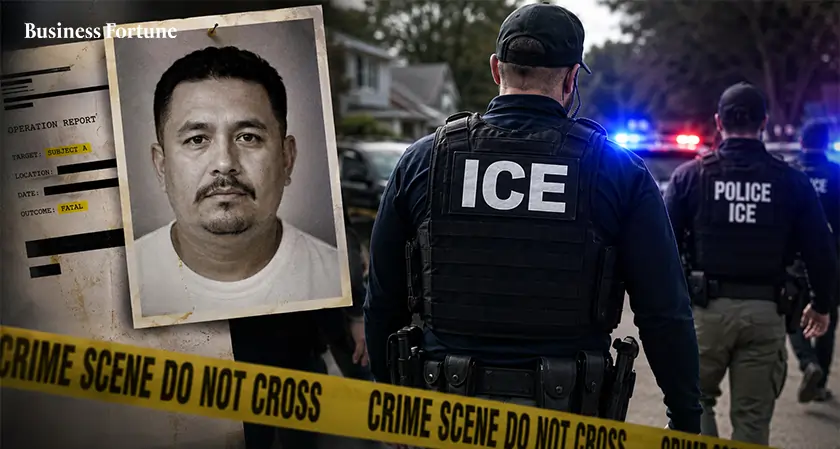
ICE agents involved in a fatal Houston shooting were not wearing body cameras, and officials say the victim was not the intended target. Investigations are underway.
A fatal encounter involving ICE agents in Houston has sparked growing controversy after federal officials confirmed that the officers involved were not wearing body cameras and that the man who was killed was not the intended target of the operation. The shooting of 52-year-old Lorenzo Salgado Araujo has raised concerns about transparency, accountability, and the methods used during immigration enforcement actions.
New Details Deepen Concerns
According to information shared by U.S. Representative Sylvia Garcia's office, Salgado Araujo was not the person federal immigration officers were originally seeking. Officials reportedly said another passenger connected to an administrative warrant was the target of the operation.
Salgado Araujo, a Mexican immigrant who had lived and worked in the United States for more than three decades, was driving a work vehicle with three other passengers when the incident occurred. Federal authorities said an ICE agent fired in self-defense after Salgado allegedly attempted to use his vehicle against an officer. However, family members have strongly disputed that version of events.
“This man had no criminal history. Are we really safer because he died?” Rep. Sylvia Garcia said while calling for a full investigation.
Why Is Body Camera Footage Important?
One of the biggest challenges facing investigators is the absence of body camera recordings. The Department of Homeland Security (DHS) confirmed that the officers involved were not equipped with body cameras during the operation.
Without video evidence, investigators may have to rely heavily on witness statements, official reports, and forensic findings to determine exactly what happened in the moments leading up to the shooting.
Multiple Investigations Are Now Underway
The case is currently being reviewed by several agencies. The Department of Homeland Security's Office of Inspector General has launched an investigation, while the FBI is examining a potential assault on a federal officer. Harris County prosecutors have also opened an inquiry, although officials say access to evidence has been limited because the case involves federal authorities. Meanwhile, civil rights groups, community leaders, and elected officials have demanded an independent review of the incident.
Could This Incident Affect U.S.-Mexico Relations?
The shooting has also drawn attention from Mexico's government. Mexican officials announced plans to pursue legal avenues in the United States and seek international support regarding the treatment of Mexican citizens during immigration enforcement operations. The case comes amid heightened immigration enforcement efforts nationwide and increasing debate over the balance between border security and civil rights protections.
As Business Fortune observes, investigations continue and the findings could influence future policies on body camera use, accountability standards, and federal immigration enforcement practices across the United States.
FAQs
Who was Lorenzo Salgado Araujo?
Lorenzo Salgado Araujo was a 52-year-old Mexican immigrant who had lived in the United States for more than 30 years and was working in Houston at the time of the incident.
Was Salgado Araujo the target of the ICE operation?
No. Officials later stated that Salgado Araujo was not the intended target of the enforcement operation.
Why are body cameras a major issue in this case?
The ICE agents involved were not wearing body cameras, meaning there is no official video footage of the encounter, making it harder to verify competing accounts of what happened.
What investigations are currently taking place?
The Department of Homeland Security Inspector General, the FBI, and local prosecutors in Harris County are all conducting separate reviews related to the shooting.
How has Mexico responded to the incident?
Mexican officials have called for legal action, requested stronger protections for Mexican nationals, and indicated they may seek support from international human rights organizations.


.webp)





























Comments