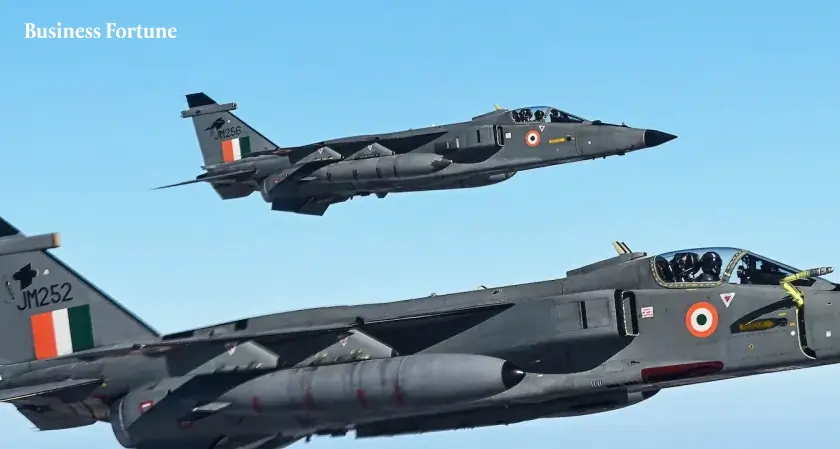
India’s ageing Jaguar fleet faces growing spare parts shortages, forcing reliance on foreign retired jets, raising serious operational and financial concerns.
The Indian Air Force’s reliance on ageing SEPECAT Jaguar fleet has intensified scrutiny as India imports decommissioned aircraft from the United Kingdom to sustain operational readiness, highlighting challenges in sourcing HAL Jaguar spare parts for the legacy fighter platform, officials and analysts said.
Dependence on imported retired airframes
HAL did not design the Jaguar platform, which was originally developed by SEPECAT as a British-French collaboration in the 1960s. Although HAL built licensed versions in India, it never held full design authority, which limited independent production after global manufacturing ended.
Supply chain breakdown drives maintenance burden
Collapse of global supply chains for Jaguar components has forced the Indian Air Force to rely on cannibalization of retired jets as original suppliers exited the market and tooling was dismantled decades ago, making HAL Jaguar spare parts difficult and costly to reproduce.
-
IAF acquires retired Jaguars for parts support
-
Design authority limits HAL manufacturing capability significantly
-
Legacy tooling dismantled after production shutdown worldwide
-
Cannibalization keeps ageing fleet operational today
-
Upgrades extend service life but increase costs
Industry experts note that sustaining the Jaguar fleet reflects broader challenges in maintaining legacy combat aircraft without active global production support. Rising lifecycle costs and limited availability of HAL Jaguar spare parts are pushing defence planners to priorities next-generation platforms such as Tejas Mk1A and Mk2.
“The Jaguar relies on technology spanning the 1970s and 1980s, which originally depended on countless smaller suppliers for custom alloys, hydraulic systems, and unique structural fasteners.”
Hence, Business Fortune believes that maintaining legacy fleets like the Jaguar will put a strain on defense logistics, necessitating an urgent transition to modern combat aircraft programs.
FAQs
Why is India importing retired Jaguar aircraft?
India is sourcing decommissioned jets to extract usable components as global production lines have shut and spare parts are no longer manufactured.
Why cannot HAL produce Jaguar spare parts independently?
HAL lacks full design authority certified tooling and complete engineering data required to recreate complex Jaguar components to modern aviation standards.
Is cannibalization common in military aviation?
Yes air forces use donor aircraft to sustain ageing fleets when manufacturing support disappears and replacement parts become unavailable or uneconomical.
When will Jaguar fleet retire in India?
Phased retirement is expected to begin around 2028 depending on induction of newer Tejas variants and strategic operational requirements of Indian Air Force.
What alternatives are replacing the Jaguar fleet?
Planning to rely on Tejas Mk1A Tejas Mk2 and future advanced fighter programmes to gradually replace the ageing Jaguar strike aircraft fleet.


.webp)































Comments