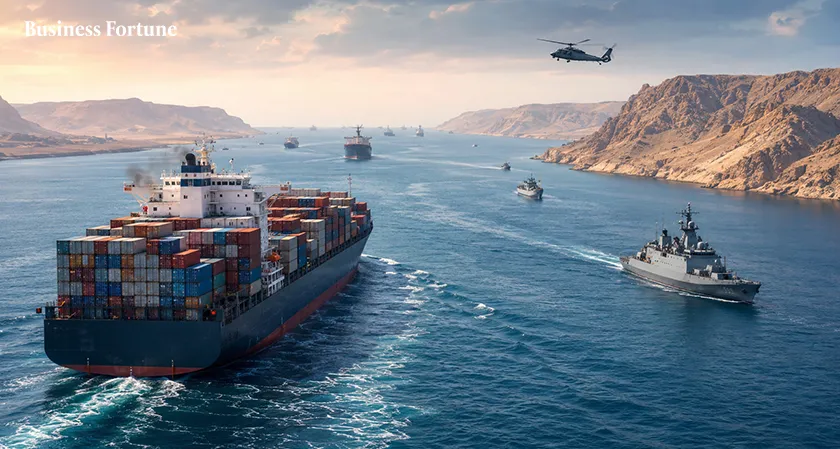
Global shipping faces uncertainty as vessel movements continue through key waterways amid rising geopolitical tensions and security concerns across Middle East trade routes.
Bab el-Mandeb Strait shipping traffic showed signs of continued movement on Thursday, with 25 commodity vessels passing through the strategic waterway while activity in the Strait of Hormuz remained severely restricted, according to Kpler shipping data. The developments come as regional tensions linked to the US-Iran conflict continue to create uncertainty for global oil shipping routes, with new security concerns emerging after a drone strike near Egypt’s Damietta port.
Vessel Movements Differ Across Key Maritime Routes
Of the 25 vessels recorded in the Bab el-Mandeb Strait, 18 entered the passage and seven exited. The traffic included major crude carriers, including two very large crude carriers (VLCCs), one Suezmax tanker and five Aframax tankers, highlighting that energy shipments continue through the Red Sea corridor despite elevated risks.
In comparison, the Strait of Hormuz witnessed minimal movement, with only two tankers crossing the waterway, both operating in ballast and entering the strait. Shipping analysts noted that actual activity could be higher because some vessels may have disabled their tracking systems, preventing them from appearing in monitoring data.
Key Developments in Maritime Shipping
-
25 commodity vessels crossed Bab el-Mandeb Strait Thursday
-
Two tankers entered Strait of Hormuz in ballast
-
VLCC and Aframax vessels remained active in Red Sea
-
Ship tracking gaps may affect recorded traffic numbers
-
Regional tensions continue impacting maritime operations
Security Risks Expand Toward New Shipping Routes
The latest shipping movements reflect a cautious approach by operators navigating critical global trade corridors. Iran and its Houthi allies have increased threats against vessels operating near the Strait of Hormuz and Bab el-Mandeb, creating pressure on shipping companies and energy markets.
The situation intensified after a drone strike targeted gas vessels at Egypt’s Damietta port, raising concerns that maritime risks could extend beyond traditional conflict zones. The incident has increased attention on the security of the Suez Canal and nearby energy infrastructure, which have become increasingly important alternative routes for oil transportation.
The Bab el-Mandeb Strait remains a crucial connection between the Red Sea and the Gulf of Aden, serving as a major route for oil tankers and commercial vessels moving abetween Asia, Europe and the Middle East. Any prolonged disruption could increase shipping costs, extend delivery timelines and add pressure to global energy markets.
The uneven traffic patterns across the Bab el-Mandeb Strait and Strait of Hormuz demonstrate how geopolitical uncertainty is reshaping global maritime logistics. Ship operators continue to monitor security conditions while balancing route efficiency with safety considerations.
Business Fortune is of the view that maritime uncertainty will continue shaping global trade decisions as shipping routes face rising geopolitical pressures.
FAQs
What is the significance of the Bab el-Mandeb Strait in global shipping?
The Bab el-Mandeb Strait is a vital maritime chokepoint connecting the Red Sea and Gulf of Aden, supporting major oil shipments and international trade routes.
How many vessels passed through the Bab el-Mandeb Strait recently?
Kpler shipping data showed that 25 commodity vessels transited the Bab el-Mandeb Strait on Thursday, including several crude oil tankers.
Why has shipping activity declined in the Strait of Hormuz?
Vessel movements through the Strait of Hormuz have slowed due to heightened security risks and growing concerns linked to regional military tensions.
How could Middle East maritime disruptions affect global oil markets?
Extended disruptions across key shipping routes could increase transportation costs, delay energy deliveries, and create volatility in global oil prices.
Could rising security threats impact the Suez Canal route?
Growing maritime risks near the Red Sea and Egypt’s coastline could affect confidence in the Suez Canal, a critical route for global cargo movement.


.webp)































Comments