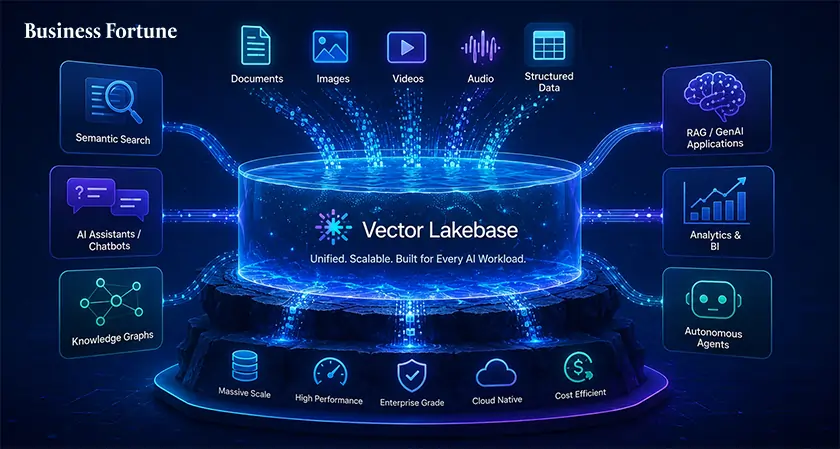
Zilliz’s Vector Lakebase, a unified AI data platform that combines vector search, analytics, and data lake access, helps organizations process large datasets more efficiently while reducing costs and complexity.
AI is generating and processing more data than ever before, and managing that data efficiently has become a major challenge. Addressing this issue, Zilliz Unveils Vector Lakebase, a new addition to Zilliz Cloud that combines real-time vector search with a shared, lake-native data foundation. The public preview aims to help organizations run multiple AI workloads on the same data without creating extra copies or moving information between systems.
Zilliz, the company behind the popular open-source vector database Milvus, says the new platform expands beyond traditional vector search. While real-time search remains at its core, Vector Lakebase also supports interactive data exploration, large-scale batch analytics, and direct search across external data lakes. This means AI teams can work with a single logical copy of their data while only paying for computing resources when they are actively used.
AI Workflows Are Becoming More Complex
Modern AI systems no longer rely on a simple search-and-retrieve process. They continuously learn from feedback, analyze data, improve models, and serve new results. Traditionally, these tasks require separate platforms, forcing organizations to move huge volumes of data between systems.
According to Zilliz, this process can be expensive, time-consuming, and difficult to manage. Vector Lakebase is designed to eliminate these barriers by allowing all workloads to operate from a unified data foundation that can scale from gigabytes to petabytes.
What Makes Vector Lakebase Different?
The platform introduces five major capabilities:
-
Tiered Real-Time Serving with multiple performance levels for different workload needs.
-
On-Demand Search that charges only for active compute usage.
-
External Data Lake Search that enables zero-copy searches across existing data lakes.
-
Full-Spectrum AI Search covering vectors, text, JSON, and geospatial data.
-
Unified Lake-Native Storage built on Vortex, an open storage format optimized for faster and more efficient data access.
One of the most notable features is the ability to perform searches directly on external data sources without moving data. This helps organizations reduce storage duplication while maintaining access to advanced indexing and retrieval capabilities.
Can Lower Costs Accelerate AI Innovation?
Cost remains a major concern for companies building AI applications. Zilliz claims that its On-Demand Search model can significantly reduce expenses compared with traditional serverless approaches by charging only when compute resources are actively running. The company believes this model will make advanced AI infrastructure more accessible to teams managing billions of vectors and massive datasets.
Looking Ahead
As Business Fortune observes, AI applications continue to expand, so organizations are searching for simpler ways to manage data, analytics, and search workloads. With Vector Lakebase, Zilliz is betting that a unified, zero-copy data foundation could become the next step in AI infrastructure. If successful, the platform may help businesses process larger datasets faster, reduce costs, and build more intelligent AI systems without the complexity of multiple disconnected tools.


.webp)