For years, many biotechnology investors viewed Oncolytics Biotech (NASDAQ: ONCY) much the same way they viewed countless other development-stage oncology companies: promising science, long timelines, and a future dependent on proving whether a novel therapeutic approach could ultimately translate into meaningful patient benefit.
That framework may no longer accurately describe the company.
Over the past year, the conversation surrounding Oncolytics and its lead immunotherapy platform, pelareorep, has undergone a notable shift. The discussion is no longer centered primarily on whether the science works. Instead, attention has turned toward how broadly the platform may fit into the future of cancer treatment itself.
That distinction matters.
The biotechnology industry is filled with companies pursuing promising therapies. Far fewer successfully position those therapies inside some of oncology's most commercially and clinically important conversations at the same time. Yet that appears to be exactly where Oncolytics finds itself today. In the conversation.
The reason begins with data.
In metastatic colorectal cancer, the company's REO-022 study evaluating pelareorep alongside FOLFIRI and bevacizumab reported a median overall survival of 27 months, compared with a historical benchmark of approximately 11.2 months with standard treatment. Additional survival observations across pancreatic and anal cancer studies have continued reinforcing a broader narrative surrounding the platform.
For patients, survival remains the endpoint that matters most.
For physicians, survival represents one of the clearest indicators that a therapy may be delivering meaningful clinical benefit.
And according to management commentary, regulators appear to be paying close attention as well.
Recent discussions described by the company suggest that the FDA may be placing greater emphasis on meaningful survival outcomes, even in situations where traditional response metrics appear less dramatic. In simpler terms, regulators appear willing to recognize what patients have understood all along: time matters.
That perspective could prove significant.
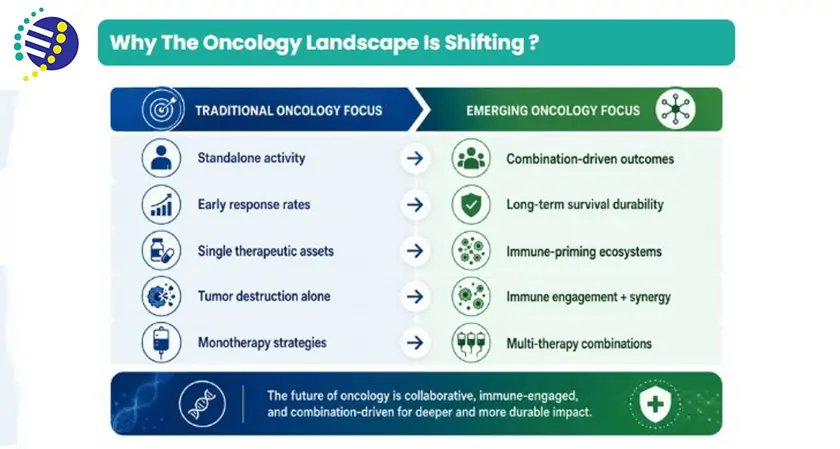
The oncology industry has spent much of the past decade pursuing therapies capable of generating stronger, deeper, and more durable responses. Yet despite tremendous advances, many cancers continue to present enormous treatment challenges, particularly when resistance develops, and therapeutic effectiveness begins to decline over time.
That reality helps explain why another recent Oncolytics development attracted attention throughout the sector.
On June 1, the company announced positive initial preclinical findings evaluating pelareorep alongside RAS-targeted approaches. The findings demonstrated greater anti-tumor activity in combination than either modality achieved independently, prompting plans for additional studies in pancreatic and colorectal cancer models evaluating immune activation, durability, and time-to-resistance.
The significance extends beyond a single preclinical study.
RAS mutations remain among the most important targets in oncology today. Pharmaceutical companies have invested billions pursuing KRAS and broader RAS-targeted therapies because these pathways play central roles in some of cancer's most difficult-to-treat forms. The challenge has never been generating interest. The challenge has been maintaining effectiveness over time.
That is where pelareorep may be beginning to attract attention beyond traditional immunotherapy discussions.
The platform has already demonstrated evidence involving immune priming, interferon signaling, T-cell activation, and modulation of the tumor microenvironment. The June 1st findings raise the possibility that pelareorep may eventually contribute to combination strategies designed to improve durability and potentially delay resistance, two areas of intense interest throughout oncology.
Viewed collectively, these developments suggest that Oncolytics is participating in several important industry conversations simultaneously.
Survival. Durability. Immune engagement. Combination therapy. Resistance.
Those are not niche discussions. They represent some of the most important challenges facing modern oncology.
The changing perception surrounding the company may also help explain why CEO Jared Kelly's arrival has attracted attention. Before joining Oncolytics, Kelly helped guide Ambrx Biopharma through a strategic process that ultimately led to its acquisition by Johnson & Johnson. Prior to that transaction, Ambrx spent considerable time trading at valuations that many observers later viewed as disconnected from the platform's ultimate strategic value.
Kelly frequently describes himself as a transactional CEO, an unusual phrase within biotechnology circles. The philosophy reflects a focus on creating a platform value substantial enough to attract larger pharmaceutical infrastructure capable of accelerating development and commercialization globally.
That approach appears relevant at Oncolytics.
The company is no longer discussing science in isolation. Today's conversation includes manufacturing readiness, registration-enabling studies, commercialization pathways, regulatory engagement, and strategic applicability across multiple oncology settings.
In other words, the company appears to be operating from a different position than it was only a year ago.
Whether that ultimately translates into commercial success remains to be seen. What appears far less debatable is that the Oncolytics story is no longer the same story many industry observers were following just a year ago.
And that may be the most important development of all. Not just for the company but for the potentially millions of lives saved over time.


.webp)